Where Russia may focus its offensive in 2026: ISW assessment


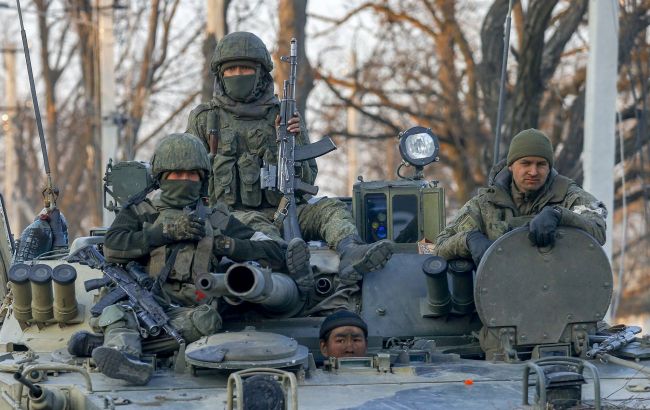 Photo: Russian military (Getty Images)
In 2026, Russia is likely to focus on the eastern direction, particularly in the areas of Lyman and Siversk, in order to prepare for an offensive on Sloviansk and Kramatorsk. The Russians may also intensify their activities in the areas of Kostiantynivka and Huliaipole, Jessica Sobieski and Jennie Olmsted, researchers on Russia at the Institute for the Study of War (ISW), said in an interview with RBC-Ukraine.
Offensive on the Fortress Belt in the east
According to analysts, in 2026, Russia is likely to focus on capturing Ukraine's Fortress Belt and may try to surround it.
“Russia's recent infiltrations into Lyman and Siversk are likely setting conditions to fully seize the towns and to set conditions for an advance on Sloviansk and possibly Kramatorsk from the northeast and east,” the ISW researchers noted.
They believe that Russia may try to attack the southern part of the Fortress Belt. However, Russia's ability to focus on this direction will depend on its success in specific tactical areas, in particular, crossing the Siverskyi Donets River or advancing west of Siversk.
Analysts also believe that Russian troops will continue to attack in several directions to maintain strategic initiative and pressure along the entire front.
“Russia's rate of advance will likely remain slow as Russia will likely continue to face difficulties pursuing simultaneous multi-pronged assaults spread across the theater. The Russian command could redeploy elements from the two CAAs located in Pokrovsk, but the forces will likely still need to rest and reconstitute following the difficult and long campaign for Pokrovsk,” they explain.
Southern direction
The researchers draw particular attention to the southern direction.
“Russia will also likely continue to find opportunities to advance in the Huliaipole direction in pursuit of Russia’s long-standing objective of advancing within the tube artillery of Zaporizhzhia city,” Sobieski and Olmsted noted.
According to them, Russian troops are likely to continue their attempts to capture settlements along the T-0401 Huliaipole-Pokrovske highway.
Open data indicate that large-scale offensive operations in the Kherson, Sumy, and Kharkiv regions in early 2026 are unlikely unless there are new troop transfers.
Analysts add that the appearance of new Russian units in these areas could change this forecast.
What else did the ISW say?
ISW analysts recently stated in an interview with RBC-Ukraine that Russia is consistently signaling that it will not agree to a peace agreement that does not provide for Ukraine's complete surrender or the implementation of Moscow's maximalist territorial demands.
The ISW also assessed the risks for Ukraine in the event of the loss of Pokrovsk.
Analysts at the Institute for the Study of War also indicated which direction is one of the priorities for the Russian army.