What end of nuclear treaty with United States means for Russia: Experts explain


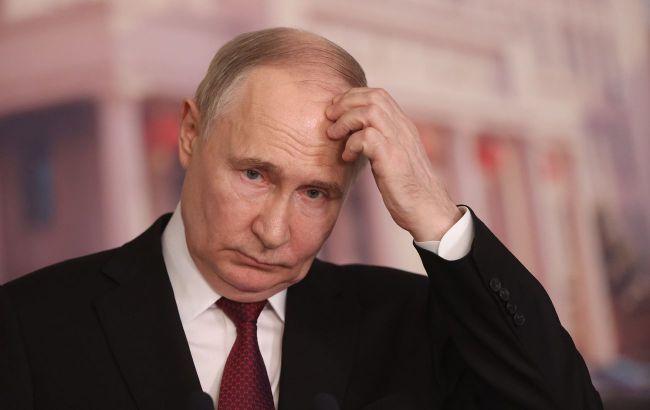 Russian President Vladimir Putin (photo: Getty Images)
The expiration of the nuclear arms limitation treaty with the United States could become a pretext for Russia to produce more nuclear weapons. However, the aggressor country does not want to spend large sums on "nukes," as it is focused on the war against Ukraine, according to the RBC-Ukraine article - World without limits: How Trump and Putin open nuclear arsenals of US and Russia.
For Russia, the problem lies primarily in resources and technology, which significantly limit its ability to provide a symmetrical response. This is one of the reasons why Russia has been trying in every possible way to extend the treaty.
For example, in September last year, Russian President Vladimir Putin proposed extending voluntary compliance with the treaty's main limits for one year, but the United States did not respond to this proposal.
"Such a step may indicate our enemy's lack of readiness to actively participate in nuclear competition, especially given the recent problems with the development and deployment of Russian strategic-range missiles and the constant issues during missile tests," said Anton Zemlyany, senior analyst at the Ukrainian Center for Security and Cooperation.
John Caves, a Senior Research Associate at the Wisconsin Project on Nuclear Arms Control, doubts that Russia is currently inclined to bear a significant financial burden to expand its arsenal solely because the treaty has expired.
"However, the expiration of New START could provide a pretext for either Russia or the United States to produce more nuclear weapons if one or the other already feels compelled to do so to maintain the strategic balance," the expert explained.
The Kremlin has other priorities. The main one is continuing the war against Ukraine. Still, it appears that Russia will not have much of a choice.
"The Russians do not really want to spend a lot of money on nukes, but they will be forced to, because the Americans will now be spending a lot," said Polina Sinovets, Head of the Odesa Center for Nonproliferation (OdCNP).
Nuclear treaty between the United States and Russia
Today, February 5, the treaty between the United States and Russia on Measures for the Further Reduction and Limitation of Strategic Offensive Arms (known as New START) ceases to be in force.
Russian President Vladimir Putin had earlier proposed voluntarily adhering to the treaty's limits for another year, but without the resumption of inspections, such a proposal is largely symbolic.
In response, US President Donald Trump said he would like a new agreement that would also include China, but Washington has not yet taken any concrete steps.
At the same time, the US president ordered the Pentagon to resume nuclear tests "on equal terms" with Russia and China.