Vance outlines the key objective of US-Iran talks in Switzerland

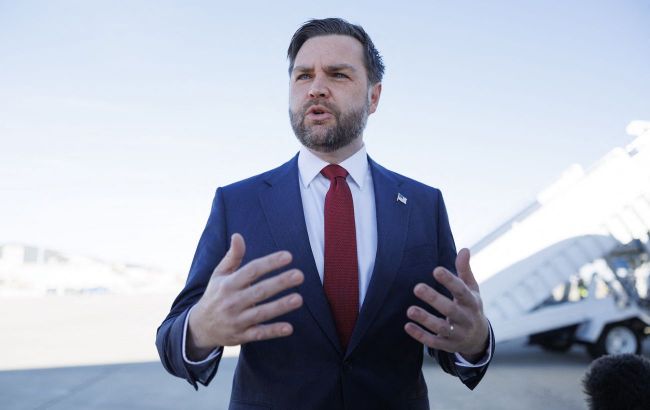 Photo: US Vice President JD Vance (Getty Images)
During upcoming talks with Iran in Switzerland, the United States will focus on establishing a framework for negotiations, making progress on nuclear issues, and securing a ceasefire in Lebanon, according to CNN, which quoted US Vice President JD Vance.
Before departing for Switzerland, Vance said he expects the talks to advance discussions on the handling of Iran’s nuclear materials. According to him, the US delegation will include both senior political leaders and technical experts.
"We’re going to have a principal level of political leadership at the top and then obviously the technical team is going to stay on the ground," JD Vance explained.
He added that he will only be able to stay in Switzerland for one or two days but hopes to make progress during that time on oversight of Iran’s nuclear materials.
The second critical issue for the United States is achieving a ceasefire in Lebanon, which has once again come under rocket fire from Israel. Vance said the renewed escalation is something the US "just going to have to continuously manage."
"Those are the two big things we’re going to be focused on. I’m sure the Iranians are going to have issues they’d like to discuss as well," the US vice president concluded.
Earlier, the White House said Vice President JD Vance had postponed his trip to Switzerland to take part in a new round of negotiations with Iran over its nuclear program.
Before that, Vance appeared at the White House and defended the framework agreement with Iran, which has been criticized by some members of the US Congress.
The vice president had also previously stated that Washington is very close to a final agreement that would fully resolve concerns over Iran’s nuclear program and said he believes the chances of reaching such a deal by the end of the year are high.
According to Vance, the United States’ primary objective is to secure a long-term nuclear agreement. At the same time, he openly acknowledged that Washington's interests regarding Iran may differ from those of Jerusalem, noting that the US position is "not exactly" what Israeli Prime Minister Benjamin Netanyahu wants.