US Senate pushes to pass Russia sanctions bill without Trump's changes

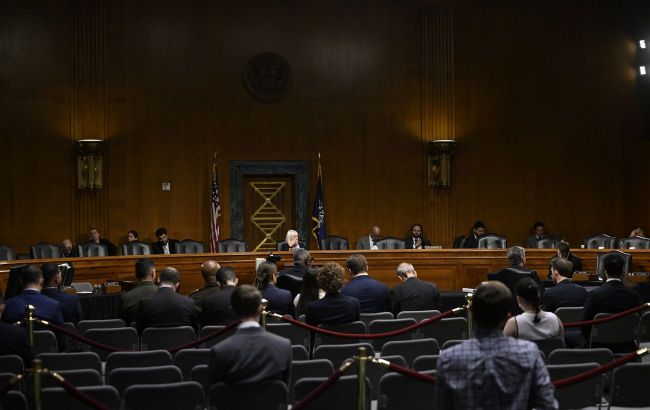 The sanctions bill has already been agreed with the White House (photo: Getty Images)
A bipartisan group of United States senators is urging a swift vote on a Russia sanctions bill that the late Senator Lindsey Graham worked on for more than two years, according to the senators' press conference.
Why they do not want to revise the bill
According to the senators, the bill has already been agreed with the White House, enjoys broad bipartisan support and, in their view, does not require any changes.
The legislation is the result of nearly two years of negotiations and contains complex technical sanctions mechanisms. For that reason, lawmakers believe it should not be reopened for additional amendments.
Speaker of the House of Representatives Mike Johnson supported that position.
"There is an agreement that has been reached. It is bipartisan in nature. The White House is in support. Now is the time for us to do this and to remove the ability of Vladimir Putin to fund this war," he said.
Why they do not want to add provisions on Iran
The senators were responding to President Donald Trump, who had earlier proposed adding sanctions related to Iran or Hezbollah to the bill. Democratic Senator Richard Blumenthal, a co-author of the legislation, insists that the president has already endorsed the current version.
"With all due respect to the president, he has approved this bill, and we should move forward with this bill rather than opening it, in my view, to other potential targets. If there are other bills that he wants to propose, we'll consider them," Blumenthal said.
According to the senator, the bill is intended as a response to Russia's attacks on Ukrainian civilians, and any delay will mean more victims.
When the bill could be passed
The senators hope to hold a vote before the August recess of the United States Congress. According to them, Senate Majority Leader John Thune is ready to bring the bill to a vote as soon as it is confirmed that there are enough votes, and the authors believe that support is already in place.
What the bill provides
The bill introduces tough sanctions against Russia, its companies, oligarchs and intermediaries, as well as secondary sanctions and tariffs targeting the largest buyers of Russian oil and gas.
Compared with the original version, which allowed tariffs on more than 60 countries, the scope of the bill has been significantly narrowed. It now applies only to the five largest importers of Russian oil and the five largest importers of Russian natural gas, with some overlap between the two groups. The bill also provides narrower sanctions waiver mechanisms and expands the authority of the United States Trade Representative to determine specific tariff rates.
For the first time, the authors have also included a section targeting Russia's so-called shadow fleet — a network of tankers that Moscow uses to circumvent international sanctions to export oil. According to Blumenthal, the revised version contains effective tools to restrict the activities of the shadow fleet, making it more difficult for Russia to generate revenue from energy exports.