US plans space-based tracking of hypersonic threats: What it means for Ukraine

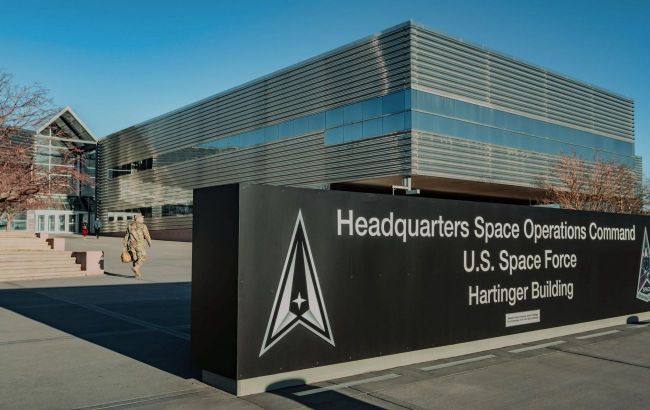 Photo: US Space Force Headquarters (US Space Force website)
The US Space Force has selected the American company Leonardo DRS to develop a space-based sensor that can detect, identify, and track high-speed targets and generate data suitable for strike guidance, according to Army Recognition.
Contract with Leonardo DRS
The contract with Leonardo DRS, an American defense company headquartered in Arlington, Virginia, was signed as an Other Transaction Agreement, a mechanism that allows for the rapid advancement of promising technologies from the prototype stage to testing and field deployment.
This is one of seven similar contracts signed by the US Space Force in May–June 2026; six more were scheduled for July, which would bring the total number of such agreements to 13, worth over $500 million.
According to Leonardo DRS, the new sensor will support the space mission and build on the company's existing and future developments in sensor technology.
Priorities include affordability, scalability, and a resilient supply chain. The company did not disclose the contract value, development timeline, orbital architecture, spectral bands, detection range, or a specific list of threats.
Similar systems are already in use by the Pentagon, notably L3Harris's missile-tracking satellites. The general trend is toward the increasingly active use of space-based sensors to detect and track complex targets, particularly hypersonic missiles. The Leonardo DRS sensor is being developed as a separate, standalone system.
Leonardo DRS is a subsidiary of Leonardo S.p.A., an Italian defense giant that opened a subsidiary in Ukraine this year. It will conduct research and development in the field of defense technologies. The company plans to test its new Michelangelo air defense dome under combat conditions in Ukraine.
Why US Space Force needs this specific type of sensor
The mere detection of a high-speed object provides only initial awareness of a threat; target identification, maintaining precise tracking, and generating data suitable for guidance—these are what enable the sensor to become a link in the combat chain.
For the US Space Force, the challenge is to reduce the time between threat detection and the transmission of actionable information to command-and-control networks or systems capable of responding.
The sensor-shooter process becomes more challenging when a target is maneuvering or moving at very high speeds. If a sensor detects an object but loses track of it before another sensor or weapon system can take over tracking, the operational value of the initial detection drops sharply.
A space-based sensor capable of maintaining high-quality tracking can reduce gaps in re-acquiring targets, improve tracking continuity, and give commanders more time and confidence to decide on next steps.
What targets is new sensor designed to detect
Leonardo DRS has not disclosed whether the sensor's future targets have been identified—spacecraft, missiles, hypersonic weapons, airborne systems, or another class of high-speed threats.
However, tracking hypersonic targets and countering anti-space threats are important strategic considerations, as both areas require high-speed detection, sustained tracking, and data processing with minimal latency.
China and Russia are also developing increasingly sophisticated space-based weapons and anti-space systems, but these capabilities should be viewed as part of the broader threat landscape.
The new project also reflects a general shift in US military space surveillance—from early warning to guidance. Traditional missile launch warning systems were designed primarily to detect launches and alert command, whereas newer architectures are increasingly focused on maintaining continuous target tracking and providing data accurate enough to support strike decisions.
The contract with Leonardo DRS fits into this broader trend of transforming orbital surveillance into combat-ready intelligence.
Leonardo DRS already has relevant experience in military space surveillance, particularly developing infrared payloads for ballistic and hypersonic target-tracking missions.
This experience provides the company with a solid foundation in the field of space sensor technologies and can reduce development and production risks should the new prototype move to operational deployment.
RBC-Ukraine regularly covers the topic of countering high-speed and maneuverable threats in space and in orbit. Previously, there were reports on the testing of a US orbital defense system, which is being developed by Northrop Grumman to intercept ballistic and hypersonic targets during the active flight phase—it is precisely at this stage that satellite infrared sensors detect missiles most effectively.
Activity in the space sector is also increasing on the part of the US adversaries: in August 2026, RBC-Ukraine reported that Russia was preparing to deploy its own Rassvet satellite network, for which Russia would need to carry out 12–15 launches of the Soyuz launch vehicle. The expansion of the adversary's orbital constellations underscores the importance of new American surveillance and tracking sensors, similar to the one now being developed by Leonardo DRS.