US-Iran talks could drag on for six months — Bloomberg

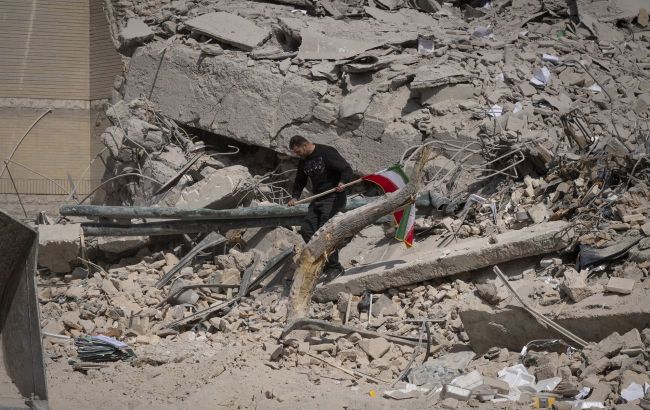 Photo: Negotiations between the US and Iran may drag on (Getty Images)
Negotiations on a peace agreement between the US and Iran could take about six months, requiring an extension of the current ceasefire, according to Bloomberg.
Leaders from the Gulf states and Europe are calling for the immediate reopening of the Strait of Hormuz to restore energy supplies.
Officials warn that if the strait is not unblocked in the near future, the world faces a massive food crisis.
Against the backdrop of these forecasts, the price of Brent crude has already risen, climbing 4.5% to over $99 per barrel.
Requirements for future agreement
Countries in the region insist that any peace agreement must include strict restrictions on Tehran. Specifically, this involves a ban on uranium enrichment and a renunciation of the development of long-range ballistic missiles.
Despite fears that Iran has not abandoned its attempts to develop nuclear weapons even after the US-Israeli airstrikes, Arab leaders oppose a return to active hostilities and are urging the US to continue pursuing a diplomatic path.
Strait of Hormuz situation
Since the start of the conflict, the strait has remained effectively closed, causing critical damage to the economies of the Persian Gulf countries. They have lost the ability to export oil, liquefied natural gas, and fertilizers in normal volumes.
Currently, Washington and Tehran are discussing the possibility of extending the ceasefire for another two weeks to create conditions for protracted six-month negotiations.
Context of events
The wars in Ukraine and Iran have significantly depleted the United States' defense stockpiles. As a result, the administration of US President Donald Trump is considering the possibility of enlisting civilian automotive giants to produce weapons.
The US President announced that an agreement had been reached between Israel and Lebanon on a 10-day ceasefire, set to begin at midnight on April 17. This is considered the first step toward a major de-escalation in the region.
At the same time, the Pentagon maintains a hardline stance toward Tehran. US Secretary of War Pete Hegseth warned that American forces were prepared to launch a second strike against Iran if the country rejects the terms of the peace agreement or resorts to further escalation.