US creates shipping corridor in Strait of Hormuz for oil transport

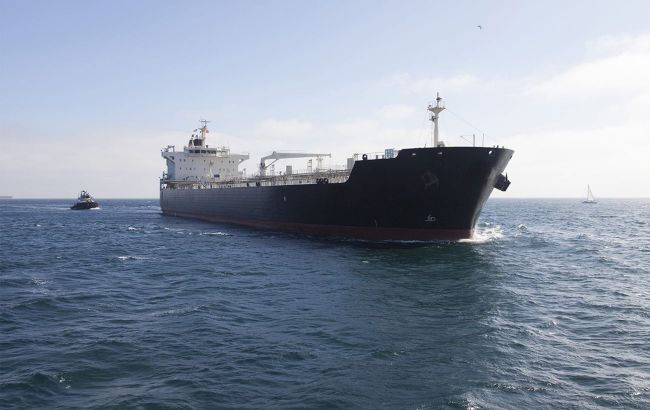 Photo: Oil tanker (Getty Images)
The corridor in the Strait of Hormuz
This is a significant success, even though the war as a whole remains at a stalemate, two US officials told Axios.
The operation has been underway for several weeks. According to the outlet, between 15 and 20 tankers have entered and exited the strait through the southern channel along the coast of Oman.
Officials said around 10 million barrels of oil a day are being transported out of the strait and injected into the global energy market. That is roughly half of the pre-war volume.
On Tuesday evening, more than 20 vessels were expected to enter and leave the Strait of Hormuz through the southern corridor. Approximately 15 million barrels of oil could potentially pass through, one official said.
The restoration of oil shipments through the Strait of Hormuz is having a noticeable impact on global markets, according to the outlet.
How it works
The US military is not only escorting oil tankers traveling abroad.
It is also helping empty tankers enter the Persian Gulf from the Arabian Sea through the strait, pick up oil from the UAE, Bahrain and Kuwait, and then exit.
The full details of the operation had not previously been disclosed.
"We have been controlling the southern lane of the Strait of Hormuz for two months now. The Islamic Revolutionary Guard Corps can be a nuisance, but they don't control the strait. We do," one US official said.
The task force operating in the Strait of Hormuz is being led by the headquarters of the Army’s 82nd Airborne Division at Fort Bragg, North Carolina.
The task force coordinates its operations with regional partners in the Persian Gulf.
Every day, lists are created of:
- vessels leaving the Persian Gulf through the Strait of Hormuz and entering the Arabian Sea;
- rented empty tankers traveling from the Arabian Sea through the strait and entering ports in Gulf countries to load oil.
Each night, ships are scheduled to move in one large outbound line during a designated time window and one large inbound line during a separate time window.
Vessels are given several checkpoints that they must pass through.
US Air Force fighter jets search for Iranian cruise missiles and drones to intercept them.
According to officials, the operation was made possible by a recent two-week military campaign by US Central Command. The campaign degraded Iran’s radar and maritime surveillance systems.
As a result, Iranian forces are launching weapons only roughly in the direction where ships may be passing, according to the outlet.
Some vessels have been hit by Iranian attacks, but many have been protected by US forces.
For example, on the evening of August 17, US forces shot down eight Iranian drones and two cruise missiles.
Earlier, RBC-Ukraine reported that US President Donald Trump had said there was an alternative to the Strait of Hormuz. Oil could be imported from an entirely different part of the world.
It was also reported that oil prices had risen for the fourth consecutive day amid conflicting statements from the United States and Iran over whether the Strait of Hormuz was open to shipping.
In addition, Iran has said it will not reopen the Strait of Hormuz until the United States fully meets all the conditions of the Islamabad Memorandum of Understanding.