Ukrainian troops carry out assault using drones and ground robot: Footage

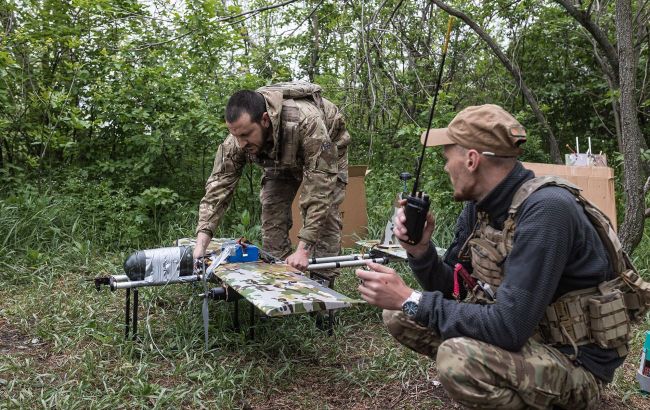 Photo: Ukrainian troops use advanced technologies on the battlefield (Getty Images)
Fighters of Ukraine's 33rd Separate Assault Regiment destroyed an enemy position using the Droid TW 12.7 unmanned ground vehicle and drones, without sending personnel into the danger zone.
How the operation unfolded
The Droid TW 12.7 was the first to move toward the enemy position. Troops remotely operated the ground robotic system, opening fire on Russian forces without exposing soldiers to direct danger.
After the ground robot had engaged the target, drones joined the operation and carried out precision strikes on the enemy position. The combination of ground and aerial unmanned systems allowed Ukrainian forces to systematically neutralize the target while minimizing the presence of personnel in the combat zone.
What the Droid TW 12.7 can do
The system was developed by Ukrainian engineers at DevDroid as a solution for reconnaissance and fire-support missions on the battlefield. Remote operation, an integrated ballistic computer, and artificial intelligence algorithms enable the platform to accurately detect, track, and engage targets.
The robot is equipped with a remotely operated turret armed with a 12.7 mm M2 Browning machine gun, capable of engaging lightly armored targets such as infantry fighting vehicles (IFVs), armored personnel carriers (APCs), and armored vehicles, as well as unarmored enemy equipment.
The system is also effective against enemy personnel at short and medium ranges. It can provide suppressive fire against platoon strongpoints and fortified positions, making it a versatile platform for both direct-fire support and battlefield reconnaissance missions.
Reconnaissance and mobility
Another key role of the system is remote battlefield surveillance. Its onboard cameras and data-transmission systems provide operators with real-time situational awareness while allowing them to remain at a safe distance from the front line.
The platform is designed for high mobility across difficult terrain and off-road conditions. It has already been tested in real combat environments and features a minimal deployment time, enabling it to go from transport to combat readiness within minutes.
Despite the growing role of drones in modern warfare, they cannot fully replace other means of delivering firepower.
RBC-Ukraine has also reported on the rapid development of interceptor drones — one of the newest and fastest-evolving categories of unmanned aerial vehicles — and examined whether artificial intelligence could eventually replace human operators in this field.