Ukraine develops AI-powered drones to intercept Shaheds

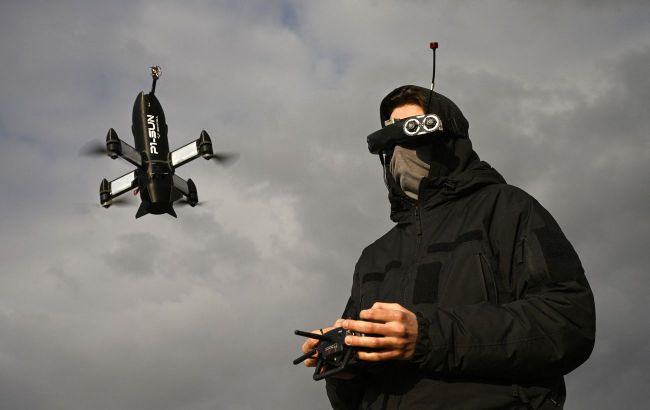 Future interceptor drones designed to counter Shahed attacks are expected to incorporate artificial intelligence (photo: Getty Images)
Interceptor drones are among the newest types of unmanned aerial vehicles, but their development is advancing faster than almost any other segment of the industry.
RBC-Ukraine takes a look at what interceptor drones are capable of today and how they are expected to evolve in the near future.
As a rule, interceptor drones are understood to be military unmanned aerial vehicles designed to destroy aerial targets, meaning they are used in air defense. Interceptors are usually first-person-view drones, including both quadcopters and fixed-wing aircraft.
At present, the Ukrainian military uses several types of unmanned aerial vehicles to intercept enemy aerial targets: kamikaze quadcopters, fixed-wing kamikaze drones, and interceptors designed to destroy Shahed-type drones, which are somewhat similar to missiles.
A separate area that is developing rapidly is drones equipped with active electronic warfare systems. The mission of these unmanned aircraft is to deprive the enemy of the ability to "see" and navigate. The drones are equipped with special jammers that suppress control and navigation signals.
These interceptor drones operate as compact mobile electronic warfare stations. They detect the enemy in the air, approach it, and jam its signal. The effectiveness of jammer drones is lower than that of models that physically destroy targets, but the chances of keeping the drone intact and reusing it are significantly higher.
What targets do interceptor drones destroy?
The history of interceptor drones spans just over two years. In February 2024, fighters from the Ajax unmanned strike systems unit of the 126th Territorial Defense Brigade used a first-person-view drone to shoot down a Russian fixed-wing kamikaze drone. Today, the primary targets of interceptor drones are long-range attack drones and reconnaissance drones.
In addition, several cases of Russian helicopters being hit by first-person-view drones were recorded in 2024. The first occurred on August 6 during fighting in the Kursk region, when a Security Service of Ukraine drone struck a Mi-28 helicopter, although the crew managed to land it.
What are the key challenges facing interceptor drone developers?
Valerii Zarubin, co-founder of technology company BlueBird Tech, told RBC-Ukraine that the main challenge today is not only creating the drone itself but also building the entire interception system. The work of an interceptor drone operator is currently one of the most difficult forms of piloting on the battlefield and is essentially advanced aerial maneuvering.
"The operator works at high speeds, often against a maneuvering target that can evade, change altitude, and alter its flight path. At the same time, the interceptor drone has a very limited supply of time and battery power. Unlike a standard first-person-view drone, there is often no second chance here — a mistake means losing the interceptor drone," Zarubin said.
According to industry representatives, the situation is further complicated by the enemy's use of electronic warfare systems, various evasion techniques, and flights over difficult terrain or bodies of water. Maritime areas are particularly challenging because there are virtually no visual landmarks for navigation and computer vision.
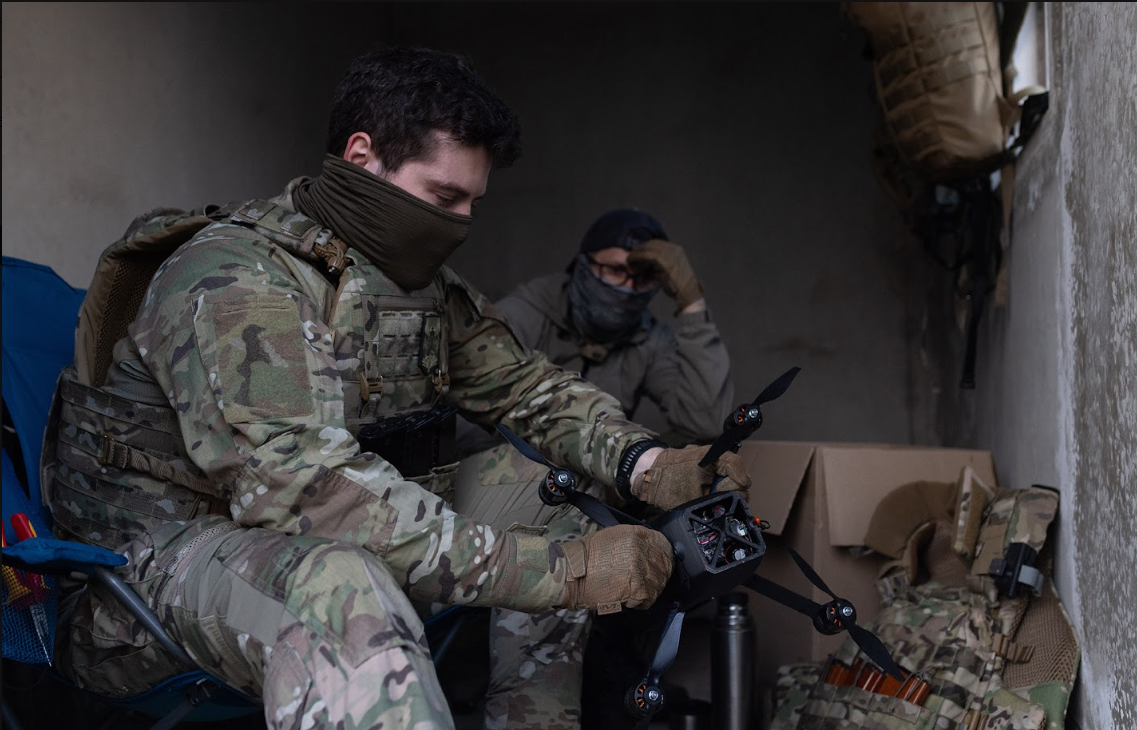 Smart drones designed to counter Shahed attacks are expected to make extensive use of artificial intelligence (photo: Getty Images)
As a result, interceptor drone operators today must have a significantly higher level of training than even experienced first-person-view drone operators. They simultaneously perform the roles of pilot, targeting specialist, and tactician, making decisions within seconds.
As for drone production itself, this sector is currently developing rapidly. Manufacturers face growing demand for relatively inexpensive means of destroying aerial targets and are expanding production. According to official statements by government officials, Ukraine produced about 100,000 interceptor drones in 2025. According to the Ministry of Defense of Ukraine, the plan for 2026 is to produce more than 7 million drones of various types, from first-person-view drones to interceptors, and the pace is expected to continue increasing.
What will interceptor drones look like in the future?
According to experts, a significant portion of interceptor drone operators' tasks will eventually be transferred to artificial intelligence systems. Artificial intelligence will be able to detect targets faster than humans, calculate interception trajectories, predict target maneuvers, compensate for the effects of electronic warfare, and choose the optimal moment for an attack.
This is especially relevant when countering jet-powered and high-speed targets, where humans are already approaching the limits of their physical ability to make decisions quickly enough.
"The future belongs to a hybrid model in which humans set the rules and oversee the system, while artificial intelligence performs most of the mathematical calculations and carries out the interception itself. This model will make it possible to scale air defense and counter the mass use of high-speed threats," added Valerii Zarubin, co-founder of technology company BlueBird Tech.