Ukrainian government speaks of a 'revolution' in the country's EU membership bid


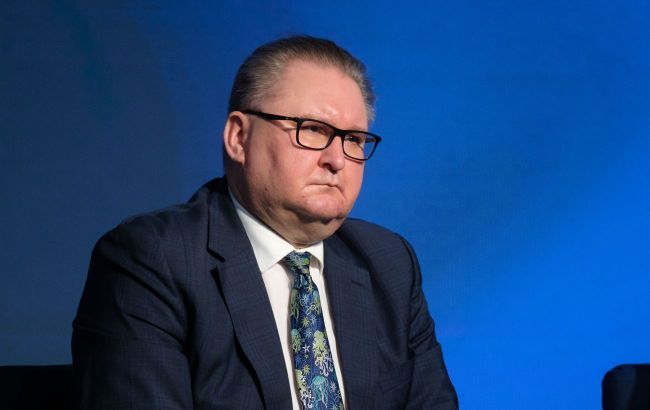 Photo: Taras Kachka (Vitalii Nosach, RBC-Ukraine)
Ukraine will receive all the benchmarks from the European Commission this week, the fulfillment of which will open the path to joining the European Union, according to Deputy Prime Minister for European and Euro-Atlantic Integration Taras Kachka.
"Right now, the circumstances have developed in such a way that Ukraine has received all the benchmarks across all clusters. We received them for three clusters in December. For the remaining three, I will receive them this week. That means the negotiation clusters are de facto open. This is already a revolution in the negotiation process," Kachka said.
According to him, the opening of a cluster has both political and factual aspects. The political moment is when the 27 member states vote for it. This is a kind of political "sacrament."
The factual aspect is when a government representative receives a letter stating that the member states have defined certain criteria, or benchmarks. The European Commission is then obliged, on behalf of the member states, to rely on these benchmarks so that the negotiation clusters can eventually be closed.
"In December, the political ‘sacrament’ did not happen, but I was handed these benchmarks. Previously, this could not be done. This had not been done with any country. But it was done with us and with Moldova. Accordingly, we now know what is required from us," the deputy prime minister added.
He also stressed that Ukraine can move quickly toward the EU. Everything that Ukraine is being asked to do consists of realistic tasks, requiring normal work from the Verkhovna Rada, the government, and other institutions.
After that, Ukraine and the 27 EU member states sit down together and create a working group to draft the treaty on the terms of accession to the European Union. This is where everything is determined: transition periods, what will apply and what will not, where member states want to introduce restrictions—for example, on the free movement of workers, because they may not want Ukrainian workers to immediately flood their labor markets.
"So right now, for us, it is simply homework. We are moving forward with it, and at the same time, let’s create this working group and determine these conditions. If we proceed in parallel, we remain within the negotiation methodology, which is very important to the EU. In this way, we shorten the path so that it becomes possible to sign the accession treaty already in 2027," Kachka added.
Background
Earlier, Ukrainian President Volodymyr Zelenskyy said that Kyiv wants to receive a clear date for joining the EU, emphasizing the need for clarity on this issue.
At the same time, it became known that the European Union is considering several options for incorporating Ukraine’s membership perspective into a future peace agreement. In particular, this could involve a step-by-step process with preliminary security guarantees for Kyiv.