Ukrainian drones hit key thermal power plant in occupied Crimea

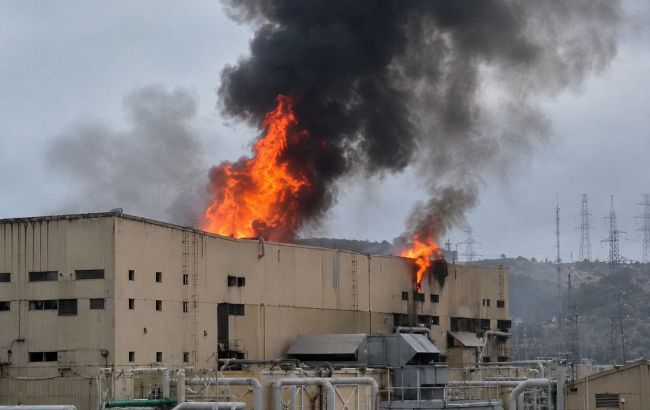 Photo: Balaklava Thermal Power Plant burns in Sevastopol (Russian media)
Crimea's Balaklava Thermal Power Plant generates nearly half of the electricity used on the Russian-occupied peninsula. But that has now changed, according to Ukraine's Special Operations Forces.
Ukrainian drones hit the Balaklava thermal power plant
Partisans from the Resistance Movement, together with the Deep Strike units of the Special Operations Forces, conducted a unique operation targeting the Balaklava Thermal Power Plant in Sevastopol. The strike took place overnight on July 14.
Preliminary information indicates that the turbine hall, including the cooling system of one of the Siemens SGT5-2000E turbines, was damaged.
If the pumping equipment was destroyed, repairs could take between two and five months, the Special Operations Forces said.
What is known about the Balaklava thermal power plant
The Balaklava Thermal Power Plant is the backbone of the power system in occupied Crimea. The peninsula's second major power source is the Tavriyskaya Thermal Power Plant in Simferopol. Together, the two facilities supply about 90% of the electricity consumed in the Russian-occupied Ukrainian peninsula, according to the Special Operations Forces.
Power plant works to support the Russian military
Occupied Crimea serves as a key military and logistics hub for Russia's armed forces.
A stable electricity supply is critical for:
- communications hubs,
- command centers,
- radar stations,
- electronic warfare systems,
- air defense systems,
- repair facilities,
- the Black Sea Fleet,
- military airfields,
- and other Russian military infrastructure.
"Strikes on electricity generation facilities in the Crimean bridgehead significantly undermine the Russian military's offensive and defensive capabilities, reducing its operational tempo and the resilience of its rear support," the Special Operations Forces said.
Earlier, on the night of July 14, the Special Operations Forces also struck the Gazprom Neftekhim Salavat refinery in Russia's Republic of Bashkortostan.
On the night of July 6, Deep Strike units targeted a Volgoneft-class Russian oil tanker and an oil terminal at the port of Kerch.
Also on July 6, Ukrainian drones flew more than 3,000 kilometers to strike the Omsk Oil Refinery, the largest refinery in Russia east of the Ural Mountains.