Ukraine war in 2026: Three scenarios analysts see

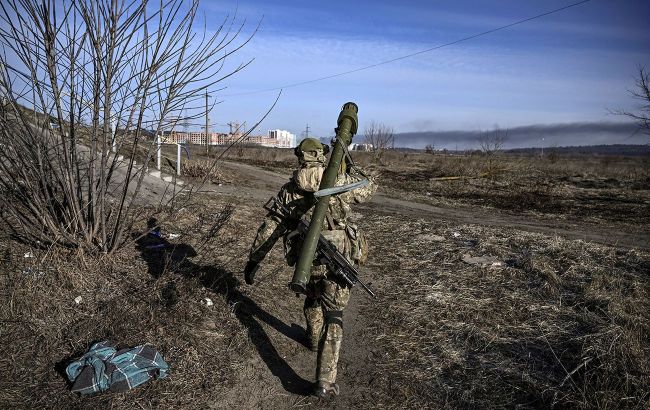 WSJ outlined three scenarios for development of war in Ukraine in 2026 (photo: Getty Images)
Despite the optimism surrounding the Abu Dhabi talks, experts predict either a war of attrition or pressure on Ukraine to make major territorial concessions, the Wall Street Journal reports.
The WSJ modeled three possible scenarios for developments in Ukraine in 2026. Analysts assume the war will continue until one of the sides exhausts its resources or willpower.
Talks in Abu Dhabi
According to US officials, recent meetings between the Ukrainian and Russian delegations in Abu Dhabi were held in an unexpectedly constructive atmosphere.
As the publication writes, "two delegations showed so much mutual respect, deference and good chemistry that at one point they almost seemed like friends."
However, the reality on the front line remains grim. Russia continues massive strikes on Ukrainian infrastructure, trying to break the resistance of cities. Russian President Vladimir Putin has not abandoned plans to subjugate Ukraine, despite diplomatic contacts.
Scenario 1: War of attrition continues
The most likely option is a fifth year of fighting, with negotiations going in circles. The Kremlin is confident that the Ukrainian army will break before the Russian economy does.
Ukraine, for its part, has resources to continue fighting and fears that giving up Donbas would become only a springboard for a new invasion.
But both sides also fear that the United States could harm them if Trump becomes angry over the stalemate. Ukraine still needs US intelligence and other support, while Russia is vulnerable to tougher sanctions. Therefore, each side seeks to show Trump that it is acting constructively and that "the enemy is to blame for the continued war."
Scenario 2: Ukraine bends under pressure
According to the publication, the biggest risk for Ukraine is that its army may eventually become exhausted.
If Ukraine runs out of strength, it may be forced to agree to a deal that would be difficult to endure.
This could include meeting Moscow's territorial demands, limiting Ukraine's military forces, and restoring Russian influence over life in the country, with only weak security guarantees from the United States.
Scenario 3: Russia tires of militarization
Russia's economy is stagnating, many non-military industries are shrinking, and high interest rates are taking a toll.
Low oil prices, Ukrainian long-range strikes on oil refineries, and actions by the United States and Europe against the shadow fleet of Russian tankers are putting pressure on the energy sector, on which Kremlin revenues depend.
Russia's business elite has long been dissatisfied with how the war distorts the economy, making it overly dependent on military production, as well as on China for components and oil purchases.
However, there are still no signs that Putin is concerned about negative reactions from the elites or Russian society.
"Still, Russia can't sustain its war indefinitely. Tighter sanctions and enforcement could shorten that time frame," the Wall Street Journal concluded.
According to analysts at the US-based Institute for the Study of War, a possible withdrawal of Ukrainian troops from Donbas would not stop Russian aggression.
Public statements by Moscow about readiness for peace through territorial concessions are merely a cover for broader geopolitical ambitions.
Russia's military leadership has already stated the need to create buffer zones in the Kharkiv, Sumy, and Dnipropetrovsk regions.