Ukraine strengthens Donbas with new defense system aimed at Russia

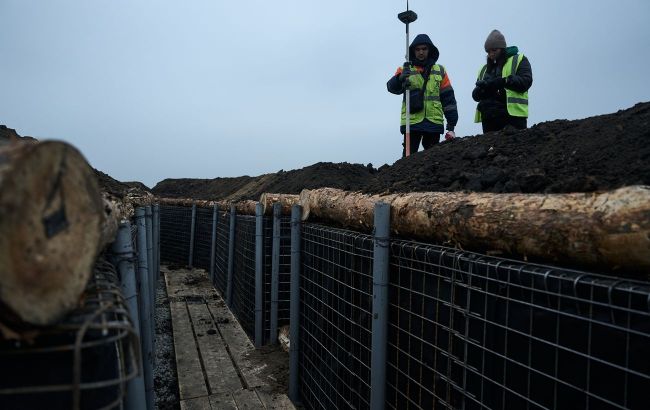 Defensive line (Photo: Getty Images)
In eastern Ukraine, a multi-layered defensive line has been established to halt further advances by Russian forces and protect Donbas cities that remain under Ukrainian control, according to The Economist.
Over recent months, the Ukrainian army has significantly strengthened fortifications in Donbas. These are not isolated positions, but an extended system of engineering defenses designed to repel large-scale offensive operations.
These defensive lines are already being described as a key factor in containing the enemy along one of the most challenging sections of the front.
Donbas multi-layered defense
As The Economist reports, Ukrainian forces have built defensive lines up to 200 meters wide.
They include several belts of barbed and anti-infantry wire, anti-tank trenches about two meters deep and up to three meters wide, as well as embankments made from excavated soil.
In some areas, additional trenches, concrete dragon’s teeth, and minefields have been installed.
“The excavated soil has become a defensive berm. Then comes more wire, a second anti-tank ditch and berm and then another strip of wire. In some places there is a third ditch, “dragon’s teeth” (tank traps made of concrete) and mines. The lines are part of Donbas’s fortress belt,” the authors write.
Role of drones and current risks
Viacheslav Shutenko, commander of the drone battalion of the 44th Mechanized Brigade, said that the fortified areas are under constant drone surveillance, significantly complicating any attempts by Russia to break through.
In his assessment, without such defensive lines in 2022, the situation could have developed very differently, to Ukraine’s disadvantage.
Peace talks factor
At the same time, journalists note that the fate of these fortifications largely depends on the terms of a possible peace deal. Moscow insists on gaining control over parts of the Donetsk region that it has failed to seize by military force.
Under one of the scenarios being discussed, the region could be designated a neutral demilitarized buffer zone and possibly a free economic zone, though its parameters remain undefined.
In Ukraine, such proposals are viewed as a risk that could allow Russia to bypass existing defenses. Despite the fortifications, pressure on the front persists: much of Pokrovsk has been lost, and defensive elements are already appearing on the streets of Kostiantynivka.
If Kostiantynivka were to fall, Druzhkivka, Kramatorsk, and Sloviansk would be at risk. The nearest Russian positions are just 17 kilometers from Kramatorsk, which is increasingly coming under drone and missile attacks.
Pokrovsk and Myrnohrad remain key hubs of Ukraine’s defense and are heavily fortified. Holding these directions has continued for more than a year: despite repeated Russian claims about timelines for capturing the entire Donbas, those plans have not been realized.
A decrease in fighting intensity around Pokrovsk does not signal that Russian forces have abandoned attempts to take the city. The direction remains fully fortified, isolated breaches through engineering obstacles are known to the Ukrainian command, which has contingency plans for various scenarios and overall keeps the situation under control.