Ukraine's officer reveals challenge of evacuating fallen soldiers with robots

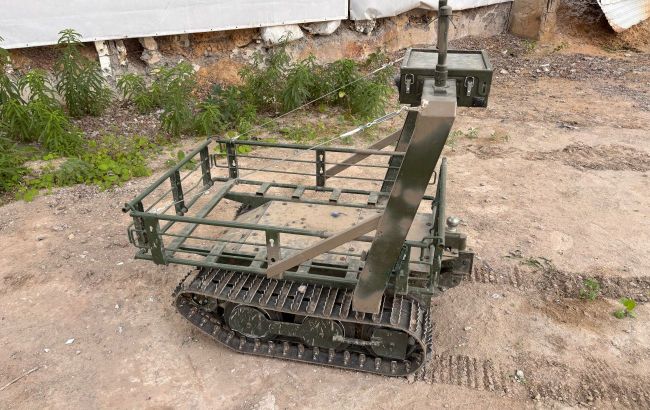 Photo: UGV at KILLHOUSE Academy (Lev Shevchenko, RBC-Ukraine)
Unmanned ground vehicles (UGVs) are technically capable of removing the bodies of the fallen from the combat zone. However, there are currently no mass-produced devices for remotely loading a body onto a platform, according to Viktor Pavlov, an officer with the UGVs Battalion of the 3rd Infantry Brigade of the Third Corps of the Armed Forces of Ukraine and founder of the KILLHOUSE Academy UGVs school.
Why loading, rather than evacuation itself, is the main problem
According to Pavlov, the UGV is capable of removing the deceased from the danger zone, but first the body must be loaded onto the platform. There is often no infantry nearby that could do this without risking their own lives, so not only the evacuation but also the loading itself must be carried out remotely.
"There are currently no off-the-shelf systems that fully fulfill this task," notes the school's founder.
At the KILLHOUSE Academy, cadets are already learning the general principles of an evacuation mission. It will only be possible to fully practice the remote loading of a casualty once the relevant technical solutions become mass-produced and available to units.
Evacuation missions are rare and the most challenging for UGVs
According to another school representative with the call sign Broker, evacuation missions are carried out much less frequently than logistical ones: 95% of all UGV tasks involve the delivery of cargo. Evacuations are carried out less frequently due to the complexity of execution—not all operators are psychologically prepared for such tasks, and the missions themselves require significantly more training than logistical ones.
The DevDroid-manufactured Droid TW-12.7 UGV was hit five times by FPV drones during a combat operation but retained its ability to move and fire. It took a sixth hit to take the robot out of action.