Railway track on Crimean Bridge damaged by Ukrainian Neptune missiles

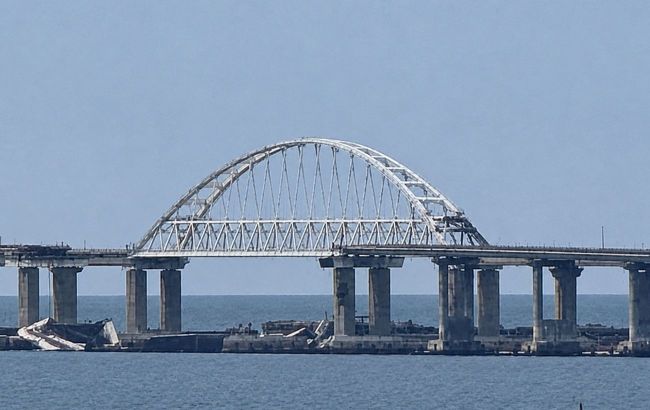 Photo: Ukrainian Neptune missiles damaged the railway track on the Crimean Bridge (Getty Images)
Ukrainian Navy's Neptune coastal missile systems struck the Crimean Bridge with missiles overnight on November 19, according to the General Staff of the Armed Forces of Ukraine.
According to reports, traffic across the bridge has been suspended. The railway track has been damaged.
The bridge is the main land route used by the Russian army to supply its occupation forces in southern Ukraine with fuel, ammunition, and equipment. Russia built it as a symbol of its occupation of the peninsula and spent years claiming that it was "unreachable" and "invulnerable."
The General Staff noted that the Kerch crossing is just one link in the chain supplying the enemy's front lines. Step by step, Ukraine's Defense Forces are reducing the capabilities of the rest of Russia's military logistics network as well.
Damage to the road surfaces of three other road bridges has been confirmed following previous strikes: on November 15, across the Siverskyi Donets River near Pryshyb in the Luhansk region and across the Mius River near Taganrog in Russia's Rostov region; on November 14, across the Mius Estuary near Lakеdemonivka, also in the Rostov region.
Every bridge put out of action means longer detours, congestion at crossings, and delayed convoys carrying ammunition and fuel that Russian forces on the front line are waiting for.
Strikes on the Crimean Bridge
On the morning of November 19, the General Staff of the Armed Forces of Ukraine "congratulated" Lisbon's Vasco da Gama Bridge on being named the longest bridge in Europe. The military was hinting at the overnight attack on the Crimean Bridge, which previously held that title.
Earlier this week, Ukraine struck the Crimean Bridge for the first time on November 16.
At the time, the occupation administration suspended road traffic, and traffic jams stretching for several kilometers formed on the approaches to the crossing.
Kremlin spokesperson Dmitry Peskov later claimed that the damage to the bridge was allegedly minor. However, images published later showed damage to the road surface and deformation of one of the structure's arches.
On the night of November 17, the Crimean Bridge came under attack again. A series of powerful explosions rang out near the crossing over the Kerch Strait, after which the occupation authorities announced the suspension of traffic.
It later became known that the bridge had partially collapsed, with an arch and a section of the road span falling into the water.