A new 'Yalta' in the making? Why Trump, Xi and Putin need the summit and what's at stake for Ukraine


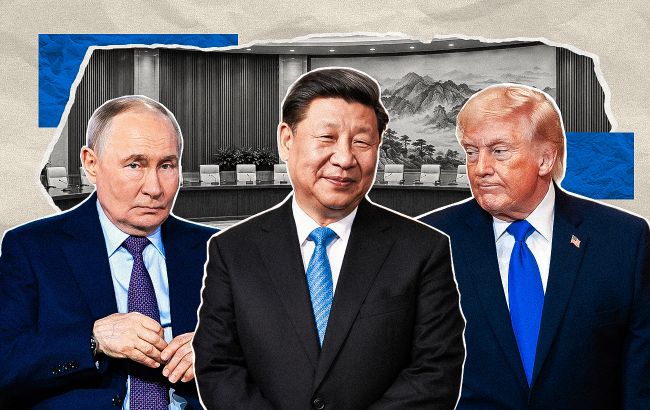 Why Trump, Xi and Putin need the summit (RBC-Ukraine collage)
Today, November 19, the leaders of the United States, China, and Russia are meeting in Shenzhen, China, on the sidelines of the APEC summit. But the gathering of the leaders of the world's two most powerful nations and Russia's dictator will not be about "dividing the world into three." Instead, the talks are expected to focus on more down-to-earth matters.
What exactly will Trump, Xi Jinping, and Putin discuss, what is each leader hoping to achieve, and how could the meeting affect Ukraine? The answers to these questions can be found in the RBC-Ukraine analysis.
Key points:
- No breakthroughs expected: Don't expect any grand deals from the summit – each leader is primarily focused on boosting his own image.
- Trump's ambitions: The US president needs to demonstrate success on the world stage before Democrats take control of Congress in January.
- Xi's interests: China wants to improve relations with the United States without abandoning Russia and Iran.
- Putin's calculations: The Kremlin aims to further ease Russia's isolation, persuade Trump to put pressure on Ukraine, and continue the war without facing new sanctions.
- The only tangible outcome: The leaders are expected to agree to ban the use of artificial intelligence in controlling nuclear weapons.
Just a few weeks ago, some experts and social media users were voicing fears that the trilateral meeting could become a new Yalta Conference. At the 1945 postwar conference in Crimea, the leaders of the United States, the Soviet Union and Great Britain laid the foundations for the post-World War II international order for decades to come.
But as the meeting approached, its actual agenda became increasingly limited. Even the format of the summit remained a matter of disagreement.
According to The Wall Street Journal, China wanted the summit to follow a tightly scripted format, with a pre-written statement to be read out and little room for discussion.
Trump's team, meanwhile, pushed for a more informal format that would allow the three leaders to exchange views more freely rather than read prepared talking points.
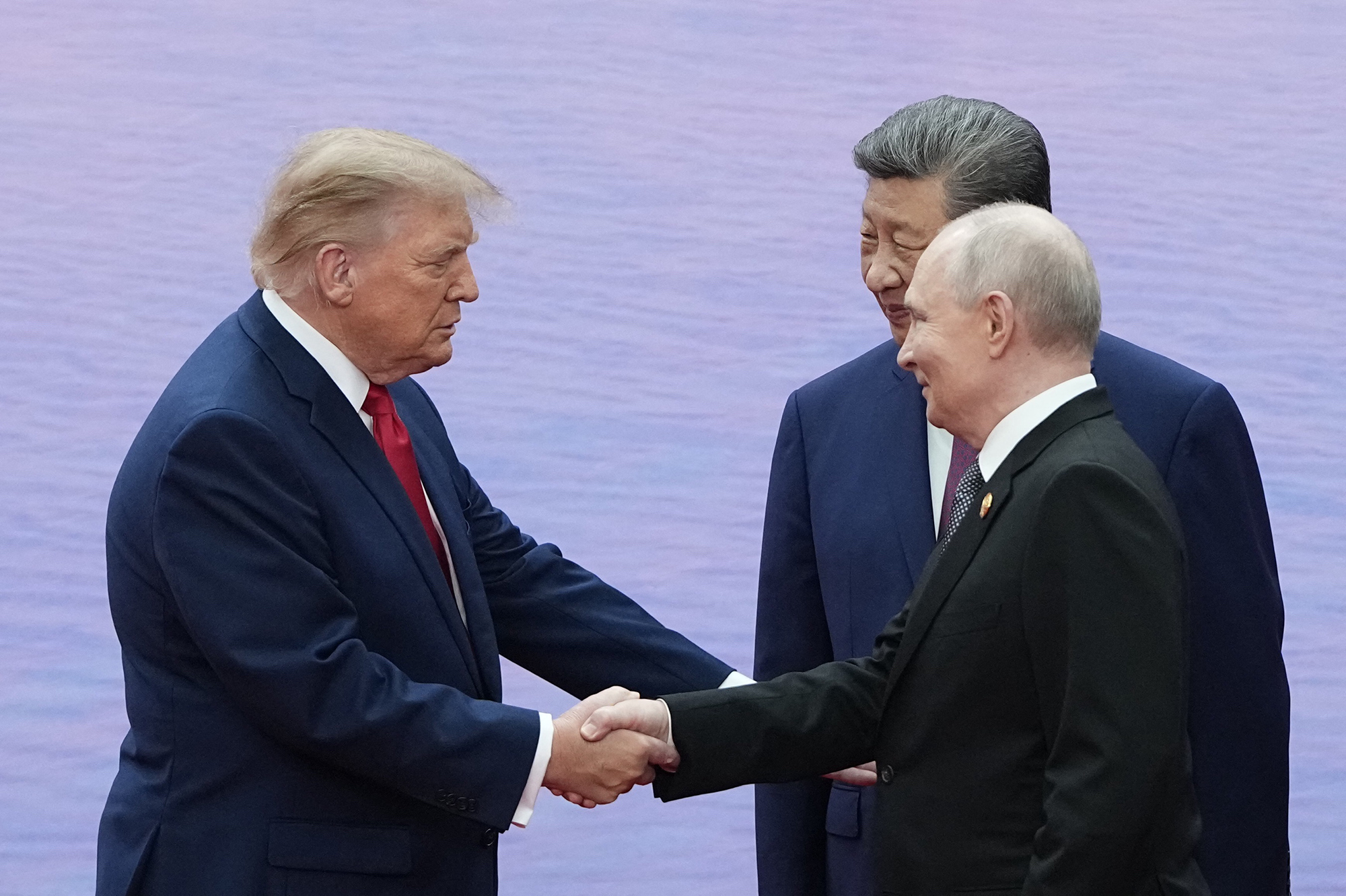
Donald Trump, Vladimir Putin and Xi Jinping (Photo: Getty Images)
One reason for the scaled-back agenda is the defeat of Trump's party in the US midterm elections. This has inevitably raised questions about whether the US president will be able to deliver on any commitments he might make.
At the same time, bilateral talks between the United States and China remain far more important to both sides. They are scheduled for November 19, less than two hours before the trilateral summit.
Since Trump's return to office, the United States has launched a trade war against half the world, including China. The confrontation is now more frozen than resolved. Against this backdrop, China imposed restrictions on exports of rare earth metals and other raw materials to the United States – resources critical to most of America's high-tech industries.
Beijing is using its near-monopoly – controlling around 80% of global rare earth processing – as its main leverage. Meanwhile, the United States has restricted exports to China of advanced chips needed to develop artificial intelligence.
During the talks, Beijing is seeking to secure an easing of restrictions on chip exports. However, reaching an agreement will now be much harder following the recent high-profile Nvidia scandal and the departure of its longtime CEO, Jensen Huang.
Nvidia's chief executive had long lobbied for easing export restrictions on the Chinese market. However, investigations into sanctions evasion and his company's ties to China have effectively given Washington's hawks a free hand, strengthening calls for a complete technological blockade of China.
A face-to-face meeting with Trump is equally important for Putin. The agenda includes the outcome of recent consultations in Abu Dhabi and a number of bilateral projects. Meanwhile, the Chinese and Russian leaders have already had a chance to coordinate their positions. On the morning of November 18, Putin and Xi held bilateral talks, during which they also discussed Ukraine in a smaller-format meeting.
As for the trilateral summit itself, the White House has officially confirmed that Trump does not plan to discuss the Russian-Ukrainian war or denuclearization of the Korean Peninsula. However, Donald Trump is known for frequently straying from the official agenda. Before departing for Asia on November 16, he personally shifted the focus, saying he also planned to discuss Russia's war against Ukraine.
Instead, according to the South China Morning Post and statements by US officials, the leaders will focus on nuclear-related issues where they can find common ground, while also touching on the situations surrounding Iran and North Korea. Washington is deliberately keeping expectations low, openly warning that no specific agreements or treaties are expected to be signed following the talks.
"We have greater concerns about the bilateral meetings. As for the Xi-Trump-Putin format, the very fact that such a meeting is taking place sets a bad precedent for us and for Europeans – one that could become standard practice," a source familiar with the matter in Beijing told RBC-Ukraine.
According to Axios, citing diplomatic sources, Europe is bracing for bad news for Ukraine amid fears that the Kremlin will try to steer the actual agenda of the meeting in its favor. Nevertheless, each side has its own calculations and objectives, which will directly shape the outcome of the summit.
Trump's interests
According to Hung-jen Wang, Executive Director of the Institute for National Policy Research (INPR) in Taiwan, Trump's main goal is to regain the diplomatic initiative following the Republican Party's defeat in the November 3 midterm elections.
With Democrats set to take control of both chambers of Congress in January, Trump has relatively little time left to demonstrate his ability to deliver significant foreign policy results without risking having them blocked by Congress.
"A potential meeting with Xi Jinping and Vladimir Putin would allow him to present himself as a central figure in managing some of the world's most serious security challenges. However, I would not interpret this simply as an attempt to recover domestic political support," the expert told RBC-Ukraine.
Trump also has a broader strategic interest: reducing the costs of confronting China, Russia and Iran simultaneously.
"For the United States, it is important that all these issues do not become simultaneous sources of concern or create either a financial or operational burden. Even in the context of the elections, we understand that there is still time until January. But after January, it will be difficult for Trump to respond exactly as he wants – very, very quickly," Dmytro Sherenhovskyi, an international relations expert and vice-rector of the Ukrainian Catholic University, told in a comment for RBC-Ukraine.
That is why the White House is now interested in a relatively "calm format" of dialogue that would allow Washington to address each of these complex challenges separately and in a measured way, he says.
After the last US-Russia New START treaty expired in February, nuclear arms control became a convenient basis for bringing both Moscow and Beijing into the dialogue. China, for its part, is actively expanding its nuclear arsenal.
At the same time, the United States has been inconsistent on nuclear weapons. Earlier this year, Trump planned to expand and modernize the US nuclear arsenal to counter Russia and China. Indeed, this was one of the reasons the aforementioned New START treaty was allowed to expire.
"The problem is that China says: we are not going to limit anything because our arsenal is smaller than yours. Once we have as many nuclear weapons as you do, then we will talk," Polina Sinovets, head of the Odesa Center for Strategic Studies and Nuclear Nonproliferation, told RBC-Ukraine.
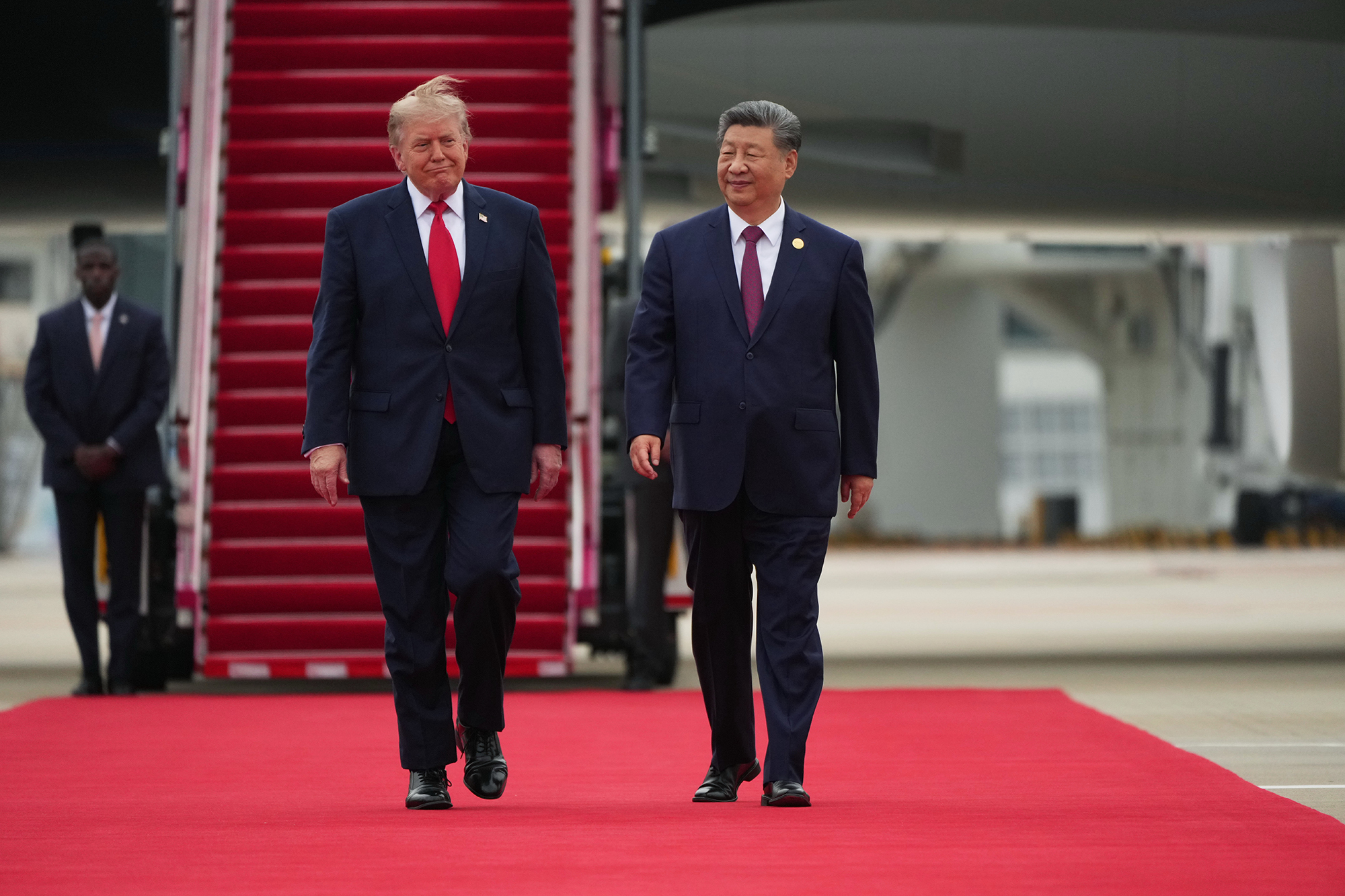
Donald Trump and Xi Jinping (Photo: Getty Images)
Read also: World without limits: How Trump and Putin open nuclear arsenals of US and Russia
Discussions about the war in Iran and possible behind-the-scenes talks on Ukraine could give the White House a path to faster diplomatic results. However, this US approach has mixed implications for the Indo-Pacific region, Wang notes.
Stabilizing relations between Washington and Beijing could reduce the risk of a direct military confrontation, but it does not guarantee the security of US allies, particularly Taiwan, which China could continue to pressure through so-called gray-zone tactics even while engaging with Trump on other issues.
Significantly, Beijing launched another round of large-scale military exercises around Taiwan just ahead of the summit.
China's ambitions
Of the three participants, China has been the most restrained, carefully commenting even on the possibility of a meeting between Xi, Trump and Putin. Last week, Chinese Foreign Ministry spokesperson Guo Jiakun said Beijing was maintaining communication with relevant parties regarding the meeting. This is broadly consistent with China's diplomatic style.
Beijing likely sees Trump's weakened domestic political position as an opportunity to gain greater diplomatic leverage over him. At the same time, Xi Jinping is unlikely to seek an open confrontation by exploiting the Republicans' election defeat.
"China has strong reasons to preserve the relatively constructive relationship established through recent high-level exchanges, particularly while major economic and technological disputes remain unresolved," Wang emphasizes.
According to him, hosting a meeting involving the leaders of the United States and Russia carries significant diplomatic value for Xi Jinping. It reinforces China's image as a major power capable of bringing competing international players together.
Nevertheless, Beijing is likely to remain cautious about the substance of any trilateral agreements. The expert stresses that China does not necessarily share Trump's priorities.
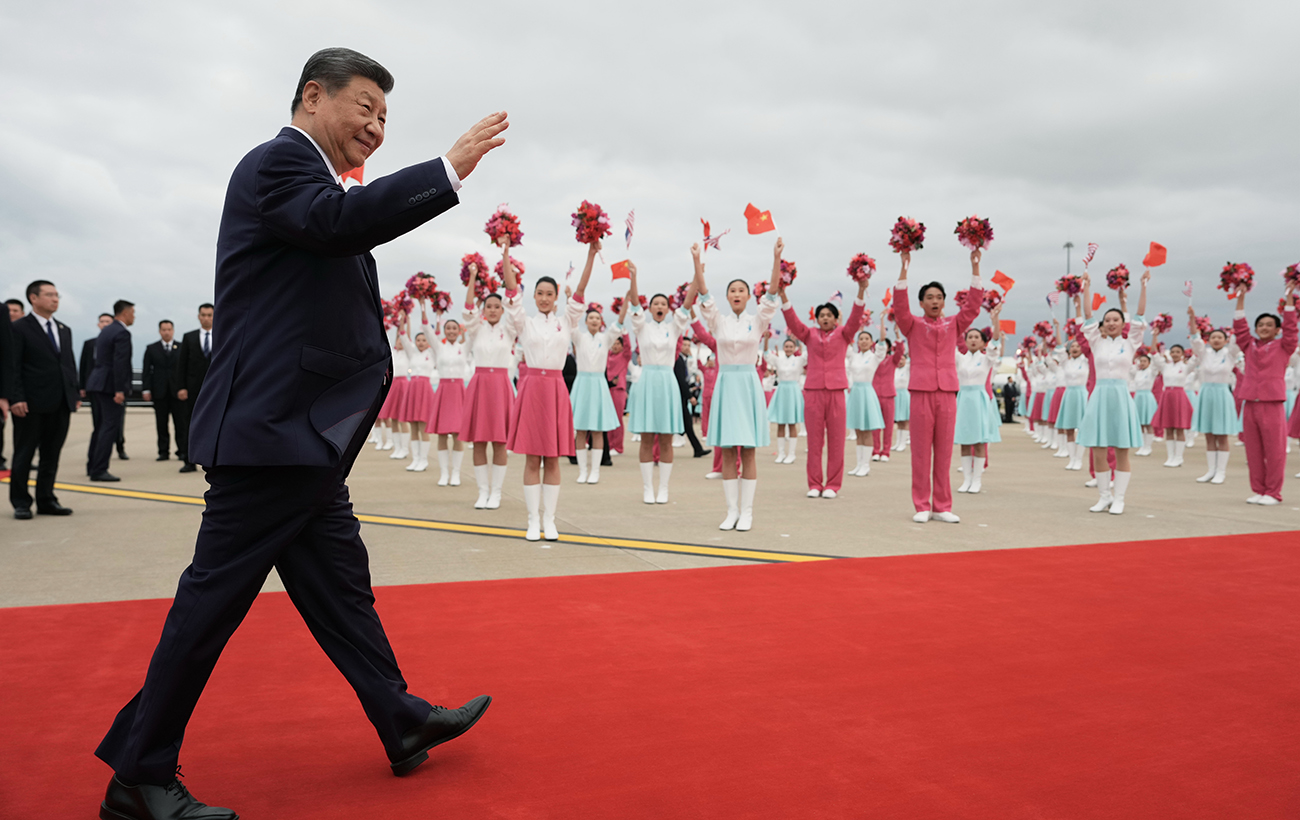
Xi Jinping (Photo: Getty Images)
"On nuclear arms control, Beijing remains reluctant to accept the same obligations as Washington and Moscow because of the substantial differences in their nuclear arsenals," Wang points out.
Regarding Iran, China is interested in preventing further instability in the Middle East and protecting its economic and energy interests. However, Wang believes Beijing is unlikely to fully support Trump's pressure campaign against Tehran, especially if it damages China's relations with Iran.
China also values its strategic partnership with Russia and is unlikely to support an agreement that would significantly weaken Moscow's position.
"Xi would prefer a summit that produces an image of responsible great-power diplomacy without requiring China to make major strategic concessions. The central risk for Beijing is being drawn into negotiations where Washington expects China to exercise pressure on Russia or Iran in ways that conflict with Chinese interests," Wang assumes.
However, despite China's reluctance, the issue of Ukraine is unlikely to be avoided, a source familiar with the matter in Beijing told RBC-Ukraine.
The source believes that Xi will seek to play more of a role as a moderator in the discussion, without taking a clear position. Most likely, the message will be that if negotiations make progress, China could consider becoming involved in the peace process at some stage.
As for Taiwan, Beijing could also try to use the atmosphere of US-China cooperation to promote its own vision of regional stability.
This makes it particularly important to distinguish between agreements that genuinely reduce military risks and diplomatic arrangements that could restrict the security options available to smaller regional players.
Putin's calculations
Compared with Xi and Trump, Putin is the most eager to engage in global geopolitics over Ukraine, despite Russia carrying the least economic weight of the three countries. One telling detail is that Xi Jinping personally greeted Trump at the airport, while Putin was welcomed by Cai Qi, the fifth-ranking member of the Chinese Communist Party's Politburo Standing Committee.
During recent trilateral negotiations in Abu Dhabi, Moscow publicly put the issue of a "new pan-European security architecture" on the agenda for the first time in a long while.
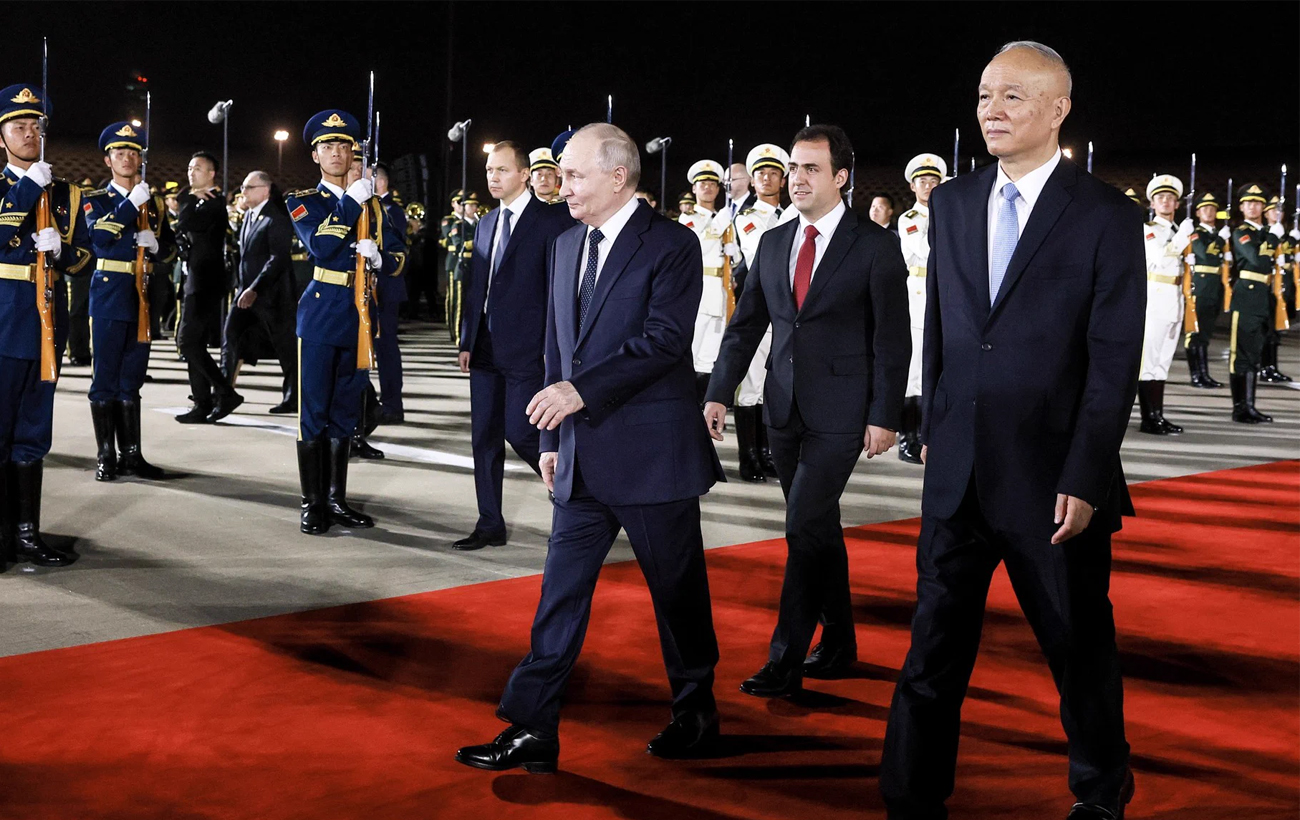
Vladimir Putin (Photo: Russian media)
Read also: Two days in Abu Dhabi, Putin's demands, and hope for POW swap: Results of talks
For the Kremlin, the war in Ukraine is just one part of a broader bargaining process over spheres of influence – a concept that sounds rather archaic in the 21st century. Moreover, Putin is trying to appeal not only to Trump, who wants to reduce the US military presence in Europe, but also to Xi Jinping.
As Dmytro Sherenhovskyi explains, Moscow and Beijing have a situational convergence of interests when it comes to putting pressure on Europe. The Kremlin is offering its military capabilities in exchange for economic support and fewer European barriers to Chinese businesses.
"Russia is trying to sell a classic Cold War or Congress of Vienna-style narrative: let's settle all the questions about the future world order. This is the kind of game it desperately wants to play, and it is trying to sell it to both the Chinese and the Americans. But it is doubtful that either side is buying it," the expert notes.
As for Putin's immediate tactical objectives, Wang says his main goal is to secure political agreements that consolidate the Russian army's current battlefield gains on terms favorable to the Kremlin.
A meeting with Trump and Xi would allow Putin to portray Russia as an indispensable player in global security rather than a country mired in prolonged diplomatic isolation because of its years-long armed aggression against a neighboring state.
"Putin would likely seek to persuade Trump that ending the war requires Ukraine to accept certain Russian demands, potentially involving territorial arrangements, security guarantees, or limitations on Ukraine's future strategic options," Wang believes.
In his view, such a meeting could allow Moscow to influence Washington's negotiating position before a final settlement is reached.
Putin would also benefit from the United States focusing on a diplomatic settlement rather than putting pressure on Russia and selling weapons to Ukraine, however limited both of these processes may be.
The Russian leader also hopes that China's participation will create the impression that another major power supports Moscow, even if Beijing is not prepared to openly endorse Russia's specific demands on Ukraine.
"However, I would not assume that Trump and Putin necessarily share the same objectives. Trump wants to demonstrate that he can end the war, while Putin wants an outcome that preserves Russia's territorial and strategic gains," the expert notes.
In the short term, the interests of the US and Russian leaders may overlap. Strategically, however, they remain different.
The main risk for other countries lies in the precedent such a meeting could set, Wang adds. Any agreement reached behind Ukraine's back that rewards territorial aggression without providing reliable security guarantees would send a dangerous signal to other revisionist powers, including over Taiwan.
However, no real breakthroughs or major concessions should be expected from the summit, Sherenhovskyi emphasizes. Even so, a lack of tangible results would still count as a win for the Kremlin if Washington does not increase pressure on Russia.
"A group photo is enough for Russia. The main issue for Moscow is making sure Washington does not worsen its alternatives: no new sanctions and no increase in support for Ukraine, but rather some pressure on Kyiv. Having the opportunity to continue the war and wait for a more favorable moment without excessive external pressure from the United States and China is already a win for Russia," Sherenhovskyi concludes.
Potential tangible outcomes
Against this backdrop, the only area where the three leaders could realistically reach concrete agreements is future security. According to the South China Morning Post, the main proposal concerns a ban on using artificial intelligence in nuclear command-and-control systems.
As Polina Sinovets explains, this would currently be more of a precautionary measure than a solution to an existing problem. The nuclear sector is extremely closed and still relies on infrastructure dating back to the 1960s–1980s, she says.
Even Russia's well-known automated Perimeter system (also known as the Dead Hand) is not connected to artificial intelligence. It operates according to a fixed algorithm and responds only to external parameters, such as critically high radiation levels combined with the absence of a signal from the country's leadership.
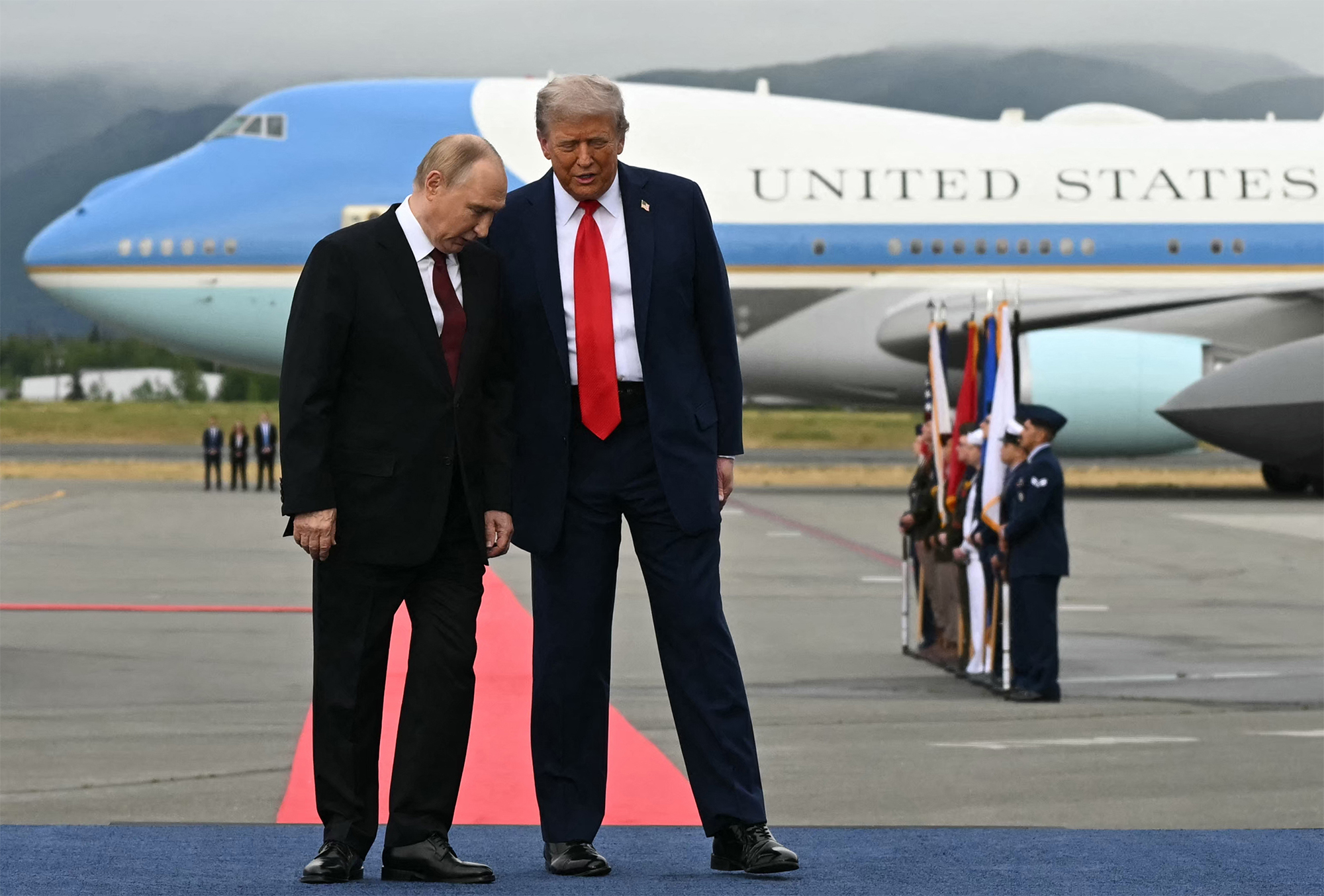
Donald Trump and Vladimir Putin (Photo: Getty Images)
"Artificial intelligence is not actually being used in the nuclear sector at present because of concerns about large language models (LLMs). In various simulations, they have demonstrated rather aggressive behavior. In other words, when they detect a risk, they do not try to avert it. Instead, they are more inclined to launch a first strike," Sinovets told RBC-Ukraine.
The expert stresses that if the leaders of the three countries approve such a measure, it would primarily be a preventive agreement for the future.
"Such an agreement could simply be intended to prevent artificial intelligence from entering nuclear command-and-control systems, because that would be quite dangerous," she adds.
This is yet another reminder that the world is far too complex to be divided up at meetings like this. Trying to redraw today's world according to the templates of the previous century simply will not work.