Ukraine's battlefield lesson: Why Western armies still underestimate ground robots


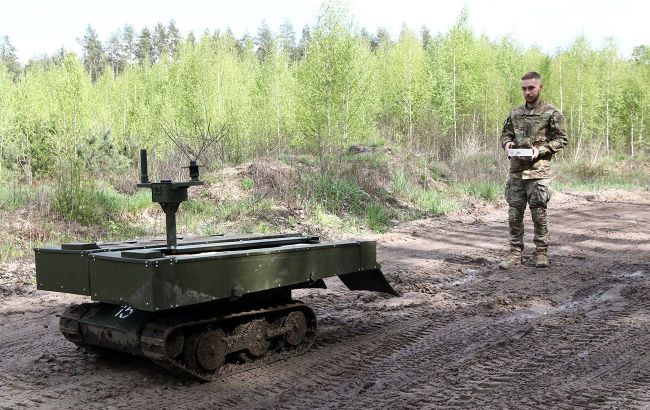 A robotic ground vehicle in Ukraine (photo: Getty Images)
Western countries have yet to fully recognize the role of robotic ground vehicles in modern warfare. That is likely to change only when they face prolonged combat, a large-scale FPV drone threat, and heavy battlefield losses themselves, according to Ukrainian defense technology experts.
Why the West remains cautious about ground robots
According to Oleg Fedoryshyn of DevDroid, the West has yet to undergo the shift in perspective and reassessment of how warfare has changed that the Ukrainian military has already experienced.
Western partners are showing interest in ground robots, but they will fully recognize their critical role only after their first large-scale ground operation. Attitudes toward new technologies usually change only after direct exposure to the problem on the battlefield.
As an example, Fedoryshyn points to interceptor drones. Interest in them surged only after it became clear that expensive air defense missiles were insufficient to shoot down large numbers of cheap aerial targets.
A similar scenario awaits robotic ground vehicles. Western countries will begin deploying robotic systems on a large scale when they face challenges such as:
-
Prolonged ground operations;
-
A constant threat from FPV drones;
-
Heavy personnel and equipment losses.
Western partners could gain such experience in the event of a potential Russian offensive against a European country, a conflict over Taiwan, or NATO's involvement in another prolonged war.
The vulnerability of heavy armored vehicles
The US military is already observing how FPV drones, once considered a secondary threat, are capable of striking even expensive helicopters. According to Fedoryshyn, heavy armored vehicles are likely to undergo a similar reassessment. They cannot be written off entirely, but their role and place on the battlefield are changing irreversibly.
Taras Ostapchuk, CEO of Ratel, emphasizes that the war in Ukraine has shown that conventional armor alone no longer guarantees protection. Due to the widespread use of drones, minefields, and aerial reconnaissance, any vehicle remains an easy target.
For this reason, the United States and Europe are gradually coming to understand that robotic ground vehicles are not merely a supporting tool, but a key element of the modern military.
As previously reported, the danger zone for civilian vehicles used by the military has expanded to 40 kilometers from the front line. At that distance, Russian forces are increasingly targeting supply routes, making the use of ordinary pickup trucks and cargo vehicles result in unnecessary losses.