Ukraine's AI-powered airfield blockade system among winners at NATO competition

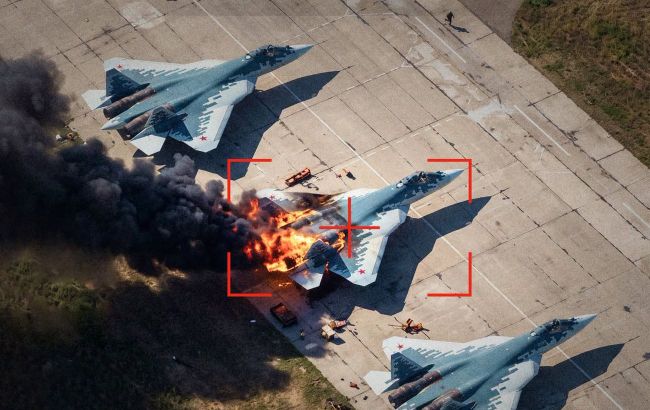 Photo: A Ukrainian AI-based system for blocking airfields won a NATO competition (mod.gov.ua)
Companies from Ukraine, Czechia, and Poland were named winners of the Persistent Airfield Denial innovation competition, organized by NATO Command and the NATO-Ukraine Joint Center, according to the Ukrainian Ministry of Defense.
The goal of the competition is to find solutions for the long-term denial of enemy airfield infrastructure and aviation.
The Persistent Airfield Denial challenge places particular emphasis on the autonomy of solutions, their scalability, their resilience to electronic warfare (EW) measures, and their ability to operate under conditions of limited access to navigation and communication systems.
A key feature of the challenge was the incorporation of Ukrainian combat experience into the evaluation of the proposed technologies. The solutions were assessed based on their novelty and their applicability in a modern combat environment.
Winners
First place went to the Czech team LPP Holding, which presented a long-range solution designed to operate with minimal reliance on external control.
Second place was awarded to innovators from Poland for a comprehensive proposal for the pre-planned destruction of enemy airfield infrastructure elements.
Third place went to developers from Ukraine, who proposed an artificial intelligence module for target acquisition. The solution is designed to increase the autonomy and accuracy of strike systems.
Who selected winners
The organizers received over 60 submissions for the competition. During the challenge finals in Warsaw, nine teams presented their solutions. The panel of experts and jury members from Ukraine included representatives of the Armed Forces of Ukraine and the Ministry of Defense of Ukraine.
On behalf of NATO, the finalists' proposals were evaluated by representatives of NATO commands, as well as the NATO Defense Innovation Accelerator (DIANA).
The next stage will involve testing and field trials of the solutions, which will allow for an assessment of their effectiveness and potential for further scaling.
Earlier, the Ukrainian Armed Forces attacked the Rostov-on-Don airfield. On the same day, according to Fire Point, the largest crude oil processing units at the Ryazan oil refinery, which account for over 77% of the refinery's total capacity, were also struck.
Ukrainian drones struck Russian Mi-35 and Mi-8 helicopters at the Taganrog-Central airfield in the Rostov region.