Ukraine helps UK build hunter-killer drone swarm

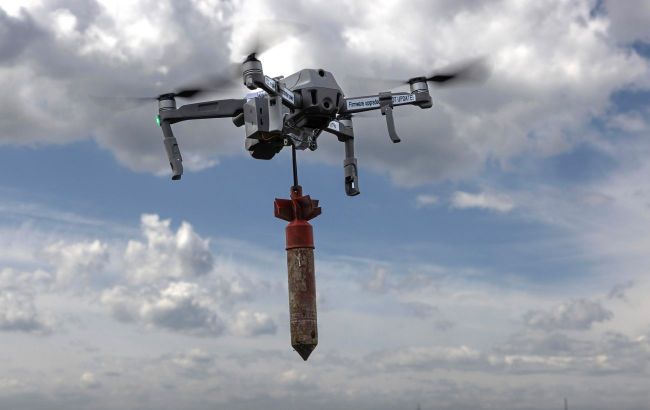 The war in Ukraine is a driving force for drone technology (Photo: Getty Images)
British defense companies have developed a swarm of eight AI-powered autonomous drones in just four months, capable of independently finding and destroying targets. The tests took place in Wales, and the technology is now being prepared for adoption by the British Army, according to The Telegraph.
How it works
Eight quadcopters, working as a collective brain powered by AI, took off autonomously. Two reconnaissance drones ahead scanned the terrain, while the rest tracked targets simulating an armoured column. Once the targets were located, the swarm received permission to attack from a human operator and carried out a simulated bombing strike.
Despite the system's autonomy, the decision to use lethal force remains with a human. The developers insist: the AI identifies and tracks the target, but only an operator can press the metaphorical button.
Why this matters
In Ukraine, drones are already responsible for more than 90% of battlefield combat losses. The kill zone — over 19 kilometres deep — is constantly patrolled by drones, from reconnaissance to kamikaze types. Russia, for its part, is developing its own drone swarms.
British developers received assistance from Ukraine, a recognised world leader in drone warfare. According to the project manager, the pace of change is terrifying — and there's no room to fall behind.
Funding problem
The company Applied Intuition has conducted over 200 test flights but is now waiting for the Ministry of Defence to decide on further funding. The UK's defence investment plan was supposed to be released last autumn, but has been delayed due to disagreements between the Ministry and the Treasury. The industry warns that the delay is jeopardising entire projects and could drive smaller companies into bankruptcy.
Sweden has successfully launched its first military satellite into orbit, designed to monitor Russia. The spacecraft — about the size of a washing machine — will be able to control the waters of the Baltic Sea. It is the first in a series of projects aimed at strengthening the country's defence capabilities.
Meanwhile, according to analysts, Moscow is already laying the informational groundwork for a possible attack on the Baltic states. The Kremlin is unhappy with NATO's control over the region and with the fact that Ukrainian drones are using the airspace of the Baltic countries.
In response, the UK, together with its allies, is assembling a new naval task force to counter Russia. London is taking a hard line against Kremlin provocations in the Baltic and the North Seas. The main goal is to be ready to engage in combat operations immediately.