Ukraine has battlefield edge US is now trying to catch up with

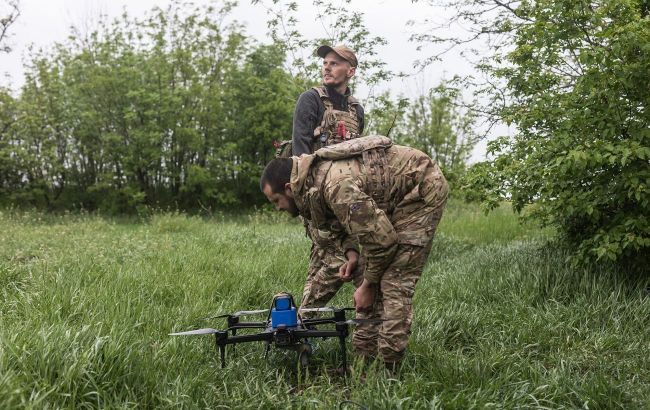 Delta has become the "nervous system" of Ukraine's drone army (photo: Getty Images)
Ukraine's Delta system combines data from drones, radio intercepts, and satellite imagery into a single platform that detects and assigns targets among thousands of reconnaissance and strike drones. This technology has played a significant role in helping stop Russia's advance, The New York Times reports.
What is Delta?
It is a Ukrainian program that brings drone video, radio intercepts, and satellite imagery together in a single system and then automatically assigns detected targets among thousands of reconnaissance and strike drones. In effect, Delta creates a multi-kilometer "kill zone" where anything that moves can be detected and struck within seconds.
Colonel Artem Martynenko, who oversees the program's development at the Ministry of Defense, called Delta the "nervous system" of the drone army that helped reduce the Russian offensive almost to zero.
How it was developed
The system was developed back in 2014 by the volunteer group Aerorosvidka, which sought to speed up the transfer of data from reconnaissance drones to artillery units. Previously, this required lengthy radio communications, and targets often disappeared before their turn came.
Initially, Delta was simply a shared digital map, and the project was funded by NATO. However, the military began deploying the system on a large scale only after the start of the full-scale invasion in 2022. It was Delta that helped identify vulnerabilities in Russian columns advancing toward Kyiv in time.
How it helps on the battlefield
The system makes it possible to track targets over time. Officers can see when enemy equipment was first detected, how many times it was struck, and who carried out the strikes, helping to avoid repeated attacks on already destroyed targets. According to commanders, this has reduced the time between detecting a target and striking it from about 20 minutes to 3–5 minutes.
US reaction
US Secretary of the Army Daniel Driscoll called the system "absolutely incredible" and publicly acknowledged before the Senate that US forces are still catching up with Ukraine. Unlike Delta, their system does not yet connect all drones, sensors, and weapons into a single network.
NATO learned about Ukraine's technological advantage last year during exercises in Estonia, where Ukrainian drone units effectively defeated Alliance formations in simulations.
What comes next
Ukraine is now integrating artificial intelligence into Delta, training algorithms on millions of hours of drone footage. A separate AI assistant called SPECTR has already been developed. It is a kind of battlefield chatbot that will help commanders make decisions faster when planning attacks.
Back in 2024, Delta became the first system of its kind to pass an information security assessment under NATO standards.
Last year, former Defense Minister Denys Shmyhal signed an order to introduce the system at all levels of Ukraine's Defense Forces, and by the fall, Delta had become a key platform during NATO's large-scale REPMUS 2025 exercises, coordinating more than 100 maritime, underwater, ground, and aerial drones from participating countries.