Ukraine finds way to strike much deeper inside Russia, media report

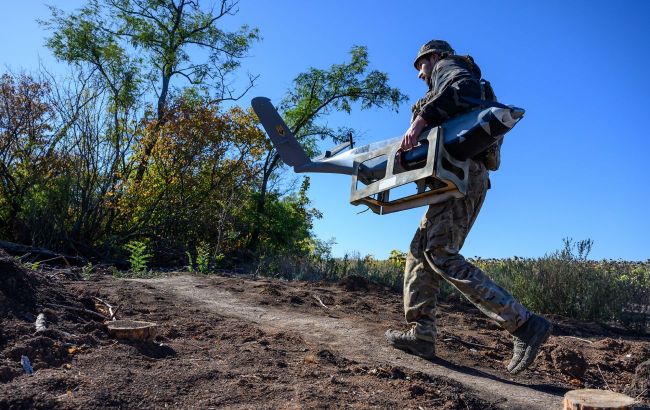 Photo: Ukrainian drone during launch (Getty Images)
The Associated Press has analyzed hundreds of Ukrainian strikes deep into Russian territory over the course of 2026. The number of long-range attacks has tripled compared to January, forcing the Russian military to stretch its air defense over a significantly larger area, according to an AP analysis.
Four main targets of Kyiv
AP analysts reviewed statements from Russian officials, state media, and the Ukrainian military, identifying four primary categories of Ukrainian strike targets.
These include oil infrastructure — aimed at depriving the Kremlin of fuel export revenues and creating shortages for ordinary Russians.
Strikes on oil and defense
In July, Kyiv struck Russia's largest oil refinery, located over 2,500 km from Ukraine. Attacks on oil infrastructure intensified precisely as the war around Iran drove up global oil prices, and the US eased sanctions on Russian oil.
Among defense facilities, Ukraine repeatedly struck a plant producing navigation systems — including with its own Flamingo missile. In July and August, Wildberries warehouses also came under attack: Kyiv claims the company helps supply the Russian army, though Moscow denies this.
Target — Crimea
A significant portion of the strikes on Russian air defense and radar systems has been concentrated around occupied Crimea — mostly carried out by drones. The commander of Ukraine's Unmanned Systems Forces, Robert "Madyar" Brovdi, told AP that the attacks in Crimea are also aimed at rendering the peninsula unusable as a staging ground for Russian troops.
Not all strikes are successful
The effectiveness of some of Kyiv's attacks is difficult to confirm. In May and June, Ukraine claimed strikes on several satellite, reconnaissance, and signals intelligence facilities in Russia, but satellite imagery analyzed by AP did not show serious damage.
Production is growing, but still insufficient
Even before the well-known Oval Office meeting, Ukraine had begun actively investing in new weapons, but it was that meeting, according to an anonymous European military official, that served as a "real wake-up call" — it became clear that US support could end "from one day to the next." Ukraine doubled its production, shortening the development and manufacturing cycle from decades to years or even months.
Although Ukraine has solved some of the navigation issues with its missiles, such as the Flamingo, they still lag behind Western counterparts in accuracy and stealth — often requiring the launch of hundreds of drones to overwhelm Russian air defenses and allow a missile to break through. According to Watling's estimate, only 5–9% of Ukraine's launched munitions get through enemy defenses.
Nevertheless, despite Russia's more powerful weapons, President Volodymyr Zelenskyy stated at the NATO summit that Putin is losing the initiative, as Ukraine has shifted the fighting from the stalled front lines into the skies.
RBC-Ukraine has already written extensively about the scale and directions of Ukraine's long-range campaign. Earlier, the Security Service of Ukraine spoke about the key targets of Ukraine's deep strikes on Russia — primarily the fuel industry, defense enterprises, and the logistics that support them. On August 10, President Volodymyr Zelenskyy announced personnel decisions in the military and stated that Ukraine had approved new strikes on enemy targets on Russian territory, adjusting some of the existing long-range operations.