Two allies oppose Ukraine's accelerated EU accession

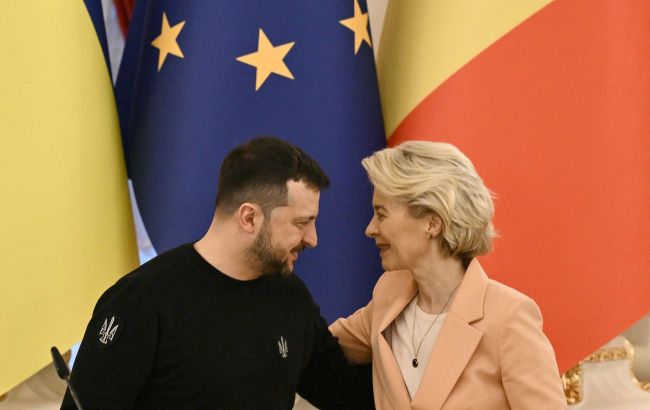 Photo: Volodymyr Zelenskyy and Ursula von der Leyen (Getty Images)
Ukraine aims to join the European Union by 2027, but the initiative is facing serious resistance from key EU governments. European capitals don't want to open "Pandora’s box" if Kyiv’s accession moves too quickly, Reuters reports.
Kyiv’s position and Zelenskyy’s plan
President Volodymyr Zelenskyy sees EU membership by January 1, 2027, as an anchor for Ukraine’s security and prosperity after the war ends. A clear accession date could serve as a crucial argument for Ukrainians if painful compromises are required in a peace settlement, especially if the country does not receive immediate NATO membership.
Deputy Prime Minister Taras Kachka said Kyiv is ready to accept additional monitoring mechanisms and transitional periods on subsidies "to address EU members' concerns."
"This is necessary for the peace process, for the establishing of long-lasting and just peace in Europe," he stressed.
Skepticism in Brussels and European capitals
Despite diplomatic efforts, France and Germany have privately expressed doubts about accelerating the process. Diplomats point to several major obstacles:
- Corruption: European officials believe Ukraine has not yet completed the required reforms.
- Populism: EU governments fear rising anti-European sentiment at home if enlargement proceeds too quickly.
- Bureaucracy: Each step in the accession process requires unanimous approval from all 27 member states, and Hungary has repeatedly blocked Ukraine-related decisions.
The idea of "reverse enlargement," promoted by European Commission President Ursula von der Leyen, allowing accession with limited access to EU funds before all reforms are completed, is currently viewed as "dead."
An alternative path: phased integration
Analysts consider full membership within the next three years unrealistic. Instead, Ukraine could be offered a model ofaccelerated integration, involving gradual participation in the EU single market, as well as energy and digital programs, before formally becoming a member state.
At the same time, the European Commission continues to insist on the importance of Ukraine’s membership, arguing it would strengthen the bloc’s military capacity amid the threat of future Russian aggression.
Ukraine's accession to the EU
Ukraine officially received EU candidate status in June 2022. Since then, it has implemented a number of recommendations on judicial reform and anti-corruption measures, allowing accession talks to formally open in December 2023.
Kyiv is seeking a political decision on membership by 2027, as previously stated by Deputy Head of the Presidential Office Ihor Zhovkva.
However, EU Enlargement Commissioner Marta Kos has taken a cautious view of these ambitions. She stressed that the current enlargement methodology was designed for peacetime, and accelerating Ukraine’s integration would require revising rules that have been in place for the past 40 years.