Trump ramps up pressure on Iran with "somewhat more effective than bombing"

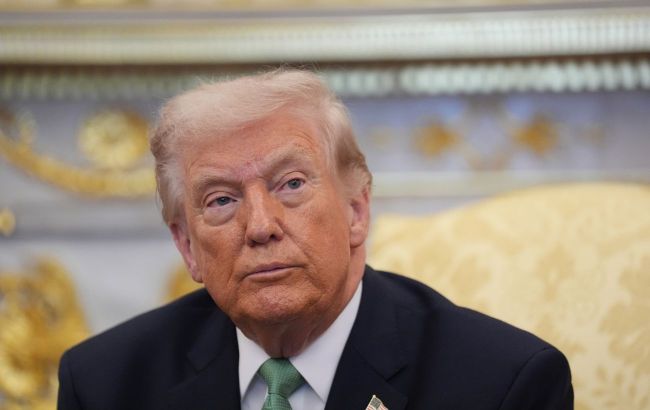 Photo: Donald Trump (Getty Images)
US President Donald Trump said he intends to maintain the naval blockade of Iran, stressing that it is a key pressure tool to secure an agreement on Tehran's nuclear program, according to Reuters and Axios
Blockade instead of concessions
US authorities view extending the naval blockade as the main lever of influence over Tehran.
According to sources, Donald Trump discussed measures with oil industry representatives to mitigate potential disruptions in global markets.
The scenario under consideration предполагает that restrictions could remain in place for several months.
Talks at a dead end
Contacts with energy company executives took place against the backdrop of a prolonged crisis in negotiations.
Efforts to resolve the situation have yielded no results, prompting Washington to ramp up pressure through export restrictions and the blocking of shipping routes.
At the same time, Trump publicly urged Iran to speed up decision-making and return to dialogue.
Market reaction and Iran's stance
Amid reports of a possible extension of restrictions, oil prices rose by nearly 4%, with Brent contracts hitting a monthly high.
Tehran, for its part, warned of potential military steps in response to the blocking of vessels linked to Iran and signaled its readiness to continue pushing back.
Risk of escalation
According to sources, US Central Command has prepared a plan for limited strikes that could be activated if the deadlock persists.
Washington emphasizes that it sees the blockade as a more effective tool than a military scenario, though it is not ruling out the use of force.
Trump's position
The US president insists that Iran must not obtain nuclear weapons. He also noted that restrictions will remain in place until an agreement meeting US demands is reached.
According to him, Tehran is interested in a settlement, but Washington is not prepared to ease pressure without concrete steps.
It is worth noting that President Trump and his national security team reacted cautiously to a new Iranian proposal that suggests reopening the Strait of Hormuz while postponing nuclear negotiations to a later stage.
US Secretary of State Marco Rubio also stressed that any attempts by Iran to control or influence the Strait of Hormuz are unacceptable to the United States and contradict its position in the region.