The Telegraph names Europe’s most at-risk country if Russia attacks

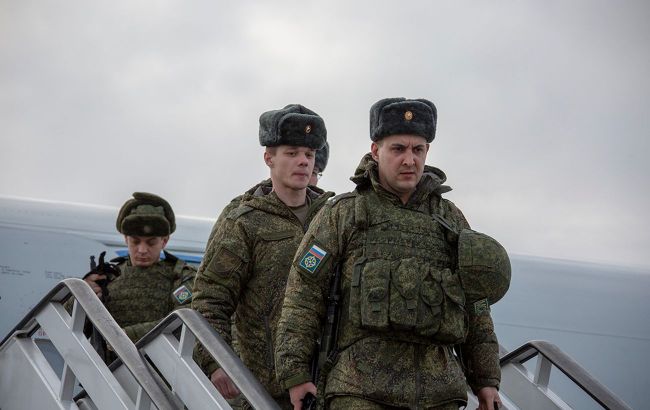 Russian army (Photo: facebook.com/mod.mil.rus)
Security concerns in a European Union country have once again come to the forefront amid discussions about Europe’s vulnerabilities and risks linked to Russian activity, reports The Telegraph.
Amid rising geopolitical tensions, assessments increasingly highlight weaknesses in Europe’s defense system against threats, particularly those originating from Russia.
Experts are especially focused on countries that lack sufficient capabilities to detect threats and neutralize them effectively.
Ireland as a vulnerable link in European security
Irish Senator and retired army captain Tom Clonan stated that his country is Europe’s weakest link when it comes to security, defense, and intelligence.
According to him, Dublin lacks modern sensors to detect threats and does not possess weapons capable of stopping them, leaving the country completely defenseless and provocatively weak.
The Telegraph notes that potential risks for Ireland are most often not related to a direct military invasion, but rather to so-called gray-zone threats.
Primarily, this concerns networks of underwater cables and gas pipelines in surrounding waters. Analysts estimate that about three-quarters of key transatlantic cables pass through or near the Irish borders.
Russian activity and lack of response
The Telegraph recalls that in November last year, the Russian intelligence ship Yantar was spotted near cables used by Microsoft and Google, whose European headquarters are located in Ireland.
At the same time, the country lacks modern radar and hydroacoustic systems and often learns about Russian operations only from allies, particularly the UK.
The report also mentions a December 2023 incident when a British warship and helicopter drove away a Russian submarine near Cork harbor.
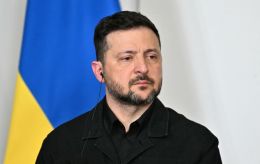
Separately, drones were spotted in Irish airspace during a flight by Ukrainian President Volodymyr Zelenskyy.
Despite these events, Irish authorities have not provided public explanations or announced any review of defense policy.
Meanwhile, EU countries near Russia’s borders plan to take concrete steps to strengthen their defense, viewing Russia as a serious threat.
Ireland has stated its willingness to participate in monitoring potential ceasefires and peacekeeping initiatives in Ukraine, confirming its intention to continue supporting Kyiv if a peaceful resolution with Russia is reached.