Origin of Victory Day: Why USSR insisted on May 9 instead of May 8?

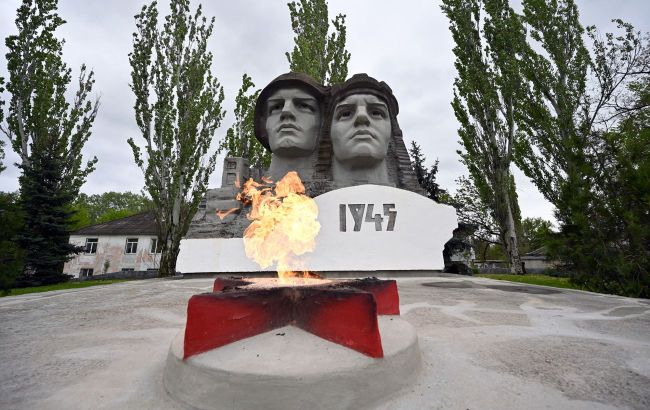 May 8 — Day of Remembrance and Victory over Nazism in the Second World War (illustrative photo: Getty Images)
In the USSR, there was a total ban on frontline truth. And the difference between May 8 and May 9 is a whole chasm between commemorating war victims and Soviet victory hysteria, according to Roman Kabachiy, PhD in history and head of a sector at the National Museum of the History of Ukraine in the Second World War.
Why May 9 became Victory Day in the USSR
The expert noted that, in general, Germany’s capitulation was signed on May 8.
At the same time, it was already May 9 in Moscow at that moment.
"That is why the Soviet Union artificially attached itself to this date," Kabachiy noted.
The key difference in approaches to this date
The historian explained that "the key issue is a completely different approach to commemorating dates."
"In the free world, the focus was on honoring the memory of the victims (of the Second World War - Ed.)," he explained.
Meanwhile, "in the Soviet Union, celebrations contained much more kitsch (a style characterized by excessive showiness, bad taste, and orientation toward mass appeal), especially after Brezhnev came to power."
Why victory hysteria still exists on May 9
Kabachiy noted that both Russian leader Vladimir Putin and self-proclaimed Belarusian president Alexander Lukashenko "grew up in this kitsch."
Therefore, this is exactly what their modern vision of May 9 celebrations is based on.
Which turns into victory hysteria, the researcher clarified.
"They imagined war and victory as something beautiful. Very few people actually knew what war really was. That is why the slogan "we can repeat it" is pure bragging," the expert stated.
What becomes the first victim of war
The historian reminded that in the USSR there was a complete ban on frontline truth.
"If someone described it in diaries or letters, they were imprisoned and brutally silenced," he explained.
Later, however, some tried to reveal what had previously been buried.
Russian historian Nikolai Nikulin, in his book Memoirs of the War, clearly described what the Second World War was actually like from the perspective of an ordinary soldier, Kabachiu said.
He noted that in 1975, the author came to a battlefield where, during the war, he had seen 20-year-old soldiers.
He was shocked by the number of unburied skeletons that were still lying in the field. This image angered him so much that he began writing the book for the drawer. It was only published after the collapse of the Soviet Union.
According to him, Nikulin wrote a simple truth: “the first victim of war is frontline truth”.
"The war in the Soviet Union was criminal, first of all against its own soldiers, because they were sent to slaughter according to schedule. There was an even rule: a commander who sent soldiers into two or three assaults could leave the frontline and go to the rear for rest," the researcher concluded.
Earlier, we explained how Ukraine moved away from Soviet myths about the Second World War.