Taiwan conflict could trigger nuclear escalation between US and China - IISS

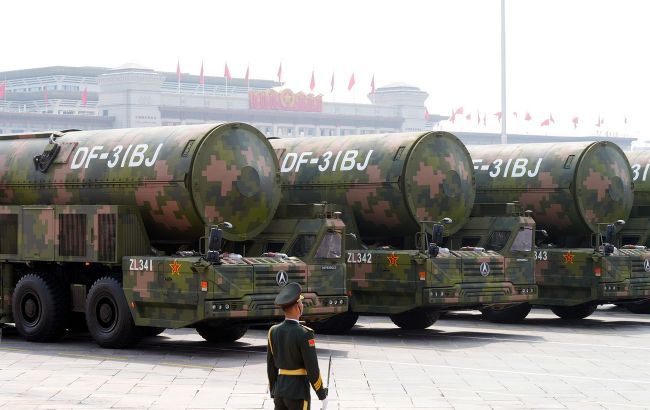 Chinese missiles (photo: Getty Images)
A potential conflict between the United States and China over Taiwan could trigger the use of nuclear weapons. The world is now on the verge of a new arms race, Reuters reports.
According to an assessment by the International Institute for Strategic Studies (IISS), in the event of a possible conflict, the armed forces of both countries would likely conduct large-scale operations across various military domains. Their main targets would be the opponent's command posts and communication centers.
"Conflict with China would risk escalation, potentially to a nuclear level, given the strategic importance of Taiwan to Beijing," the document states.
The American and Chinese militaries have different goals: China seeks to deter the United States and its allies, while Washington aims to strengthen the island's resilience. There is currently no public data indicating that the sides are ready to establish protective mechanisms.
This refers to rules on the use of weapons that would limit strikes on key computer systems, intelligence, and command centers.
Expansion of nuclear arsenals
The IISS report emphasizes that the Asia-Pacific region is becoming the epicenter of a new nuclear arms race. Countries are actively expanding their arsenals, while non-nuclear states seek to acquire long-range weapons, posing a challenge to strategic stability.
The United States and Russia have significantly larger arsenals, but China is increasing and improving its nuclear capabilities at the fastest pace among all nuclear powers. According to a Pentagon report released in December, Beijing plans to deploy 1,000 warheads by 2030.
According to expert estimates, the current stockpiles are as follows:
-
Russia — 4,400 active warheads
-
United States — 3,700 active warheads
-
China — 620 active warheads
The IISS strategic assessment was published ahead of the major Asian security summit, the Shangri-La Dialogue. The informal conference will take place in Singapore from May 29 to 31.
The situation around Taiwan, the war by the United States and Israel against Iran, and the overall uncertainty regarding Washington's commitments to the region are expected to be key topics of discussion. A wide range of participants will attend the event, including ministers, generals, diplomats, weapons manufacturers, and intelligence chiefs.
US President Donald Trump, after meeting with Chinese President Xi Jinping, said that he does not support Taiwan's declaration of independence and wants to avoid escalation in relations with China.
In addition, the Chinese leader warned that wrong decisions regarding Taiwan could lead to conflicts between China and the United States.