Strikes on world's largest LNG hub could trigger worst fuel market scenario - Bloomberg

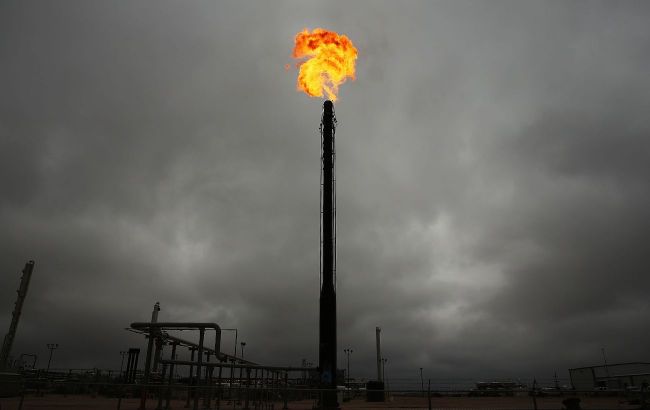 Stopping rise in fuel prices is now nearly impossible (photo: Getty Images)
Strikes on gas and oil infrastructure in the Persian Gulf have pushed fuel prices to a new level — and analysts warn the worst is yet to come, Bloomberg reports.
"$120 won't be the ceiling, it'll be the starting point"
This is how Haris Khurshid, chief investment officer at Karobaar Capital LP in Chicago, described the situation.
"The market is still underestimating and not fully pricing the risk of how quickly this could escalate. If this escalates into direct hits, then $120 won't be the ceiling. It’ll be the starting point," he said.
Since the start of the US-Israel war against Iran, oil has already risen by about 60%. As of March 18, Brent first crossed the 111 dollar mark. Within a day — already 119.
What happened in Ras Laffan
The main strike hit the industrial complex in Ras Laffan in Qatar — the world's largest liquefied natural gas (LNG) production center. Iran attacked it twice within 12 hours.
State company QatarEnergy confirmed that several plants sustained significant damage and large-scale fires broke out.
"While we don’t know the extent of the damage yet, we are likely talking about months of repairs," said Anne-Sophie Corbeau, a researcher at Columbia University's Center on Global Energy Policy.
The Pearl gas processing plant of Shell Plc was also damaged. The fire was extinguished, and no personnel were injured.
Consequences for the global market
Most Middle Eastern LNG goes to Asia, but prolonged supply disruptions will affect prices worldwide. US gas futures rose by 6.5% in a day.
"The latest wave of attacks on energy infrastructure in the Gulf just underpins the dire supply outlook from the region for months to come," said Florence Schmit, energy strategist at Rabobank.
Pipelines can be restored relatively quickly after the end of hostilities. However, heavily damaged production facilities may remain idle for months.
Why this matters
After US and Israeli strikes on Iranian facilities, Tehran closed the Strait of Hormuz, and Saudi Arabia redirected part of its oil exports to the port of Yanbu.
Qatar condemned the attacks and expelled the Iranian ambassador, giving him 24 hours to leave the country.
The price of Brent crude surged sharply, immediately pushing up fuel prices worldwide. On March 18, it set a new record.
Amid the price spike, the United States temporarily eased sanctions against Russia — allowing already shipped oil and petroleum products to be exported within 30 days.
China took advantage of this decision: after a four-month break, it is preparing to resume purchases of Russian crude.
Ukrainian Foreign Minister Andrii Sybiha, in response to rising fuel prices, called on the EU to strengthen — not weaken — sanctions pressure on Russia and urgently adopt the 20th sanctions package.