Strikes on Wildberries could cost Russian sellers up to $1.3 billion - Analyst


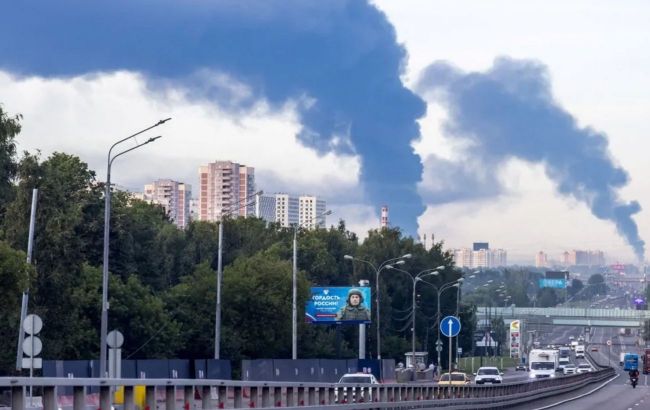 Smoke rises after strikes on Wildberries warehouses outside Moscow (Photo: Russian media)
RBC-Ukraine reports on this in a material titled Wildberries under attack: How Ukrainian strikes are crippling Russia's logistics.
Key points:
- Revenue decline: The revenue of Russian online marketplaces fell by 10.6% between July 20 and 26 following the attacks, according to the Tsina Derzhavy project.
- Total losses: Damage from attacks on Wildberries' logistics network is estimated at $2 billion, including $1–1.3 billion in lost inventory.
- Ownership: According to VChK-OGPU, the beneficiaries of the merged RWB company include Senator Suleyman Kerimov, as well as senior Russian Presidential Administration officials Alexey Gromov and Anton Vaino.
- Market size: Wildberries generates more than $78 billion in annual turnover and accounts for 47% of Russia's e-commerce market.
In a comment to RBC-Ukraine, financial analyst Andrii Shevchyshyn estimated sellers' losses at $1-1.3 billion out of Wildberries' total losses of roughly $2 billion.
Legal trap and financial burden for sellers
Wildberries amended its terms and conditions in advance, officially classifying losses of goods caused by hostilities as force majeure. This releases the marketplace from financial liability for damaged property and merchandise.
According to Andrii Shevchyshyn, Wildberries has integrated its marketplace, fulfilment operations, logistics network, pickup points and banking services into a single ecosystem. The decision is expected to hit microbusinesses the hardest:
- The median annual revenue of a single seller is only about $7,500, leaving little to no financial buffer.
- Only 5-7% of sellers have war-risk insurance policies because of their high cost.
Financial shockwave: Banks and closed-end investment funds
The destroyed warehouses are often owned not by the marketplace itself, but by third-party developers, banking institutions or closed-end mutual investment funds (ZPIFs), whose investors include private pension funds.
According to VChK-OGPU, the largest players in this market are Modern Real Estate Funds Management Company (formerly Sber Real Estate Funds), with about $8.1 billion in assets, and Parus Asset Management, which manages roughly $2.6 billion.
As insurance companies increasingly refuse to cover losses caused by drones, the direct destruction of property is eroding the value of investment fund units and increasing non-performing debt across Russia's banking system.