Stonehenge mystery finally explained? Scientists point to a glacier

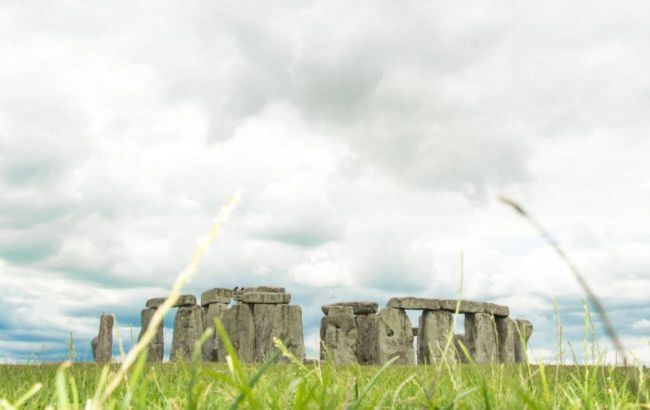 Nature moved Stonehenge's heaviest stone (photo: Pexels)
A new scientific model suggests that Stonehenge's heaviest stone traveled 700 kilometers not solely through human effort, but also with the help of a natural "conveyor belt," according to a study published in the journal JQS.
Challenges of construction, origin mystery
Stonehenge was assembled from stones weighing between 2 and 25 tons, requiring enormous effort from people who lived before the invention of the wheel.
The Altar Stone is the largest and heaviest of the so-called bluestones installed at Stonehenge roughly 2,000 years before the emergence of the well-known monumental arches.
Geological evidence indicates that this sandstone boulder formed from sediments of the ancient Orcadian Basin in modern Scotland.
How glacier created natural 'conveyor belt'
About 15,000 years ago, at the end of the last Ice Age, a thick layer of ice covered all of northern Britain. The glacier gradually moved across the landscape, picking up rock fragments and transporting them over enormous distances.
Scientists conducted numerical modeling that took five years to develop. It revealed the following route taken by the moving ice:
- The ice sheet picked up the boulder in Scotland and carried it south
- The rock was deposited in the Dogger Bank area, a highland in the Doggerland region that is now submerged beneath the North Sea
- Dogger Bank functioned as a giant terminal moraine—a ridge of rocks and debris where the glacial "conveyor belt" came to a stop.
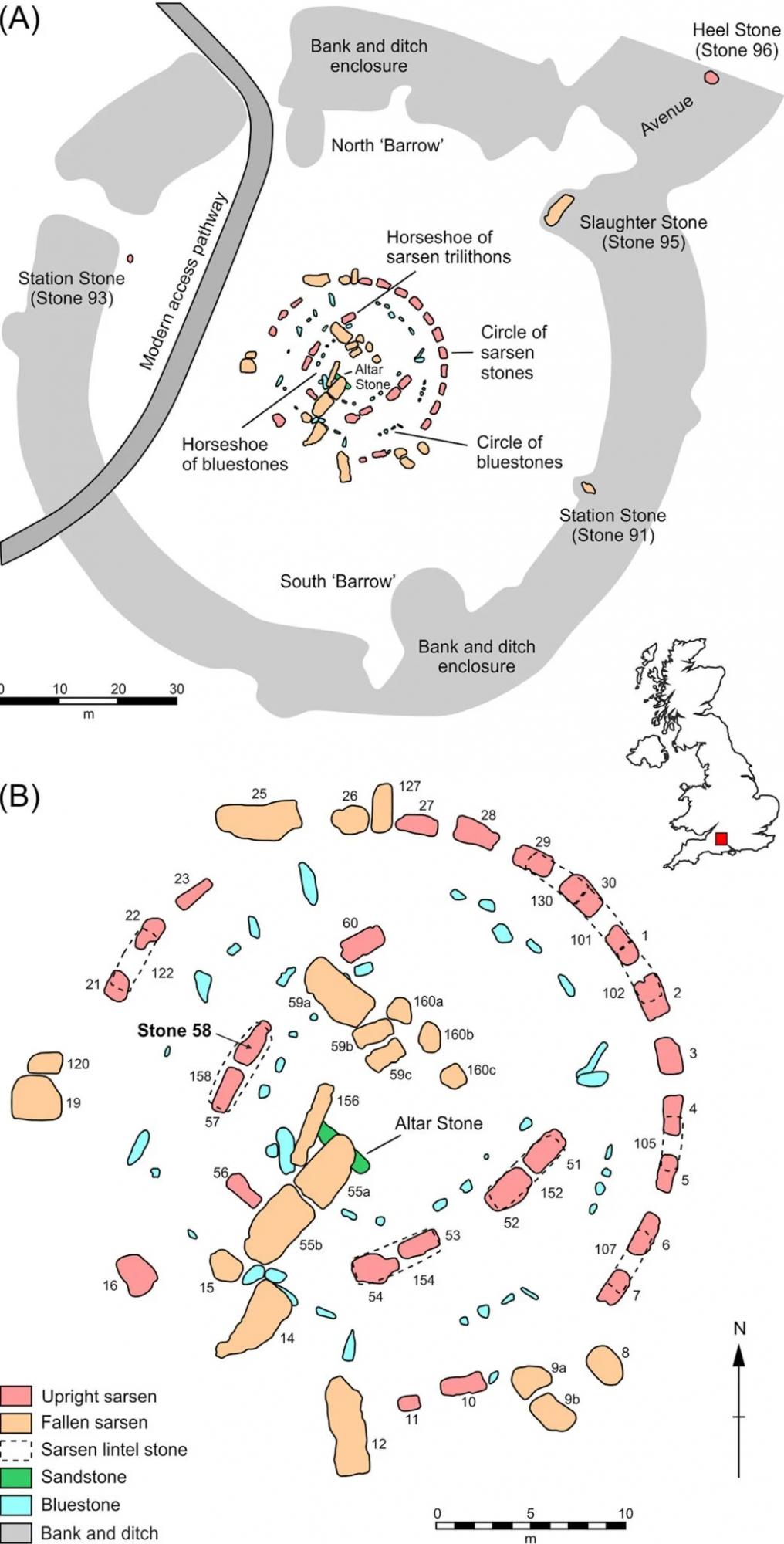
The Altar Stone is located roughly in the center of Stonehenge (diagram: Nash DJ, Ciborowski TJR, Darvill T, Parker Pearson M, Ullyott JS, Damaschke M et al., CC BY-NC)
Role of Dogger Bank and ancient people
About 12,000 years ago, Doggerland was still a land bridge between Europe and Britain, while Dogger Bank was a highland area rich in natural resources.
Neolithic people had an excellent understanding of stone and selectively sought materials for making tools, so they may have deliberately chosen the Altar Stone for its unique properties.
Later, the glaciers began to melt rapidly, causing global sea levels to rise. Doggerland gradually sank beneath the water, becoming a small island where the rock was initially located.
About 7,000–8,000 years ago, the area finally disappeared beneath the sea.
The threat of flooding prompted people to move the stone to England's eastern coast in advance. From there, it was transported over roughly 400 kilometers of terrain to Salisbury Plain.
The stone was moved along the Ridgeway, an ancient Neolithic highland route considered Europe's oldest road.
Finally, scientists say that Neolithic people not only had the means and ability to coordinate their efforts to move a large boulder hundreds of kilometers, but also likely understood that their landscape was changing and that they needed to take action.