AI cracks ancient codes revealing Vatican secrets and love letters

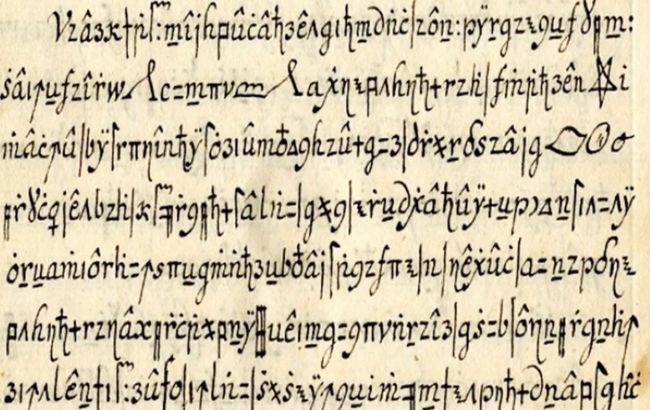 Historical secrets revealed by new AI algorithms (screenshot: Beáta Megyesi)
Thousands of historical documents that have been stored for centuries in libraries and archives around the world in encrypted form are now becoming accessible for reading for the first time. Thanks to AI technologies, scientists have learned to quickly break secret codes that were previously considered hopeless.
This was reported by an analytical article by science journalist Sandrine Kørstemiller for the BBC.
Secret recipes from the Vatican: decoding the Borgian cipher
One of the key achievements of machine learning has been the complete analysis of the Borgian Codex (Borg.lat.898) from the Vatican Library.
This 408-page book, written approximately 400 years ago, consists of 34 mysterious symbols, several Latin letters, and a title page in Arabic.
The inscription on the cover suggested that it contained healing remedies for the human body. At the time the manuscript was created, medical practices were often encrypted to avoid accusations of witchcraft.
After the involvement of AI, it was discovered that the book contains thousands of strange recipes: from advice to drink high-quality red wine to a recipe for fermenting nutmeg in dough for treating dysentery.
As noted by Professor of Computational Linguistics at Stockholm University, Beata Megyesi, even with computer algorithms, searching for the cryptographic key required long and painstaking work, as many pages had been significantly damaged over time.
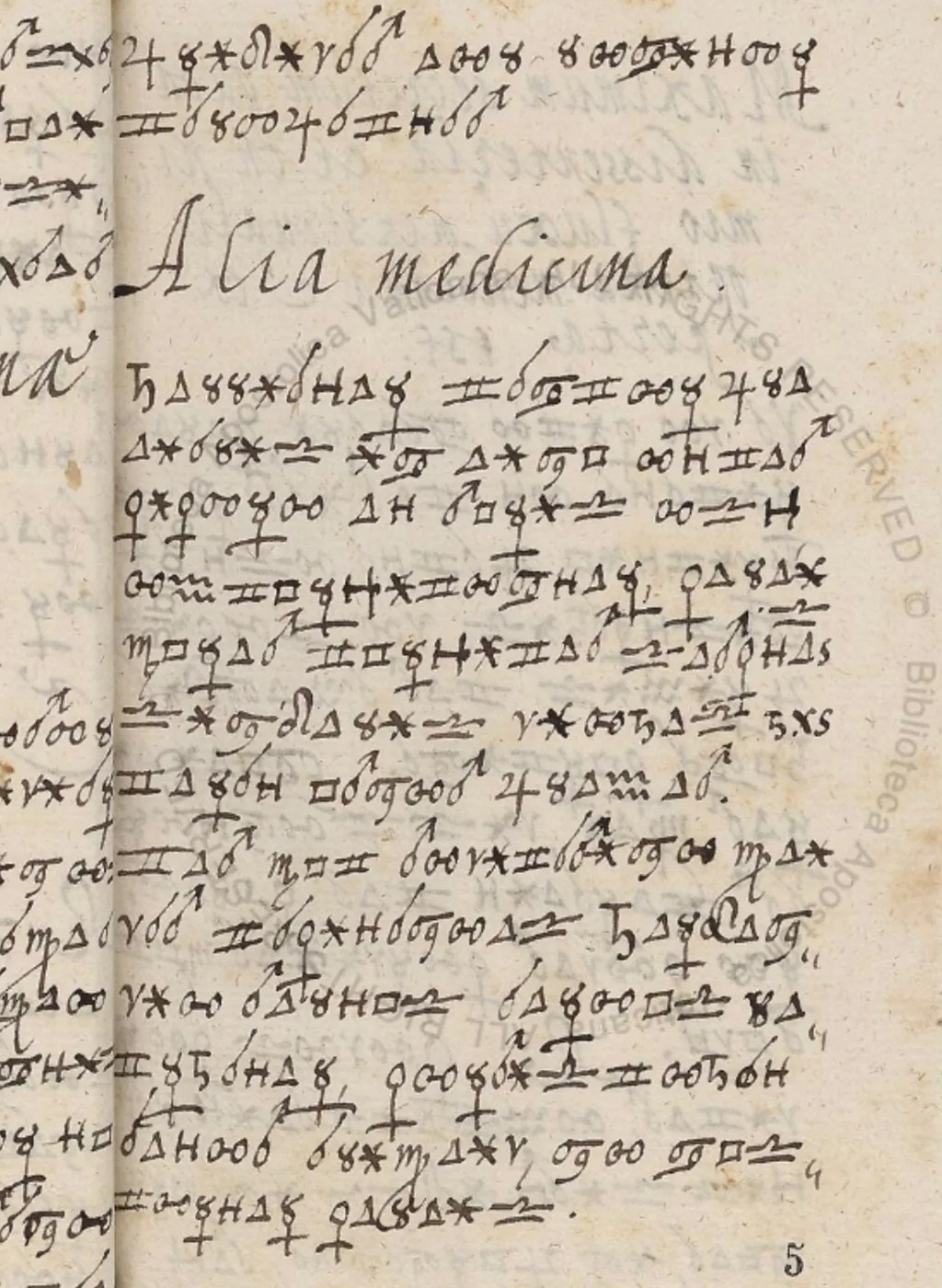 It is believed that the Borgian cipher is around 400 years old and contains a combination of encrypted symbols and Latin letters (Source: Biblioteca Apostolica Vaticana).
Why are scientists’ efforts no longer enough?
Traditional deciphering of historical texts is an extremely slow process. The main problem is that before analytical software can be used, each letter and symbol must first be manually transferred from paper into a digital format.
Due to the poor handwriting of ancient authors and faded ink, manual transcription of just two pages of text can take an entire working day for a modern expert.
In addition, past authors used various tricks to protect information:
- they introduced extra “null” symbols (dummies) to mislead researchers;
- they used 5–8 different signs to encode a single common letter;
- they encrypted texts in languages that are themselves dead or unknown.
For example, a team of French cryptographers needed six months to decipher a three-page letter by Emperor Charles V, written using 120 secret symbols.
The text revealed an unexpected historical fact: one of the most powerful rulers of his time was in a state of panic, fearing an assassination attempt by an Italian mercenary.
From letter recognition to secret love letters
Today, AI technologies are being integrated at all stages of research. Professor Michelle Valdisspuhl from the University of Oslo used the AI platform Transkribus to digitize a letter written in 1637 by the nobleman Sigismund Heisner von Wandersleben, during the height of the Thirty Years’ War.
The system, trained on thousands of manuscripts from different centuries, successfully recognized mixed text where German alternated with digital cipher blocks.
This made it possible to read a warning addressed to the Swedish Chancellor Axel Oxenstierna about betrayal and conspiracies among Protestant allies, particularly involving Lord Franz Heinrich of Saxony, which forced the author to carry out a strategic retreat.
At the same time, scientists from the Descrypt project are building a database of ancient ciphers to train AI. Among the findings are over 400 mysterious encrypted postcards from the late 19th to early 20th century.
The first decoded fragments revealed that they were secret love letters written in German.
AI chatbot against hallucinations
The next step in technological development has been the creation of a chatbot. The AI combines image recognition, large language models (like ChatGPT), and decryption into a single process.
Users simply upload a photo of a page to receive a decoded text.
An important technical detail: the bot documents its decoding process step by step and explains why its solution is plausible.
This is critical for historians, as it proves that the neural network did not hallucinate or invent a translation on its own.
In addition, the system is capable of self-learning, automatically taking into account corrections made by human experts.
In the future, the scale and speed of AI are expected to be used to solve the oldest linguistic mysteries of humanity that still resist classical analysis, including the 4,000-year-old Phaistos Disc from Crete and ancient Greek writing.