Stoltenberg reportedly considered 'buffer zone' with Kremlin, Baltic states were at risk

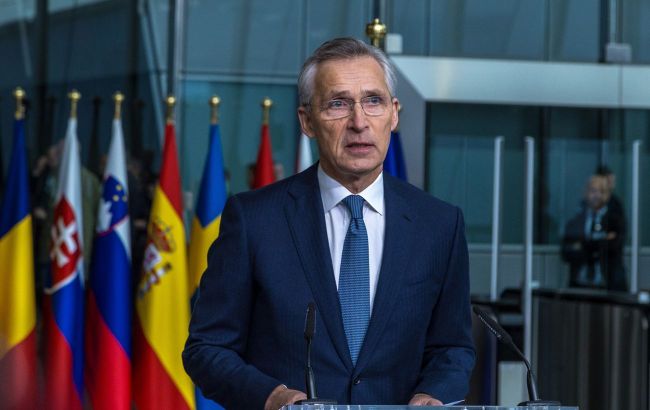 Photo: former NATO Secretary General Jens Stoltenberg
Former NATO Secretary General Jens Stoltenberg has revealed facts about backroom agreements with Moscow in his memoirs. In 2021, he was ready to discuss with Russia the withdrawal of Alliance troops from Eastern Europe and the creation of a buffer zone involving the Baltic states, writes the Latvian edition Baltic Sentinel.
In its analysis of Stoltenberg's memoirs, the publication emphasizes that he conducted negotiations with the Kremlin without informing the most vulnerable allies. For example, in the fall of 2021, he met with Russian Foreign Minister Sergey Lavrov. During the conversation, he offered to discuss the Kremlin's proposal to create a buffer zone.
Poland and the Baltic states categorically opposed any concessions. However, the Secretary General ignored their concerns and was ready to revert the security architecture to the borders of 1997. This would have effectively meant the disarmament of NATO's eastern flank.
Why Russia rejected the buffer zone proposal
Despite such willingness to make concessions to the Kremlin, Moscow rejected the plan. Russia did not want compromises but sought complete control over the region.
In his memoirs, Stoltenberg writes that his views on relations with Russia were shaped by his father, Thorvald, a former foreign minister of Norway who even promoted dialogue with Moscow during the Cold War. His son writes with pride about how he managed to maintain this dialogue even after the annexation of Crimea in 2014.
Trump and NATO
A significant part of the memoirs is devoted to Donald Trump. Stoltenberg confirms: the threat of the US withdrawing from NATO was real. Trump's advisors were seriously preparing this step, and it could have destroyed the Alliance within days.
Despite this, a paradox occurred, the former Secretary General writes in his memoirs: it was under Trump that the American presence in Europe increased. Allies began investing more in defense.
US-NATO relations
With the start of the US and Israeli military operation against Iran, relations between the US and the Alliance sharply deteriorated. Due to his refusal to help, Trump is threatening to withdraw from NATO.
For his part, US Secretary of State Marco Rubio calls the Alliance a one-way street for Washington. Rubio emphasized that the US will have to reconsider its NATO membership, but the final decision, of course, rests with Trump.
Meanwhile, Italy has closed its skies to US military aircraft. They are unhappy with the Pentagon's lack of warning about such overflights. Italy's Defense Ministry was notified only after the fact.