SpaceX calls off Starship V3 launch seconds before liftoff: What happened

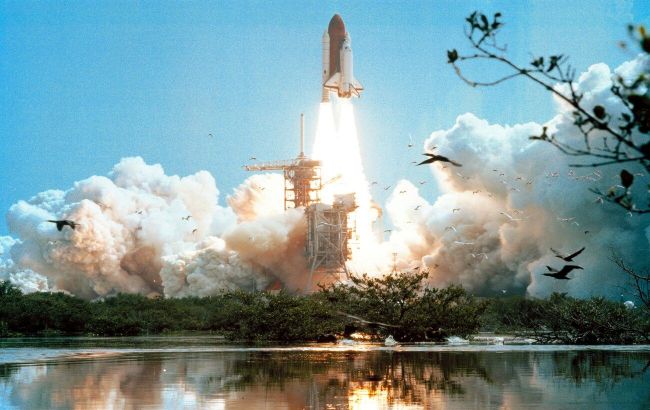 Photo: Raptor engines let Elon Musk down (Unsplash)
The Starship V3 launch was scrubbed just seconds before liftoff due to problems with the Super Heavy booster engines. The safety system automatically aborted the mission, and the next launch attempt is not expected until next week, according to a post by Elon Musk on X.
Throughout the day, preparations for Starship Flight 13 had proceeded without any issues.
Ground crews at the launch site near the US-Mexico border successfully completed the complex fueling process, loading the two-stage launch system with more than 5.2 million kilograms of supercooled liquid methane and liquid oxygen.
However, when the countdown reached zero and the water deluge system began flooding the launch pad to suppress heat and acoustic shockwaves, a problem occurred.
The launch control system detected a malfunction during the staged engine ignition sequence and immediately initiated an automatic launch abort.
Indicators on SpaceX's official livestream confirmed that four of the 33 Raptor 3 engines installed on the Super Heavy booster failed to ignite.
Elon Musk later said that a Friday launch was no longer possible. The most likely window for the next attempt is now early next week.
Some of the engines didn’t start, triggering an automatic launch abort.
— Elon Musk (@elonmusk) July 16, 2026
Now offloading propellant.
Next launch attempt hopefully in a few days.
Evolution of the Raptor 3 engines and fixes after Flight 12
The mission was set to become only the second test flight of the third-generation Raptor 3 engines and the upgraded Starship Version 3 rocket.
Although the previous launch in May (Flight 12) ended with the upper stage successfully splashing down in the Indian Ocean, it also revealed several technical issues with the propulsion system.
Issue during the flip maneuver. During stage separation on the May flight, a microscopic delay in the booster engine ignition caused Super Heavy to deviate from its planned flip maneuver by about 90 degrees.
For Flight 13, engineers modified the engine ignition algorithm to make it more resistant to timing variations.
Landing burn problems. During the simulated landing attempt in the Gulf of Mexico in May, several booster engines failed to reignite for the landing burn, causing the booster to crash into the water.
SpaceX planned to address this issue during Flight 13 as part of preparations for eventually returning the Super Heavy booster directly to the launch tower.
Premature engine shutdown in orbit. One of the Starship spacecraft's six engines shut down earlier than planned during the previous mission, forcing SpaceX to cancel an important Raptor vacuum relight test.
This remains one of the key objectives that engineers hope to complete during the next launch attempt.
Ambitious space goals
The success of Flight 13 is considered critical to SpaceX's long-term plans.
The spacecraft is carrying upgraded Starlink V3 satellites for the first time.
Under the original flight plan, the satellites were scheduled to burn up in Earth's atmosphere about 20 minutes after deployment, since the vehicle is not yet capable of reaching a stable operational orbit. However, the mission was intended to demonstrate the concept of orbital data centers.
In addition, launching Starlink satellites remains the only consistently profitable part of SpaceX's business.
Achieving reliable performance with Starship V3 is also a key step toward future orbital refueling tests and preparing the spacecraft for Moon missions under NASA's Artemis program.