China launches its first reusable rocket, giving SpaceX new rival

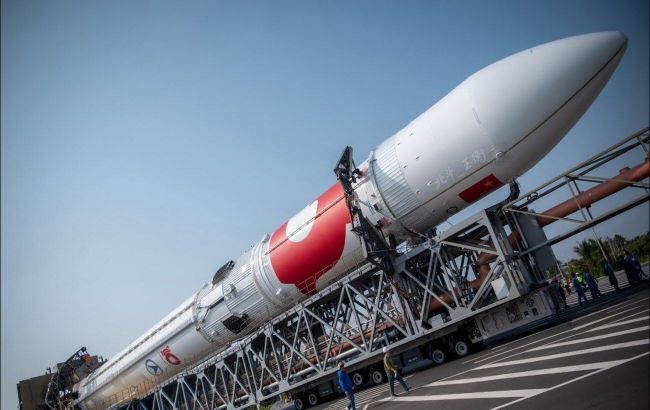 China's reusable rocket (Screenshot: PointOrView)
China has taken another major step toward reusable rockets. During a recent test, engineers successfully recovered the first stage of the Long March 10B rocket, catching it in a net on an offshore platform after a controlled vertical landing, according to BBC.
How China is catching up with industry leaders
Traditionally, rockets have been designed for a single use. Once their fuel is exhausted, the stages separate and are destroyed as they fall back to Earth, making every launch extremely expensive.
The biggest cost-saving breakthrough in modern spaceflight is the ability to reuse the first-stage booster, which contains the rocket's most valuable components, including its engines and advanced electronics.
Until now, the leaders in reusable rocket technology have been US private companies.
- In December 2015, Elon Musk's SpaceX became the first company to successfully land the reusable first stage of a Falcon 9 after an orbital mission.
- In November 2025, Jeff Bezos' Blue Origin achieved a similar milestone when its New Glenn rocket successfully recovered its first-stage booster.
For China, this launch marks the culmination of years of testing. The country's first attempt came in February 2026, when a Long March 10A booster splashed down in the sea near the recovery platform instead of landing on it.
On July 10, however, the Long March 10B demonstrated that China's reusable rocket system is now fully operational. Just six minutes after liftoff from Hainan Island, the rocket's first stage completed a precise vertical landing and was successfully captured by a recovery net on a sea platform.
A historic day in China’s space program!
— Mao Ning 毛宁 (@SpoxCHN_MaoNing) July 10, 2026
China’s Long March-10B has successfully completed its maiden flight—and recovered its first stage via a sea-based net. This marks the country’s first-ever controlled rocket recovery. A major leap toward reusable launch capabilities.… pic.twitter.com/FWuQXLltaD
Engineering breakthrough: A lighter rocket means a cheaper mission
The key innovation behind China's reusable rocket design is its decision to eliminate the heavy landing legs typically used for booster recovery, reducing weight and allowing the rocket to carry more payload.
Instead, Chinese engineers moved the landing support system to a floating offshore platform fitted with a strong recovery net. The rocket itself is equipped with just four lightweight capture hooks.
During its vertical descent, the reusable booster is guided into the net, which absorbs the landing forces and securely holds the stage in place.
This lighter design allows the Long March 10B to retain enough fuel for recovery while still delivering at least 16 metric tons of payload to orbit.
Global space race: What's next?
China's breakthrough immediately boosted investor confidence. Shares of major domestic aerospace companies, including China Spacesat and China Satellite Communications, surged by the daily trading limit of 10% following the successful test.
The recovered booster is expected to be refurbished for another launch in the near future.
If the technology proves reliable, Beijing could dramatically reduce the cost of launching commercial satellites and become a much stronger competitor to US launch providers.
The reusable first-stage technology is also expected to play a crucial role in supporting China's future crewed missions to the Moon.