Shipowners avoid Odesa after Russian strikes: What it means for Ukraine's grain exports

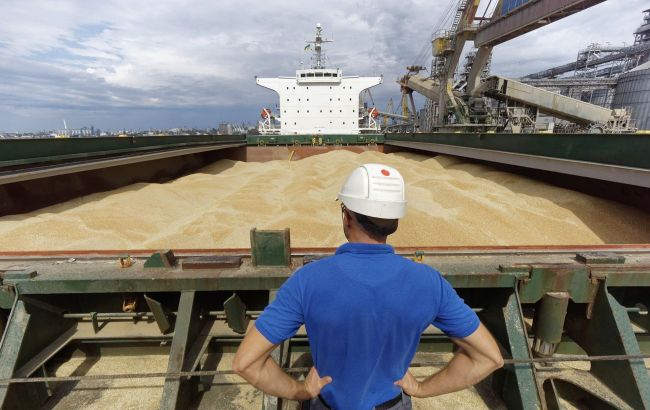 Photo: Grain exports (GettyImages)
Russian strikes on Ukrainian ports are disrupting grain exports through the Black Sea. The attacks have prompted shipowners to avoid calling at Ukrainian ports, while the cost of cargo insurance has surged, the Financial Times reports.
Russia's attacks on Ukrainian port infrastructure are beginning to affect Black Sea grain exports.
Following a series of strikes on port facilities in Odesa, shipowners are increasingly refusing to send vessels to the region, while some grain traders have suspended purchases.
At the same time, shipping insurance costs have risen sharply, further complicating logistics.
According to the Financial Times, citing maritime security firm Ambrey, drone attacks have reduced storage capacity at Ukraine's largest port in Odesa by roughly one-third.
Ports operating under constant threat
According to the Ukrainian Sea Ports Authority, dozens of Russian attacks on ports and civilian vessels over the past two weeks have killed 11 people, including port workers and foreign seafarers.
After Russia withdrew from the Black Sea Grain Initiative in 2023, Ukraine restored exports through its own maritime corridor. However, the latest escalation has once again put that route at risk.
Grain market analyst Masha Belikova said that Russia had been attacking ports and terminals for four consecutive days and that ships no longer wanted to enter them.
According to her, domestic grain purchase prices at Ukrainian ports have effectively disappeared, while shipowners have stopped offering freight services for new shipments.
Insurance costs rise
Industry experts also report a sharp rise in shipping insurance costs. Pavlo Sosnovskyi, an analyst at International Seaborne Market (ISM), said some vessels have remained outside Ukraine's territorial waters while operators assess the risks of further attacks.
He noted that several insurers had suspended war risk coverage for voyages to Ukrainian ports.
As an alternative, market participants are discussing increasing shipments through Ukraine's Danube ports, with cargo then transported via Romania's Port of Constanța. This route was used during the early years of Russia's full-scale invasion.
Impact on global markets
Analysts say the situation is affecting more than just Ukraine's exports. Reuters notes that as Russia and Ukraine together account for roughly one-third of global wheat supplies, disruptions to Black Sea shipping could affect the global market.
The Financial Times also reports that Russia's export capabilities are deteriorating. Following a series of Ukrainian strikes on vessels in the Sea of Azov, analysts have downgraded the forecast for Russian wheat exports in July by approximately 20%. Delayed harvests and fuel problems are having an additional impact.
Against this backdrop, wheat prices continue to climb. Chicago wheat futures have reached their highest level in nearly two years, while milling wheat prices in Paris have risen to their highest point in the past 17 months.
According to Andrey Sizov, managing director of agricultural consultancy SovEcon, the market is beginning to realize that the current events no longer look like a short-term price spike. The analysts warn it could have more serious consequences, noting that future export forecasts for both Russia and Ukraine will have to be significantly downgraded, which in turn will worsen the situation with global grain and wheat stocks.
Despite intensifying Russian attacks, Ukraine intends to maintain grain export volumes at a level no lower than that of the previous season. At the same time, according to UAC estimates, the country has already lost about a third of its export capacity due to strikes on Black Sea ports.