Secret Carpathians: 5 breathtaking locations known only to local guides

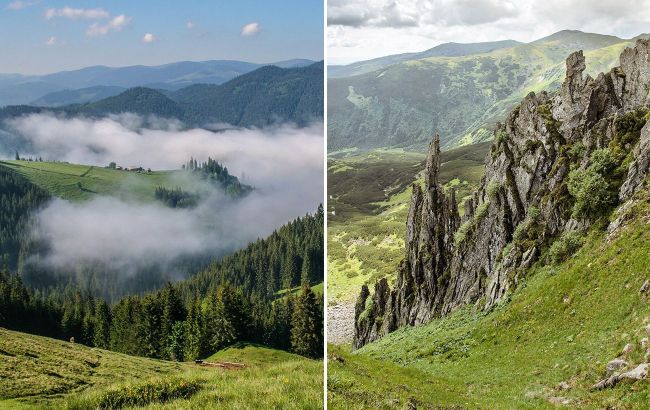 Five secret places in the Carpathians that few people know about (RBC-Ukraine collage)
While most tourists traditionally hike to Mount Hoverla, stand in line for the cable car in Bukovel, or flock to Synevyr Lake, the real magic of the Carpathians remains hidden from the mass tourism eye. If you’re tired of crowds, souvenir stalls, and want to experience the Carpathians as wild, mystical, and quiet, it’s time to step off the popular routes.
RBC-Ukraine presents five incredible Carpathian locations that are rarely featured on tourist banners.
Kostrycha Ridge: The best panoramic cinema
If you want to see the entire Chornohora range (including Hoverla and Pip Ivan) as if it were in the palm of your hand, without the need for a strenuous climb to the high peaks, this is the place for you.
Kostrycha is a relatively low and gently sloping ridge running parallel to Chornohora. It has few tourists, but offers endless alpine meadows, abandoned wooden shepherd huts, and breathtaking views.
It becomes especially magical during the blooming of the red rue (rhododendron), or in autumn, when the valleys are covered in thick morning fog and the peaks float above it like islands.
Shpytsi: Stone giants of Chornohora
Mount Shpytsi (1,863 m) is not far from popular hiking routes, but due to its remoteness from main access roads, only true enthusiasts make it here.
Its main highlight is the massive rock formations—stone outcrops rising vertically straight from grassy slopes.
They resemble giant natural spires or Gothic columns. When clouds descend over the mountain, the atmosphere becomes cinematic, as if you’ve stepped onto the set of The Lord of the Rings.
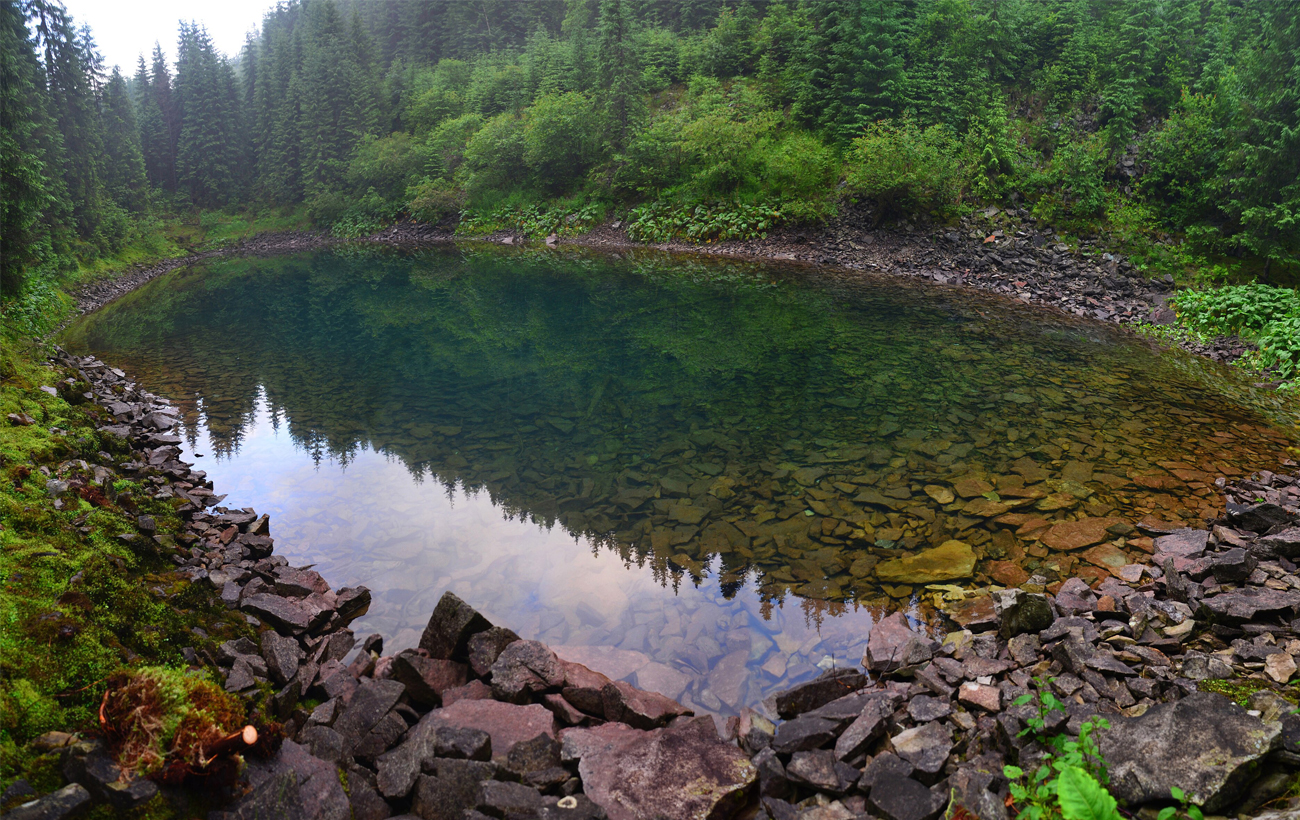
Mountain lake Rosokhan (photo: wikipedia.org)
Yasinia village: Hidden wonders
Most travelers simply pass through this colorful village by car on their way to Drahobrat, without realizing what treasures are hidden in its surroundings. Yasinia is not just a transit stop, but an ancient capital of the Hutsul Republic with a unique atmosphere.
Right in the village stands the remarkable wooden Strukiv Church (1824), built without a single nail and protected by UNESCO.
A bit further, toward the hamlet of Svydovets, you can find the stunning 10-meter Trufanets Waterfall — the highest natural waterfall in the Zakarpattia region. It cascades right next to the road, yet most tourists somehow miss it.
Yasinia is also the starting point for some of the least forested and wildest hiking routes to the scenic Svydovets range.
Lake Rosokhan: Turquoise secret of the Gorgany
Forget Synevyr, where it’s hard to take a photo without strangers in the frame. Rosokhan is a tiny hydrological wonder hidden on the slopes of the Arshytsia ridge in the Gorgany mountains.
Its water has a striking greenish-turquoise color and is so clear that every submerged tree on the bottom is visible.
The lake was formed by a landslide, has no surface inflows, and never warms above +11–13°C. There is no infrastructure here — just you, ancient forest, rugged stones, and absolute silence.
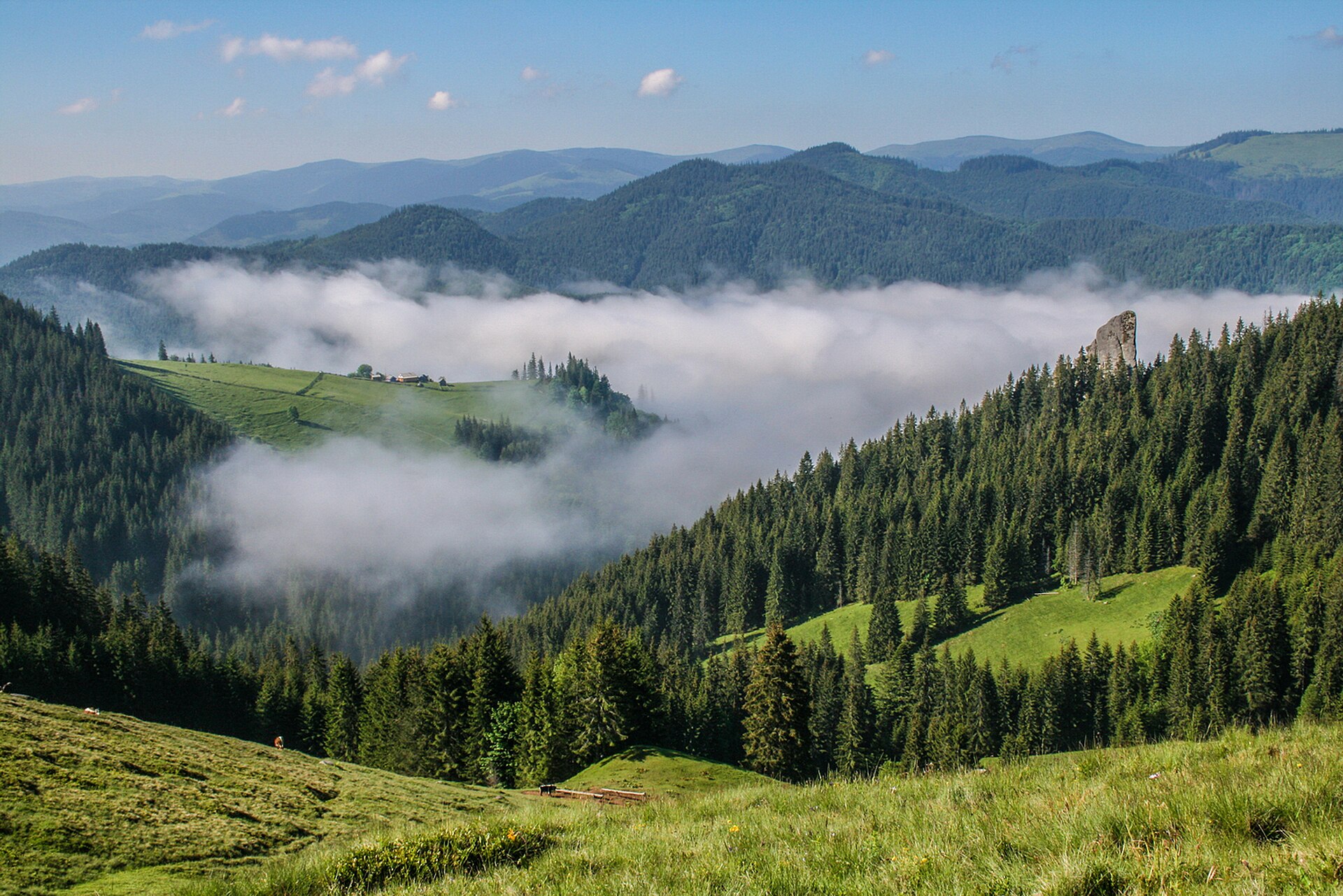
Hungarian Rocks (photo: wikipedia.org)
Hungarian Rocks: Carpathian Stonehenge
This unique rock formation is located in the Verkhovyna region, near the village of Zelene, and remains a mystery even for many experienced guides.
The Hungarian Rocks are a group of massive sandstone blocks, up to 30 meters high, standing alone in the middle of a coniferous forest. The rocks form bizarre labyrinths and narrow passages.
Local historians and esoteric enthusiasts still debate whether this is purely a natural formation or an ancient pagan sanctuary-observatory where our ancestors performed rituals.
Checklist for visiting hidden places
Offline navigation. In these locations, mobile coverage is often unavailable. Download maps in advance (for example, Maps.me or paper routes).
Proper footwear. Gorgany rocks and wild ravines do not forgive urban sneakers — only trekking boots with good ankle support are suitable.
Environmental etiquette. Since these places are not serviced by municipal cleaning teams, all waste (even the smallest items) must be taken back to civilization.