Scientists 3D-print living organ tissue in space for first time: Here's why it matters

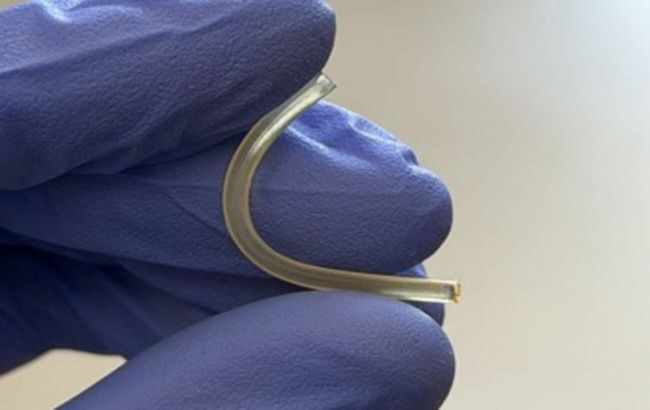 Twenty-eight nerve implants were produced aboard the International Space Station (photo: Auxilium Biotechnologies)
Auxilium Biotechnologies has achieved a historic breakthrough in regenerative medicine. For the first time, living kidney and liver tissues have been successfully 3D-printed aboard the International Space Station under microgravity conditions, according to a company press release.
Space bioprinting: What AMP-1 platform can do
Most previous orbital experiments were limited to artificial test samples or proof-of-concept demonstrations. However, the latest mission proved that the automated AMP-1 platform is capable of high-precision, multi-purpose biomanufacturing.
The bioprinter operated in space using cellular structures and tissue designs developed by specialists at the Wake Forest Institute for Regenerative Medicine (WFIRM).
Key achievements of the current space mission:
- Living human kidney tissue was successfully produced in space for the first time in history
- Functional liver tissue was fully bioprinted in orbit for the first time
- First-ever simultaneous production of three different tissue types during a single mission was achieved
- Production batch of 28 functional nerve repair implants was manufactured for treating nervous system injuries.
Thanks to the microgravity environment, scientists achieved an exceptionally uniform distribution of cells throughout the tissue structures. This opens up real possibilities for creating complex biological products and eventually manufacturing fully functional artificial organs.
The capsule carrying the samples successfully splashed down off the coast of California at 5:11 a.m. Pacific Time on June 17.
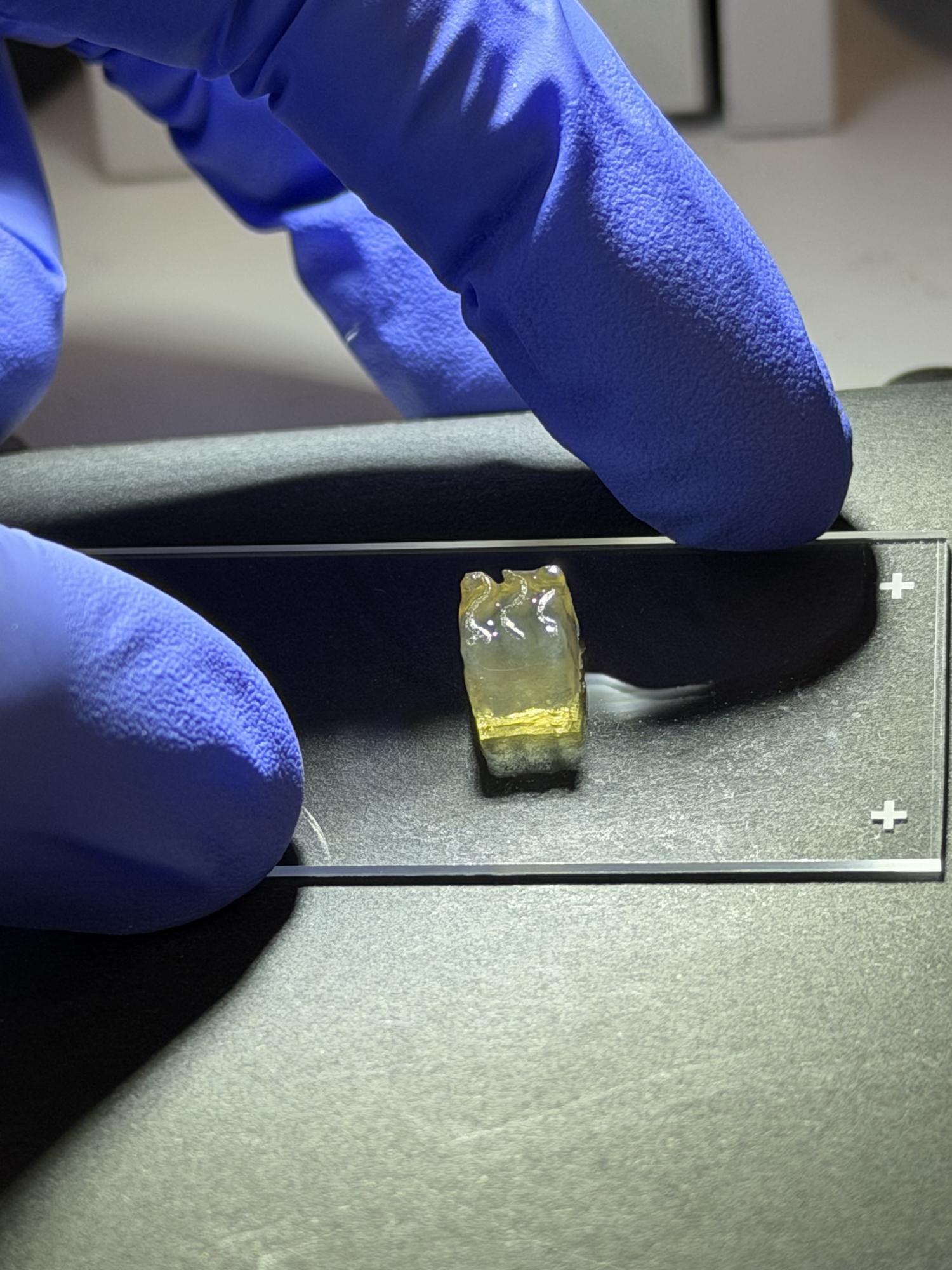
A liver implant printed aboard the International Space Station (photo: Auxilium Biotechnologies)
New era of research, preparations for lunar missions
The main commercial and scientific goal of the project is to create organoids—three-dimensional miniature models of human organs.
Pharmaceutical giants and research laboratories use them to study disease mechanisms, test drug safety, and model treatment responses. This could eventually replace traditional cruel animal testing methods.
Scientists explained that until now, all organoids were created on Earth and then transported into orbit aboard rockets.
The ability to print them directly in space would give researchers autonomous access to experiments and eliminate dependence on spacecraft launch schedules.
Amid the planned retirement of the International Space Station, Auxilium is already developing a long-term strategy to integrate its printers into future commercial orbital stations, including projects such as Vast and Starlab.
The technology is expected to be scaled up in the future to support long-duration interplanetary missions and provide autonomous medical care at permanent lunar bases.
This material is for informational purposes only and should not be used for medical diagnosis or self-treatment. Our goal is to provide readers with accurate information about symptoms, causes, and methods of detecting diseases. RBС-Ukraine is not responsible for any diagnoses that readers may make based on materials from the resource. We do not recommend self-treatment and advise consulting a doctor in case of any health concerns.