Russian hybrid attacks in Europe reach 'new level,' German FM says

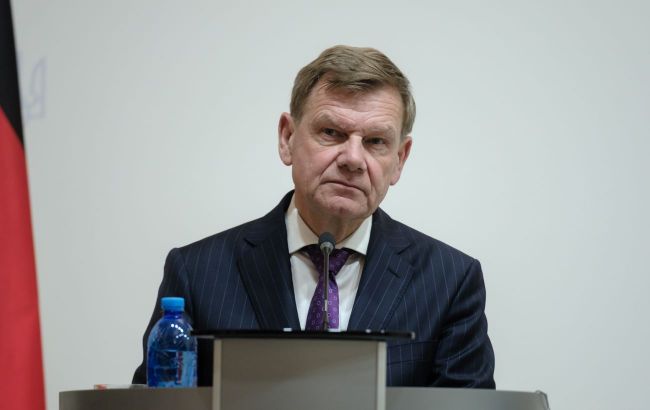 German Foreign Minister Johann Wadephul (photo: Vitalii Nosach, RBC-Ukraine)
Russia's hybrid attacks against European countries that support Ukraine have reached a "new level," German Foreign Minister Johann Wadephul said at a UN Security Council meeting, according to dpa.
"Russia's hybrid attacks against those who support Ukraine and support international law have reached a new level," Wadephul said.
He referred to an attempted attack at Germany's Leipzig airport in early August, saying Russia had tried to blow up two Ukrainian cargo planes using a drone rigged with explosives.
"This is not an isolated example of Russia's reckless and dangerous escalation in Europe, and we must not forget that the consequences of this war are being felt around the world," he said.
Wadephul said Russia was "exacerbating hunger and starvation worldwide" as Ukrainian grain could not be exported due to attacks on ports.
"Let us finally escape this spiral of destruction and violence," he told the meeting.
The German foreign minister repeated calls for a full and immediate ceasefire as well as an exchange of prisoners of war.
"We need a return to negotiations in good faith, based on the principles of international law, paving the way for a comprehensive, just, and lasting peace."
"Ukraine is ready. We Europeans are ready, and Germany stands ready to contribute to a peaceful outcome we urgently need."
Russian provocations
The US Central Intelligence Agency has warned European countries that Russia is preparing to carry out an operation against them similar to Ukraine's Operation Spiderweb.
Mediterranean countries could be potential targets for Russia. Russia may use drones hidden inside shipping containers and launch them directly from the sea.
Russia is most likely to use Gerbera drones against Spain, France, or Italy, the same drones it uses to terrorize Ukraine daily.
NATO has previously said it is ready to respond to any Russian provocations and attacks. An Alliance general stressed that the organization is prepared to counter potential escalation on Europe's eastern flank.
Lithuania has also reported receiving intelligence about Russia's possible preparations for "false flag" operations. According to the Lithuanian side, such actions could be aimed at testing NATO's readiness to respond.