Russian economy faces 'high-cost money' as war with Ukraine drags on, intelligence reports

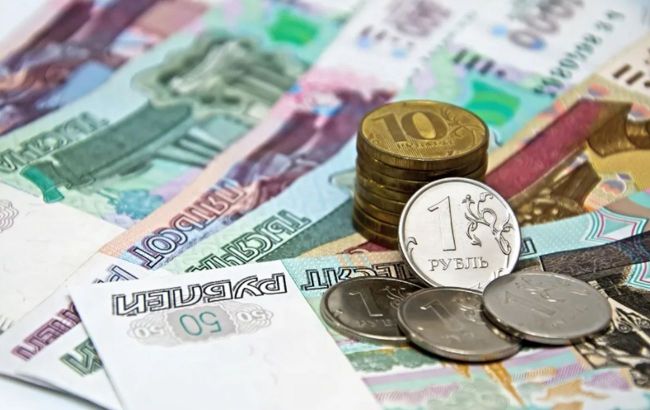 Photo: Russia’s economy enters a "high-cost money" phase amid war in Ukraine (Getty Images)
In 2026, Russia's economy is entering a "high-cost money" phase, becoming the new normal amid the war against Ukraine and prolonged macroeconomic instability, according to the press service of the Ukrainian Foreign Intelligence Service.
According to signals from the Bank of Russia, the high cost of capital will persist for a long time, forcing businesses to abandon inertia-based planning, cut investments, and strictly control working capital.
Russian companies will have to reassess project payback periods, payment deferral conditions, and the real cost of borrowed funds. As a result, even with formally stable demand, caution rises and growth readiness declines.
Additional pressure on business comes from tax policy. From January 1, 2026, Russia applies an increased VAT rate of 22 percent.
This complicates settlements with counterparties, increases the risk of tax disputes, and raises administrative burdens, which is particularly painful for small and medium-sized businesses in a wartime economy.
The labor market remains tight: there are more vacancies than workers. Low unemployment amid mobilization and demographic losses means companies face increased competition for staff and pressure on payroll funds.
At the same time, expected wage growth slowdown forces businesses to replace "wage competition" with automation, role reductions, and higher requirements for versatile skills.
Problems are also mounting in logistics. Mandatory electronic documentation and stricter regulation of international transport create risks of delays and inspections.
For marketplace sellers, new platform economy rules, higher taxes, and regulatory uncertainty further worsen the situation, sharply increasing the cost of any mistake.
"In combination, these factors show that the economic consequences of the war against Ukraine are hitting Russia's domestic business environment increasingly hard. Instead of development and investment, companies are forced to focus on survival, legal defense, and risk minimization, signaling systemic economic degradation in the medium term," the Foreign Intelligence Service noted.
Collapse risks for the Russian economy
Previously, the Ukrainian Foreign Intelligence Service reported that Russia's economy has fallen into a problematic loan trap that could trigger a collapse. Even the Russian government acknowledges the issue — the Kremlin has effectively confirmed a high risk of a banking crisis and corporate sector payment failures.
A key factor is the hidden growth of nonperforming debt. Even accounting for restructured loans, the real volume of troubled debt has already exceeded 11 percent, reaching roughly $131 billion.
According to intelligence, since early 2022, Russia's war against Ukraine has cost Russian taxpayers $550 billion. Overall, Russia's war spending since 2021 has nearly quadrupled.
The Foreign Intelligence Service notes that Russia's financial and institutional system is increasingly sinking into controlled chaos. Banks conceal ownership structures, officials evade declarations, and entrepreneurs barely keep their businesses afloat.
Additionally, the Russian economy suffers not only from sanctions and the war in Ukraine. Permafrost in regions critical to the Russian economy is beginning to thaw, threatening key infrastructure.
Furthermore, Russia faces a large-scale utilities collapse caused by years of infrastructure decline and the redirection of state funds to the war against Ukraine.