Russia turns to China for military uniforms amid domestic textile collapse

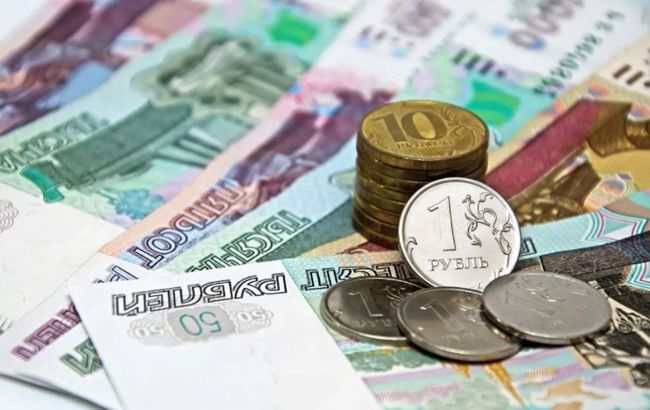 Illustrative photo: Russiaєs economy takes another hit (corporatefinanceinstitute.com)
Russian clothing and footwear manufacturers are shutting down their businesses on a large scale due to rising taxes and fines. The trend mainly affects domestic producers, while foreign companies continue to operate comfortably amid these developments, reports the Foreign Intelligence Service of Ukraine.
Despite repeated promises of "import substitution," the Russian industry failed to capitalize on the exit of international brands after 2022. Temporary sales growth was short-lived, and by 2024 and 2025, the sector faced falling demand, store closures, and rising costs.
"Even big players are shutting down their businesses en masse. Incity and Deseo went bankrupt, the Just Clothes brand closed, and Gloria Jeans is closing shops, selling factories, and moving production abroad. Half of all retail outlets that closed in 2025 were clothing and footwear shops, mostly Russian," the intelligence service said.
Instead of developing domestic production, the market is flooded with imported goods, mainly from China and Türkiye. Russia lacks a full-fledged textile base, including modern factories, quality fabrics, and accessories. Even military uniforms are ordered from China. Russian marketplaces Wildberries and Ozon have promoted Asian imports and displaced local producers.
"Against the background of rising taxes and fines, businesses are losing profitability while consumers are losing purchasing power. As a result, russian fashion has proven incapable of existing without well-known international brands. It has exposed poverty, technological weakness, and the economy's complete dependence on the outside world," the intelligence service concluded.
Ukrainian intelligence also noted that Russia's financial and institutional system is increasingly sinking into controlled chaos. Banks conceal ownership structures, civil servants evade reporting requirements, and entrepreneurs struggle to keep their businesses afloat.
Recently, Russia purchased critical turbo generators for nuclear power plants from China for the first time, highlighting the weakness of its domestic engineering sector and signaling Moscow's deep technological dependence on Beijing.
Russia's economy is suffering not only from sanctions and the war in Ukraine. Permafrost in regions critical to Russia's economy is starting to thaw, posing a threat to vital infrastructure.