Russia testing Europe's limits with new provocations, UK ambassador warns


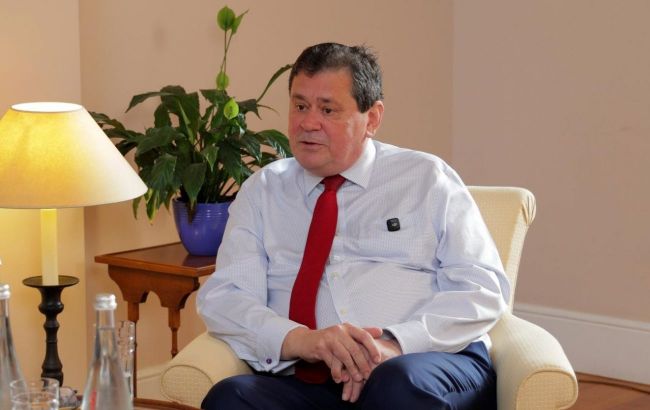 Photo: British Ambassador Neil Crompton (RBC-Ukraine)
For years, Russia has been testing NATO's readiness by carrying out air provocations against Poland, Romania, and the Baltic states. Neil Crompton, the British Ambassador to Ukraine, explains the risks involved and when the Alliance will have to respond with force.
How Russia testing the waters in Europe
According to the diplomat, violations of the airspace of NATO countries, Romania, Poland, and the Baltic states, have been ongoing for several years. He notes that various terms are used to describe such actions, including hybrid warfare and cyberattacks.
"Russia is testing and sort of 'pokes', and I think NATO collectively discusses those response regularly," Crompton says.
According to him, Alliance countries are investing, both individually and collectively, in strengthening their defenses, including intelligence, cyberspace, and the military.
The Ambassador recalls that in Ankara, NATO characterized Russia as a long-term threat to European security. Therefore, each incident is analyzed separately, with a military response chosen that will not lead to escalation.
NATO and Russia playing cat and mouse
When asked whether NATO's response to the situation in Poland is sufficient to deter Kremlin leader Vladimir Putin from further provocations, the Ambassador notes that discussions regarding the optimal response are ongoing at the Alliance's headquarters in Brussels.
"I think it's like a cat and mouse game. Putin will, I'm sure, test in another area and NATO will have to respond," the diplomat says.
At the same time, according to Crompton, Russia's strategic position is weakening over time, partly due to Ukraine’s actions, partly due to NATO as a bloc. This creates additional challenges for Moscow.
Threat to Baltic States and Alliance's resolve
When asked about the risk of direct Russian aggression against one of the NATO countries, particularly in the Baltic region, the Ambassador replies that such a scenario is widely discussed.
"My personal sense is that NATO resolve to defend each other's states is strong and that would be a miscalculation by Russia. But we clearly need to not be naive and we need to both prepare for but also deter contingencies like that," Crompton emphasizes.
The diplomat adds that NATO has a good, coordinated plan designed specifically for this purpose. According to him, dealing with Russia is very difficult right now.
British troops in Estonia ready to act
The Ambassador was also asked whether the British contingent, as part of the multinational operational forces in Estonia, is ready to engage in combat immediately in the event of an attack, without waiting for consultations at the NATO level.
"They're there to both demonstrate support to Estonia and to deter Russian aggression. So the intention would be that they do whatever to act in light of the circumstances at the time," Crompton replies.
Earlier, Ambassador Crompton said that President Volodymyr Zelenskyy had invited the new British Prime Minister, Andy Burnham, to visit Ukraine as soon as possible.
Regarding a possible visit by King Charles III to Kyiv, the diplomat says that only the monarch himself knows the answer.
Meanwhile, the diplomat notes that Russian troops in eastern Ukraine are losing tens of thousands of men every month, either killed or wounded, and that their actual rate of advance has turned out to be slower than a snail’s pace.