Russia switched to jet Shahed drones: Expert explains why


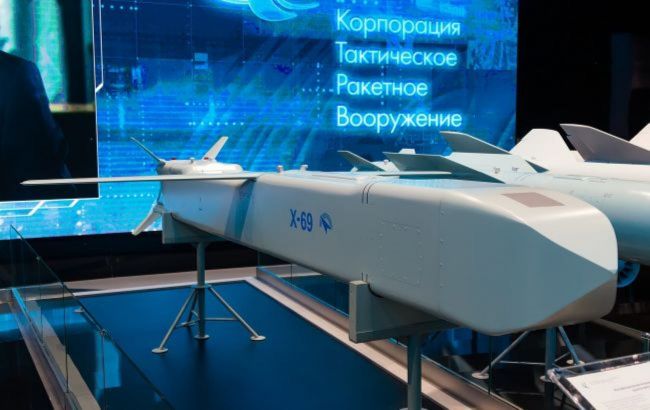 Kh-69 missile, one of the predecessors of jet-powered drones (photo: Wikipedia)
Russia spent a long time searching for a solution to scale up production of aerial attack weapons, and jet-powered Shahed drones became one of the results, aviation expert Anatolii Khrapchynskyi explained on RBC-Ukraine's TSE BAZA (THIS IS THE BASE) podcast.
From cruise missiles to jet-powered drones
Khrapchynskyi recalled that at the start of the full-scale invasion, most aerial attacks involved launching large numbers of Kh-101, Kh-55, and Kh-22 cruise missiles from strategic aircraft.
According to him, Russia did not have cruise missiles that could be used from tactical aircraft at ranges of more than 400 km. He described the modernization of the Kh-69 as the first step, as launching these missiles from tactical aircraft significantly reduced strike costs.
Later, the Russians began looking for a solution that could be launched from a ground platform, which led to the emergence of Shahed drones powered by internal combustion engines that put a significant strain on Ukrainian air defenses. They then began fitting them with jet engines.
The first jet-powered modification was simply an engine replacement, and because of the airframe's design, the drone could not exceed 300 km/h. After the airframe was reinforced, the Geran-4 emerged, capable of reaching speeds of up to 500 km/h. At the same time, the expert said the Russians obtained what he described as a workable version of the Iranian Karrar drone's design documentation, which resulted in the Geran-5.
Why Russia needs cheap weapons
According to the expert, the main driver was finding a solution that would keep Ukraine under round-the-clock air alerts and allow large numbers of cheap weapons to be launched at low cost. In his view, the difficulty in intercepting them lies in the fact that they are small drones, while radar systems are conventional.
Khrapchynskyi said former Russian Defense Minister Sergei Shoigu was shown the Kh-69 and given its technical specifications, but that was not enough.
The expert said the main problem was the insufficient number of cruise missiles and the inability to scale up their production. He also noted that a sortie by six strategic bombers costs Russia $2 million, not including the cost of the missiles.
In the expert's view, the Russians were looking for a solution that would significantly reduce the cost of air attacks while maximizing terror. He said that what the Germans did to London, the Russians are now trying to do to Kyiv.
Earlier, RBC-Ukraine reported that the advantage of jet-powered drones for Russia lies in their combination of speed, range and relatively low cost compared with conventional cruise missiles.