Russia's shift to jet-powered drones: What it means for Ukraine's defenses

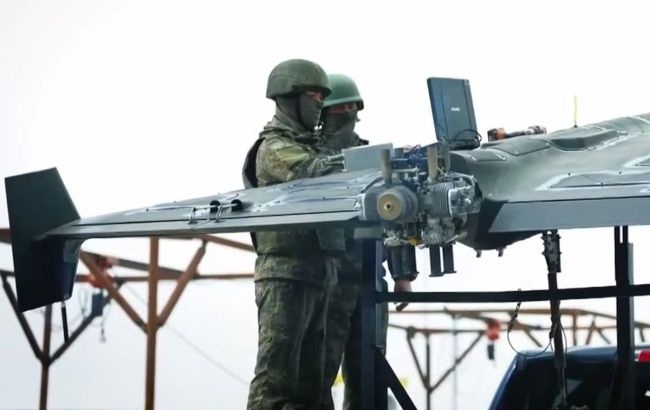 Photo: Geran jet-powered drone (Russian media)
Russia is increasingly using jet-powered drones and missile-drones, including new versions of the Geran and Banderol. Their main advantage is significantly higher speed, making them more difficult to intercept and leaving less time for detection and engagement.
RBC-Ukraine spoke with military experts about Russia's shift to jet-powered drones, its ability to mass-produce them, ways to counter the threat, and the development of Ukraine's own high-speed unmanned systems.
Main takeaways:
- Russia is gradually shifting to jet-powered drones. Conventional Shaheds and their Russian-made counterparts are no longer as effective in large-scale attacks, prompting Moscow to increasingly rely on faster jet-powered systems.
- Engines and components are limiting large-scale production. Jet engines are more expensive and technologically complex, while Russia remains dependent on imported components, including supplies from China. The production of composite materials is another challenge.
- Speed is the key advantage. Some of the newer jet-powered drone variants can reach speeds of around 600-700 km/h (370-435 mph), making them significantly more difficult to intercept.
- Jet-powered drones can be intercepted by different air defense systems. Slower variants may be engaged by interceptor drones, while faster targets require air defense systems capable of countering cruise missiles. At the same time, using expensive interceptor missiles against relatively cheap drones is economically inefficient.
Russia is betting on jet-powered drones
Russia's shift toward more active use of jet-powered drones is already underway. As Russian manufacturers expand production, these systems are being used more frequently in strikes against Ukraine.
One reason is the declining effectiveness of conventional Shahed drones during large-scale attacks. According to Anton Zemlianyi, a senior analyst at the Ukrainian Center for Security and Cooperation, Russia is increasingly relying on faster drones capable of penetrating Ukraine's layered air defense network and striking targets deep in the rear.
"This transition is already taking place. The Russians are increasingly establishing mass production of jet-powered drones and missile-drones and are using them more often in attacks on Ukrainian territory," Zemlianyi said.
According to him, conventional Shahed drones no longer serve the role they did at the beginning of their widespread use. Jet-powered systems are intended to reduce flight times and complicate the work of Ukraine's air defenses.
This includes not only new versions of the Geran drone but also missile-drones such as the Banderol. Their emergence presents a separate challenge for Ukraine because they combine speed, range and relatively low cost compared with traditional cruise missiles.
Can jet-powered drones become just as widespread?
Despite their obvious advantages for the enemy, making jet-powered drones as widespread as conventional Shaheds is more difficult. This is primarily due to their technological complexity and the cost of their components.
One of the main constraints is the production of jet engines, which are more expensive than conventional engines and more difficult to manufacture. According to Zemlianyi, Russia depends on imports of such components, particularly from China.
Another problem is the materials used to manufacture the drone's airframe. Russia also faces difficulties producing the required composite materials and depends on imports of certain components and chemical compounds.
"This is an entire set of factors that limits their mass production. Right now, the main issue being discussed is engines. These are jet engines, and they are more expensive. The same applies to the composite materials used to make the drone itself," the expert says.
However, the scaling of jet-powered drones will depend not only on Russia's ability to manufacture such systems on its own. The key bottleneck remains turbojet engines, the supply of which, according to Defenыe Express editor-in-chief Oleh Katkov, largely depends on private Chinese companies.
"At the moment, everything depends on how many small turbojet engines from private Chinese companies they can obtain," Katkov notes.
According to him, Russia may try to follow the same path it took with engines for conventional Shaheds — initially purchasing them abroad and then gradually establishing domestic production.
Moscow may also seek agreements with Chinese manufacturers to simplify the design of such engines to scale up production in the future.
Another factor is the complexity of the manufacturing process itself. A jet-powered drone is technologically more complex than a conventional Shahed and therefore takes more time to assemble, Anton Zemlianyi believes.
At the same time, this does not mean Russia will be unable to increase production. On the contrary, according to the expert, gradual scaling is already taking place.
Why jet-powered drones are harder to shoot down
The main advantage of jet-powered drones over conventional Shaheds is speed. It reduces the amount of time Ukraine's air defenses have to detect, track and destroy a target.
"They are much more difficult to shoot down because of their high speed. For now, this is the main problem and the main advantage of these systems," Zemlianyi emphasizes.
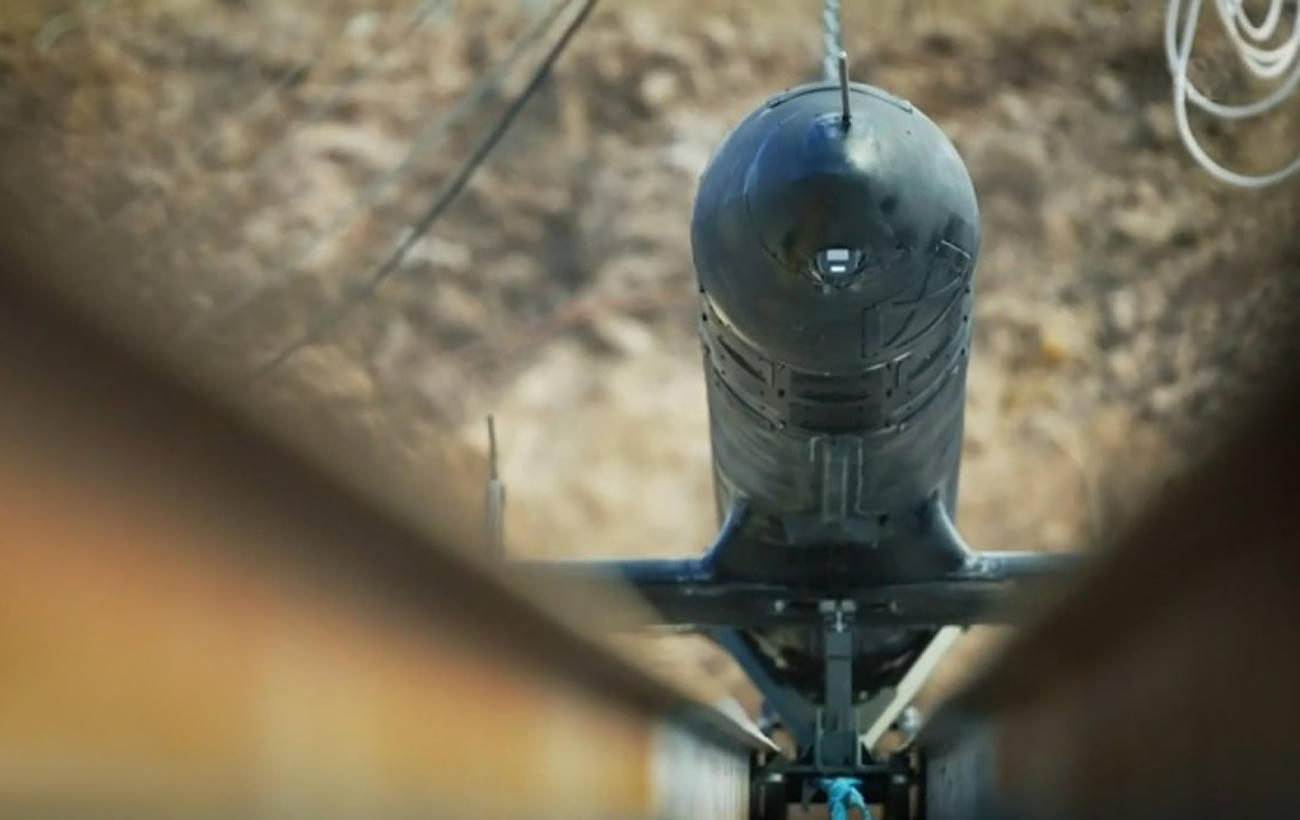
Photo: Geran drone (video screenshot)\
At the same time, the term "jet-powered drone" is increasingly becoming conditional. For example, the Geran-5, which is described as a jet-powered drone, is much closer to a cruise missile than to a Shahed, explains Defenыe Express editor-in-chief Oleh Katkov.
"If we stop calling them jet-powered Shaheds and instead call them cruise missiles, we understand that the enemy is acquiring a large number of systems that require appropriate countermeasures on our side," Katkov says.
Different jet-powered drone variants can differ significantly in their characteristics. For example, earlier versions of the jet-powered Geran could remain relatively slow due to the design of the drone itself. Against such targets, interceptor drones capable of reaching higher speeds could operate effectively.
According to Zemlianyi, newer variants more closely resemble cruise missiles in both design and speed characteristics. Various short- and medium-range air defense systems can be used against them, including Mistral, Skynex, Gepard and other systems capable of engaging fast-moving targets.
At the same time, another problem arises — the economics of interception. Using expensive missiles from Patriot, SAMP/T or IRIS-T systems against relatively cheap drones is not cost-effective.
That is why interceptor drones, such as systems similar to Ukraine's P1-Sun, are considered a promising solution. Their cost is several times lower than that of traditional surface-to-air missiles. Ukraine is already developing new interceptor drone models, although it remains unclear whether they will be able to effectively engage the fastest targets, Zemlianyi says.
The emergence of faster Russian targets marks a new stage in the technological race, Katkov believes. According to him, whether Ukraine can respond effectively to this shift will largely depend on weapons developers and procurement authorities, but the technological capabilities to do so exist.
"This issue should be addressed by the developers and procurement authorities themselves. Do we have the capabilities to take on the next stage of this technological race? Yes, we do," Katkov says.
Former Ukrainian Defense Minister Mykhailo Fedorov separately spoke about the development of Ukrainian interceptor drones. According to him, the first Ukrainian jet-powered interceptors are already undergoing combat testing. One of these systems can reach speeds of more than 600 km/h.
"Several Ukrainian manufacturers already have such solutions. One of the teams has created a jet-powered interceptor drone that can reach speeds of more than 600 km/h thanks to its jet engine. The system is now undergoing combat testing," Fedorov said.
He stressed that the next task should be to scale up production and continue testing such systems to counter Russian jet-powered drones.
Ukraine is also shifting to jet-powered drones
Ukraine is not only trying to counter Russian jet-powered drones but is also actively developing this area. According to Zemlianyi, Ukrainian jet-powered drone developments emerged even earlier than Russian ones. Among such systems, he mentions the Bars, Palianytsia and other Ukrainian long-range systems.
Ukraine is already using jet-powered drones in strikes on Russian territory, including to hit strategic targets.
"Ukraine was effectively the first to start using and developing jet-powered drones. They are increasingly flying into Russian territory and hitting strategic targets," the expert notes.
At the same time, Ukrainian and Russian approaches to such systems differ. Some Ukrainian developments are technologically more sophisticated and are already approaching cruise missiles in terms of their capabilities.
The newer Russian Geran variants and Banderol drones, by contrast, are largely designed with a focus on simplifying their construction and enabling large-scale production. For Ukraine, one of the key issues remains balancing the speed, range, warhead and cost of such a drone, the expert says.
A jet-powered drone can reach its target faster, but its more complex engine and design make it more expensive. Moreover, increasing speed alone does not always mean greater strike effectiveness.
Some Ukrainian jet-powered drones have long been used primarily to strike military targets in occupied territories. The reason is their limited warhead weight. Sending an expensive high-speed drone over a long distance for a relatively small payload is not always economically justified, Zemlianyi explains.
At the same time, advances in technology are gradually expanding the capabilities of such systems.
Will jet-powered drones replace cruise missiles
Russia's reduced use of certain types of cruise missiles amid the emergence of new jet-powered drones may create the impression that Russia is switching from missiles to cheaper unmanned alternatives. However, it is still too early to talk about fully replacing cruise missiles with jet-powered drones.
Jet-powered drones lag behind missiles in a number of technological characteristics, from navigation systems and electronics to protection capabilities and warheads.
"Jet-powered drones are technologically inferior to missiles. A missile has better navigation, better electronics and a better protection system," Anton Zemlianyi notes.
The expert believes it is more accurate to view jet-powered drones as an intermediate class between conventional long-range unmanned systems and cruise missiles. For Russia, their main advantage is the ability to increase the scale of attacks while reducing flight time to the target.
For Ukraine, the development of its own jet-powered drones follows a similar logic — such systems allow targets at long range to be hit faster and complement other long-range strike capabilities.
At the same time, according to Zemlianyi, there is no reason to completely abandon conventional long-range drones or cruise missiles. Different types of weapons perform different tasks, and the future long-range strike system will most likely combine them depending on the specific target.
Thus, the development of jet-powered drones does not mean the disappearance of conventional Shaheds or cruise missiles. Rather, it represents the emergence of a new class of systems that allows both Russia and Ukraine to achieve greater speed, range and strike volume, but with greater manufacturing complexity and cost.
Quick Q&A
– Why is Russia switching to jet-powered drones?
– Conventional Shaheds are losing effectiveness during large-scale attacks because Ukrainian air defenses have learned to counter them effectively. Jet-powered drones can reach speeds of up to 600–700 km/h, reducing flight time and making them harder to detect and intercept.
– What is holding back the mass production of jet-powered drones in Russia?
– The main limitations are the cost and complexity of jet engines, as well as a shortage of composite materials for the airframes. Russia depends on imports of these components, including turbojet engines from private companies in China.
– What can be used to shoot down jet-powered drones?
– Interceptor drones are effective against slower models. Faster targets that are closer in characteristics to cruise missiles require air defense systems such as Mistral, Skynex and Gepard. Using expensive Patriot, SAMP/T or IRIS-T missiles against cheaper drones is economically inefficient.
– Is Ukraine developing its own jet-powered drones?
– Yes. According to analyst Anton Zemlianyi, Ukrainian developments, including the Bars and Palianytsia, emerged even earlier than their Russian counterparts. Ukrainian jet-powered interceptor drones capable of speeds above 600 km/h are also being tested, as reported by Mykhailo Fedorov.