Russia shifts tactics with new offensive strategy in Ukraine, ISW reports


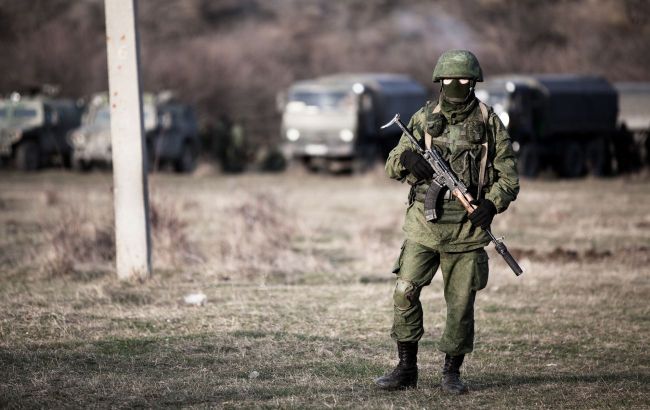 Illustrative photo: Russians have devised a new offensive model against Ukraineєs Armed Forces (Getty Images)
Russian occupying forces have developed a new two-stage model for attacking Ukrainian positions. Analysts at the Institute for the Study of War (ISW), Jessica Sobieski and Jennie Olmsted, explained in an interview with RBC-Ukraine that this approach is one of the reasons the Russian offensive has continued, and why it has proven difficult to stop so far.
According to them, Russia's new offensive model consists of two stages. The first involves attacks on the logistics of Ukraine's frontline units. The occupiers strike Ukrainian ground supply routes at operational depth.
"Russian operational-level interdiction campaigns have facilitated recent Russian advances by denying Ukrainian forces the use of supply lines deeper in the Ukrainian intermediate and near rear, which is in turn complicating Ukrainian forces' frontline defensive operations. Russian drone interdiction of Ukrainian GLOCs is achieving partial effects of battlefield air interdiction (BAI) and is negatively impacting Ukraine's defensive operations that rely on the consistent flow of equipment, supplies, and manpower," ISW analysts explained.
The second stage of Russia's model is the direct assault on Ukrainian positions - after they have been sufficiently degraded and their logistics exhausted. Analysts emphasize that Ukraine has not yet developed an effective counter to Russia’s aerial drone blockade that would reliably protect its logistics.
"Ukrainian forces also suffer from increasing manpower and equipment shortages that have allowed Russian forces to exploit gaps in defenses to advance. Shortages in artillery and other traditional systems have also limited Ukrainian forces' ability to operate in bad weather conditions that disrupt drones," the analysts added.
At the same time, Ukraine has begun to replicate Russian approaches to aerial battlefield interdiction. The near rear of Russian occupying forces has already suffered significant damage from this, particularly on the Pokrovsk axis. If Ukraine’s capabilities expand, this would substantially limit Russia’s offensive potential, as Russian logistics would be unable to concentrate troops in the rear or sustain necessary supplies.
"Ukraine has systems capable of striking Russian near rear areas and has been increasing such strikes in recent months, but needs support to significantly expand its production of mid-range strike systems," the analysts concluded.
ISW also believes that by the end of 2025, Russian occupying forces are likely to complete their operation to seize Pokrovsk and close the Myrnohrad pocket. Russia is also likely to attempt to create conditions for a further advance on Kostiantynivka (Donetsk region) and Huliaipole (Zaporizhzhia region), with the latter currently identified by Russia as a priority direction.