Russia's war against Ukraine could reach turning point in 2027, Latvian president says

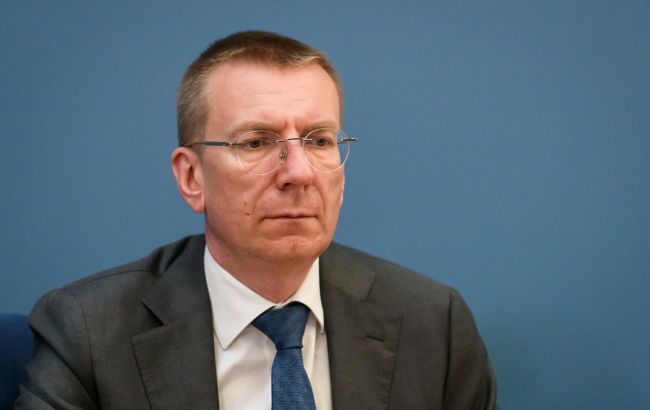 Latvian President Edgars Rinkēvičs (photo: Getty Images)
Russia's war against Ukraine could reach a turning point in the spring or summer of 2027, driven by Russia's deteriorating economy and mounting international pressure on Moscow, Latvian President Edgars Rinkēvičs said in an interview with Reuters.
When the war could reach a tipping point
Rinkēvičs believes the war could reach a tipping point next year that would eventually lead to Moscow's defeat. However, he linked such a development to Ukraine's ability to withstand military and economic pressures.
"If we see Ukraine surviving from a military point of view, from an economic point of view - and I'm sure Ukraine is going to survive - then the tipping point could be next year, next spring, next summer," the Latvian president said.
According to him, Ukraine is facing a "perfect storm": a harsh winter, intensified attacks on energy infrastructure, and strikes on civilian facilities. However, Ukraine has repeatedly demonstrated its resilience, and Europe is ready to support it with military, financial, and infrastructure assistance.
Pressure on Russia will increase
In addition to Russia's deteriorating economic situation, Rinkēvičs pointed to a growing international consensus on the need to end the war.
As an example, he cited attacks that killed Indian sailors or hit vessels from the Philippines and other countries. In his view, this demonstrates that the consequences of the war are extending beyond the immediate conflict zone.
"The number of countries that are putting pressure is going up so the tipping point may come in spring, summer, next year," Rinkēvičs emphasized.
At the same time, the Latvian president does not believe Moscow is genuinely interested in ending the war. In his view, the Kremlin likely sees renewed ceasefire negotiations as a distraction allowing it to continue its invasion.
Russia is becoming more willing to take risks
Rinkēvičs also expressed concern over an increase in hybrid activities against European countries that are likely linked to Moscow. These include airspace violations, cyberattacks, and acts of sabotage.
In his assessment, Russia is still carefully avoiding crossing the threshold that could trigger NATO's Article 5 on collective defense. However, Moscow's willingness to take risks is growing.
The Latvian president noted that European intelligence services are improving coordination and intelligence sharing, making it possible to prevent attacks in some cases.
Latvian President Edgars Rinkēvičs previously warned of Europe's vulnerability to Russian missile attacks. According to him, NATO countries are failing to keep pace with advances in aerial warfare technology, while Moscow is using sabotage and cyberattacks to test their resolve to support Ukraine.
Amid negotiations aimed at ending the war, discussions on security guarantees for Kyiv continue.
Ukrainian President Volodymyr Zelenskyy previously highlighted the uncertainty surrounding security guarantees modeled on NATO's Article 5 and later described Ukraine's accession to NATO as a simpler solution, as there is still no clear answer as to who would defend the country and how in the event of another Russian attack.