Europe may struggle to repel a Russian missile attack, Latvia's president warns

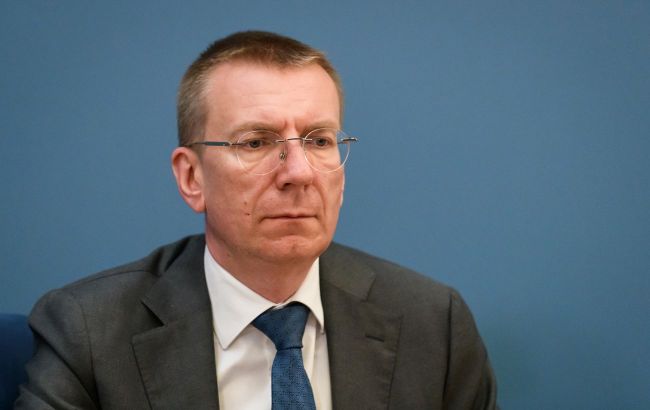 Photo: Latvian President Edgars Rinkēvičs (Getty Images)
The war in Ukraine is rapidly changing the technology of air attacks, while Europe is failing to keep pace with these developments. This creates new risks for NATO, says Latvian President Edgars Rinkēvičs in an interview with The Guardian.
Rinkēvičs noted that technological development in the field of drone warfare in Ukraine is taking place at "lightning speed." In his view, current European approaches to preparing for air warfare may become outdated as early as the middle of next year.
"What we see is that air defence, drone defence, anti-ballistic defense has serious problems," he said.
The Latvian president noted that this situation concerns not only Europe but also Ukraine itself, which has been confronting large-scale Russian air attacks for several years.
"And let’s be frank. Ukraine has it. The whole of Europe and NATO has it," Rinkēvičs added.
According to him, if Russia decides to launch several missiles at NATO territory, this could become a serious test for many countries.
"Because if Russia decides to use a couple of missiles in that territory, I think that would be a serious challenge today for many countries to cope with that," the Latvian president said.
Separately, the Latvian president commented on the risk of further escalation from Russia. He said he does not expect a conventional Russian military invasion of NATO countries, but called for readiness for other scenarios.
In his view, acts of sabotage, cyberattacks, as well as incidents involving drones and missiles indicate that Europe is being tested for its readiness.
Russia may be preparing new provocations in Europe
Poland and Lithuania have recently warned about a possible intensification of Russia's hybrid activities.
Warsaw has reported the intensification of Russian intelligence services' activities against European infrastructure, including railways, bridges and border crossings.
Polish Prime Minister Donald Tusk said that the coming weeks and months could become a period of active Russian actions. He also did not rule out that escalation could spread to Polish territory.
Lithuanian Foreign Minister Kęstutis Budrys said that Vilnius and its allies have the same intelligence information about possible Russian hybrid attacks. For example, a possible false flag operation.
Lithuania announced the preparation of a plan to evacuate residents of Vilnius in the event of a military threat or large-scale crisis.
One of the possible routes is through Poland, which is also being considered as a transit corridor for residents of the Baltic states.