Russia's oil and gas revenues fall nearly by half, Reuters reports

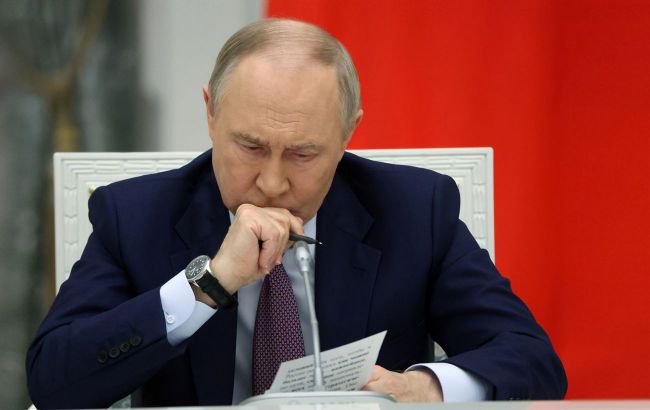 Photo: Russian President Vladimir Putin (Getty Images)
Russia’s oil and gas revenues in January fell nearly by half due to the drop in the ruble-denominated oil price and the strengthening of the ruble, Reuters reports.
The country’s budget may have received only about 420 billion rubles (approximately 5.4 billion dollars), the lowest level since August 2020, when global energy demand collapsed due to the COVID-19 pandemic.
Why it matters
Oil and gas revenues account for about a quarter of Russia’s federal budget and remain a key source of funding for state expenditures, including the Kremlin’s military campaign against Ukraine. Such a sharp decline in revenues adds additional pressure on the country’s financial system.
Oil price in rubles collapses
According to Reuters, the indicative price of Russian oil in rubles, which is used for tax calculations, fell by 53% year-on-year in December to 3,073 rubles per barrel, while the ruble simultaneously strengthened by 30.6% compared to December 2024. This combination of falling prices and currency appreciation led to a significant reduction in budget revenues.
Official data in February
The Russian Ministry of Finance will publish official data on January’s oil and gas revenues on February 4.
Overall, the 2026 budget forecasts oil and gas revenues of 8.957 trillion rubles, while total federal budget revenues are projected at 40.283 trillion rubles.
For comparison, in 2025, Russia’s federal budget revenues from oil and gas fell by 24% to 8.48 trillion rubles, also marking the lowest level since 2020.
At the current exchange rate, 1 US dollar equals 77.65 rubles.
Thus, the start of 2026 could be one of the most challenging periods for Russia’s state finances in recent years, especially given the budget’s reliance on the energy sector and rising expenditures during wartime.
The Russian economy ended 2025 with catastrophic results: oil prices fell to a five-year low, and the space industry returned to 1961 levels.
US President Donald Trump recently approved a bipartisan bill that significantly expands the mechanisms for sanctions against Russia. The legislation allows the US president to impose sanctions on countries that continue to purchase cheap Russian oil.