Russia's offensive in Ukraine slows to crawl, ISW says

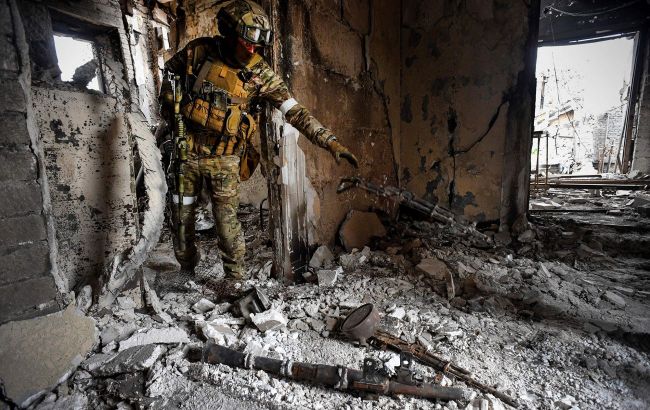 Russian forces have slowed to an unusually slow pace in Ukraine (photo: Getty Images)
Over the past year, the pace of Russia's offensive on the front line has slowed by a factor of 16. In June, Russian forces captured only a few dozen square kilometers, according to an ISW report.
During June 2026, Russian forces captured or advanced across a total of about 30.42 square kilometers of Ukrainian territory. On average, they advanced 1.01 square kilometers per day.
For comparison, the analysts cited data from June 2025. At that time, the Russian army captured 481.25 square kilometers of Ukrainian territory, advancing at an average rate of 16.04 square kilometers per day.
Thus, the pace of Russia's offensive has slowed by approximately 16 times over the past year.
ISW also noted that Russia's territorial gains have remained slow and gradual for more than a year.
Moreover, even the significantly higher rates of advance recorded in 2025 were characterized by analysts as slow, incremental progress rather than a rapid offensive. This year, the situation for Russian forces has deteriorated even further, as they have set a new record for the pace of their advance.
According to the analysts, the Russian army has effectively been reduced to a gradual, step-by-step offensive. It does not have sufficient forces for deep breakthroughs on the front line, so it advances in small sections, covering hundreds of meters or a few kilometers.
For Ukraine's Defense Forces, this creates new opportunities. Ukrainian troops can more effectively destroy enemy personnel and resources, as well as conduct new counteroffensive operations.
On July 2, the Defense Forces attacked one of Russia's largest oil refineries. A fire is currently burning there.
Due to the Ukrainian strikes, gasoline prices in Russia are showing their sharpest increase in the past 20 years.
The Kremlin is currently looking for various ways to stabilize the situation. For example, it is asking Kazakhstan for help.