Russia's Iskander just got longer range: Can Ukraine still shoot it down?


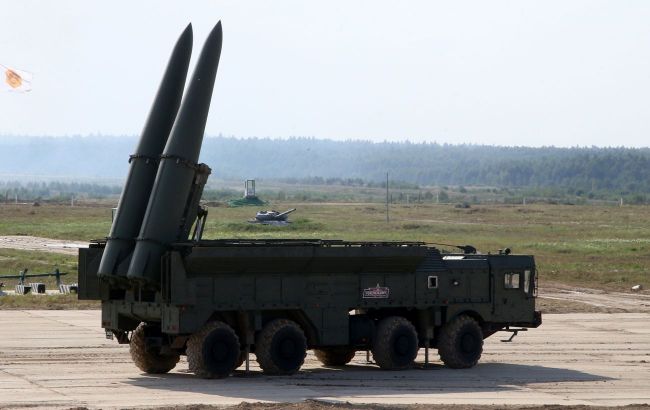 Iskander launcher (photo: Getty Images)
The difficulty of intercepting the upgraded Iskander has not changed. Moreover, Ukraine is successfully intercepting the missiles and striking their launchers, aviation expert Kostiantyn Kryvolap said in a comment to RBC-Ukraine.
How the Iskander's range has changed
According to Kryvolap, for years, Ukrainian military calculations were based on Russia's stated range of 500 km for the Iskander-M. However, according to Ukraine's Defense Intelligence, the actual range of the standard 9M723 missile is only about 390 km. At the same time, a case has been recorded in which the 9M723-2 modification was used at a range of up to 550 km.
The expert recalled that there had previously been reports of tests of the Iskander-1000 missile with a range of up to 800 km, but no confirmed cases of its combat use have been recorded since December 24.
According to him, this rather indicates that Russia is preparing in advance to respond to Ukraine's acquisition of FP-7 ballistic missiles capable of striking Iskander launchers.
According to Kryvolap, the missile has a launch weight of 3,800–4,600 kg, a length of 7.3 meters, and a body diameter of 920 mm. The warhead weighs about 480 kg, although for strikes at ranges of up to 550 km, the Russians may use a slightly lighter version.
What this means for air defense
According to the expert's assessment, with a range of 390 km, an Iskander launcher targeting Kyiv would have to be positioned in the Bryansk region, approximately 150 km from the border. This is already a distance at which Ukrainian reconnaissance and strike drones are capable of detecting and destroying such targets.
Over the past month and a half, Kryvolap noted, at least three launchers have been hit, including a Bastion system in Crimea that uses Oniks and Zircon missiles. Because of the threat posed by kamikaze drones, the Russians, according to the expert, were forced to move some launches targeting the Kyiv region farther away from the Bryansk region.
As for interception itself, Kryvolap noted that the difficulty of shooting down the Iskander has not fundamentally changed: the missile flies along a quasi-ballistic trajectory at an average altitude of about 50 km, can maneuver within 300–400 meters of its main trajectory, and can withstand overloads of 20–30 g.
Patriot systems usually begin tracking the target at a distance of about 100 km and attempt to lock onto it for interception at approximately 25 km — and, according to the expert, Ukrainian air defense, particularly PAC-3, is mostly successful in doing so.
Kryvolap separately mentioned the Bora-M launcher — it differs from the basic model in having more powerful launch rails and a reinforced structure due to the more powerful engine, but there are no fundamentally new solutions here.
The missile also receives an improved guidance system — DSMAC optical correlation seekers or radar seekers resistant to electronic warfare, as well as faster processors based on foreign components from Germany, Switzerland, the United States and Taiwan.
According to Kryvolap, the Russians borrowed some of the technical solutions from North Korean KN-23 missiles.
Earlier, Ukraine's Defense Intelligence revealed the design and manufacturers of the Iskander-K missile, naming Novator, part of the Almaz-Antey concern, as the main developer of the system's cruise missiles.
It was also previously reported that Russia is developing the Iskander-1000 — a modification with an increased range of up to 550 km.