Russia's inflation reality: ISW says prices far higher than Putin admits

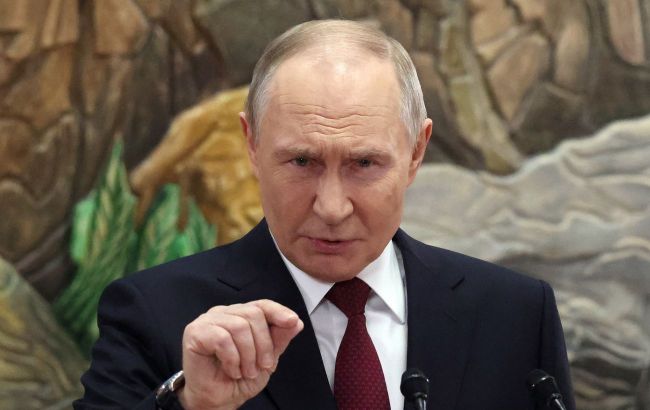 Russian President Vladimir Putin (photo: Getty Images)
The real inflation rate in Russia is higher than what Russian President Vladimir Putin claims. In particular, food prices have risen by 25 percent, according to a report by the Institute for the Study of War (ISW).
Analysts note that the Kremlin continues to try to conceal and ignore the economic consequences of its war against Ukraine, Western sanctions, and poor economic policy decisions.
Recently, Putin acknowledged that Russia's gross domestic product grew by only 1 percent in 2025, compared with 4.1 percent in 2023 and 4.3 percent in 2024. At the same time, he claimed that this slowdown was artificial and part of the Russian government's efforts to curb inflation.
Putin asserted that inflation in Russia fell to 5.6 percent by the end of 2025, compared with a peak of 9.6 percent that he claimed for 2024.
The Russian president also acknowledged that inflation rose to 6.4 percent year on year in January 2026, but said the government had expected this increase after Russia raised the value-added tax from 20 to 22 percent starting January 1, 2026.
At the same time, analysts note that the Russian government likely increased the value-added tax to support a federal budget deficit caused by persistently high defense spending, a burden that directly fell on Russia's population.
ISW tracked reports of sharp increases in food prices in Russia of up to 25 percent both before and after the value-added tax hike took effect. This indicates that the real level of inflation in Russia is higher than what Putin claims.
"The Kremlin's continued false portrayal of the inflation rate aims to posture that neither the war in Ukraine nor Western sanctions are hurting the Russian economy," analysts said.
Problems in Russia's economy
The Russian economy ended 2025 with catastrophic indicators. In particular, oil prices fell to a five-year low, and the space industry reverted to levels seen in 1961.
It is noted that Russia's financial and institutional system is sinking ever deeper into a state of managed chaos. Banks are concealing ownership structures, civil servants are exempted from asset declarations, and entrepreneurs are barely keeping their businesses afloat.
In addition, the International Monetary Fund downgraded its forecast for Russia's economic growth in 2026.
Media reports indicate that Russia is facing increasingly serious financial difficulties in financing its war against Ukraine. Against the backdrop of negotiations, this narrows the Kremlin's ability to prolong the war without economic consequences.
At the same time, Russian President Vladimir Putin is trying to present the Russian economy as capable of sustaining a prolonged war against Ukraine.