Russia rushes to connect Donetsk and Mariupol

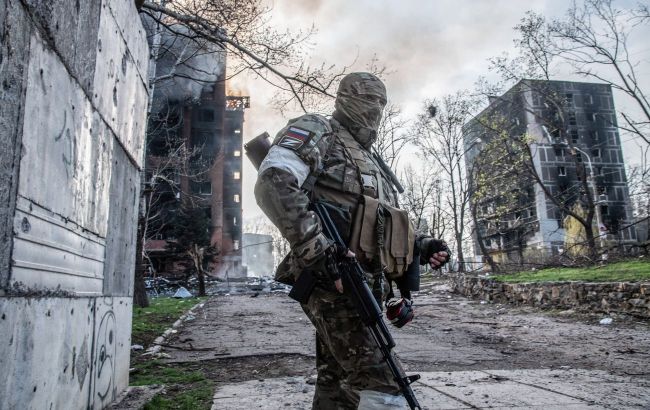 Destroyed Mariupol (Illustrative photo: Getty Images)
Russian units plan to launch a train service between Mariupol and Donetsk by summer 2026, according to the Mariupol City Council.
A representative of the Russian authorities, the so-called Minister of Transport of the Donetsk People's Republic, Aleksandr Bondarenko, stated that Russia plans to launch direct rail connections between Mariupol and Donetsk by summer 2026.
At the same time, Kremlin propaganda talks about reviving the region and preparing for the resort season, although the Kremlin's real goals are much more cynical and dangerous.
Launch plans: Donetsk–Volnovakha first
According to the announced plan, the first stage will be launching trains on the Donetsk–Volnovakha section. After completing restoration works, the occupiers promise to open full service between Mariupol and Donetsk.
Formally, the goal is to prepare for summer and attract tourists to Mariupol. However, experts are convinced that civilian passengers are merely a cover.
Russians’ real intentions
Building a railway on the ruins of a destroyed city is yet another tool for consolidating occupation. Russia is trying to turn Mariupol into a major military base, disguising militarization as restoring peaceful life.
The main goals of Russians are to create a reliable logistical corridor for:
- Troop redeployment: rapid delivery of equipment and ammunition to the front line;
- Looting: removal of remaining metal products from the destroyed giants Azovstal and Illich, as well as Ukrainian grain;
- Route redundancy: Russia seeks to reduce dependence on the vulnerable Crimean Bridge.
For civilian residents, this train will not symbolize freedom but will become another cog in the Russian military machine. Amid the ecological disaster, city destruction, and militarization of the region, such initiatives appear more as tools for consolidating occupation than genuine concern for civilians.
Environmental disaster instead of a resort
Attempts to lure people to Mariupol by train seem like a mockery given the city's critical situation. The occupied coastline is currently not a recreational area but a disaster zone:
Local residents have repeatedly reported that the Sea of Azov has effectively become a reservoir for sewage and industrial waste.
The consequences are already evident:
- Massive fish die-offs in the Sea of Azov;
- Near-total disappearance of the goby, one of the region’s key species;
- Spread of infectious diseases;
- In March 2025, elevated levels of phosphates and mercury were recorded in Mariupol’s rivers;
- Detection of localized accumulations of petroleum products.
Under these conditions, talking about a resort season appears at best cynical.
The Russian authorities announced plans to create a museum cluster on the territory of Azovstal in Mariupol, effectively attempting to rewrite events and erase the memory of the heroic resistance of Ukrainian defenders.
Additionally, in 2025, Russia intensified the use of the temporarily occupied Mariupol seaport, presenting it as a restoration.